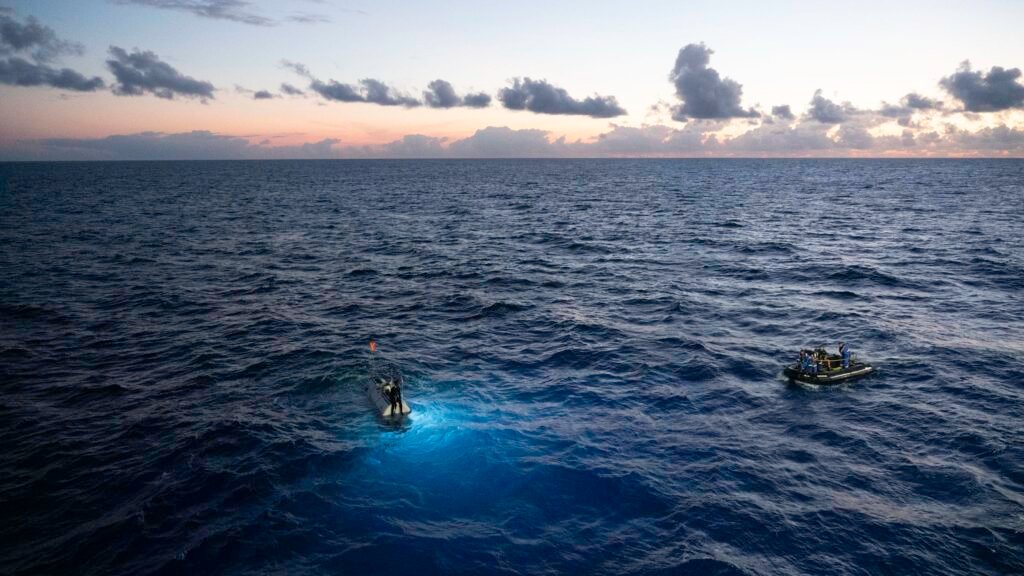
The ocean averages about 3,682 meters deep — roughly 12,080 feet, or more than two miles down — according to NOAA, which is deeper than most people guess and still just an average. That single number hides an enormous range, from shallow continental shelves a person could wade into to trenches deep enough to swallow Mount Everest with room to spare.
The Average Hides a Huge Range
Across the entire globe, the ocean floor sits at an average of about 3,682 meters below the surface, NOAA’s National Ocean Service reports. That average blends vast stretches of relatively shallow continental shelf near coastlines with the much deeper abyssal plains that make up most of the seafloor. It also means that if Mount Everest, at roughly 8,849 meters tall, were dropped into the middle of the ocean, its peak would still sit more than two miles underwater.
The Deepest Point Is Deeper Still
The single deepest known spot in any ocean is the Challenger Deep, a sliver of seafloor at the southern end of the Mariana Trench in the western Pacific. NOAA puts its depth at approximately 10,935 meters, or 35,876 feet — deep enough that Everest could sit inside it with more than a mile of water still overhead. The trench takes its modern name from the HMS Challenger, whose crew first measured its extraordinary depth in 1875 using a weighted sounding line, a rope lowered until it hit bottom. Modern sonar surveys have since refined that figure, but the basic scale hasn’t changed: the trench is deep enough to hold the tallest mountain on the planet and still have open water above its summit.
Depth Splits the Ocean Into Distinct Zones
Depth changes more than just water pressure — it changes what the ocean looks like and what can survive in it. According to the Woods Hole Oceanographic Institution, sunlight only penetrates the top 200 meters or so, known as the sunlit zone, where nearly all ocean life and photosynthesis happens, since plants and algae need light to convert sunlight into energy the way they do on land. Below that, the twilight zone stretches from 200 to 1,000 meters, dim enough that plants can’t grow but many fish and other animals still thrive. Past 1,000 meters lies the midnight zone, extending to about 4,000 meters in total darkness, followed by the frigid abyssal zone and finally the hadal zone, found only inside deep trenches like the Mariana, reaching past 10,000 meters.
Most of the Seafloor Is Still Unexplored
Despite centuries of exploration, humans have mapped only a fraction of what lies beneath the waves. As of 2026, NOAA Ocean Exploration reports that about 28.7% of the global seafloor has been mapped at high resolution using modern sonar — and that’s just mapping the shape of the bottom from the surface. Actual direct visual exploration of the deep seafloor is far more limited: NOAA estimates explorers have physically seen less than 0.001% of it, an area roughly the size of Rhode Island. More people have walked on the surface of the Moon than have visited the Challenger Deep in person — a gap that says less about the deep ocean’s importance than about how extraordinarily hard it is to reach.
Every deep-sea expedition tends to turn up something new, from bizarre bioluminescent fish to entire ecosystems built around hydrothermal vents that run on chemistry instead of sunlight. Extreme pressure, near-freezing temperatures, and total darkness make the deep ocean one of the most hostile environments on Earth — and also one of the least understood. With so much of the seafloor still unmapped in detail, scientists say there is a real chance it holds discoveries as significant as anything space exploration has turned up.