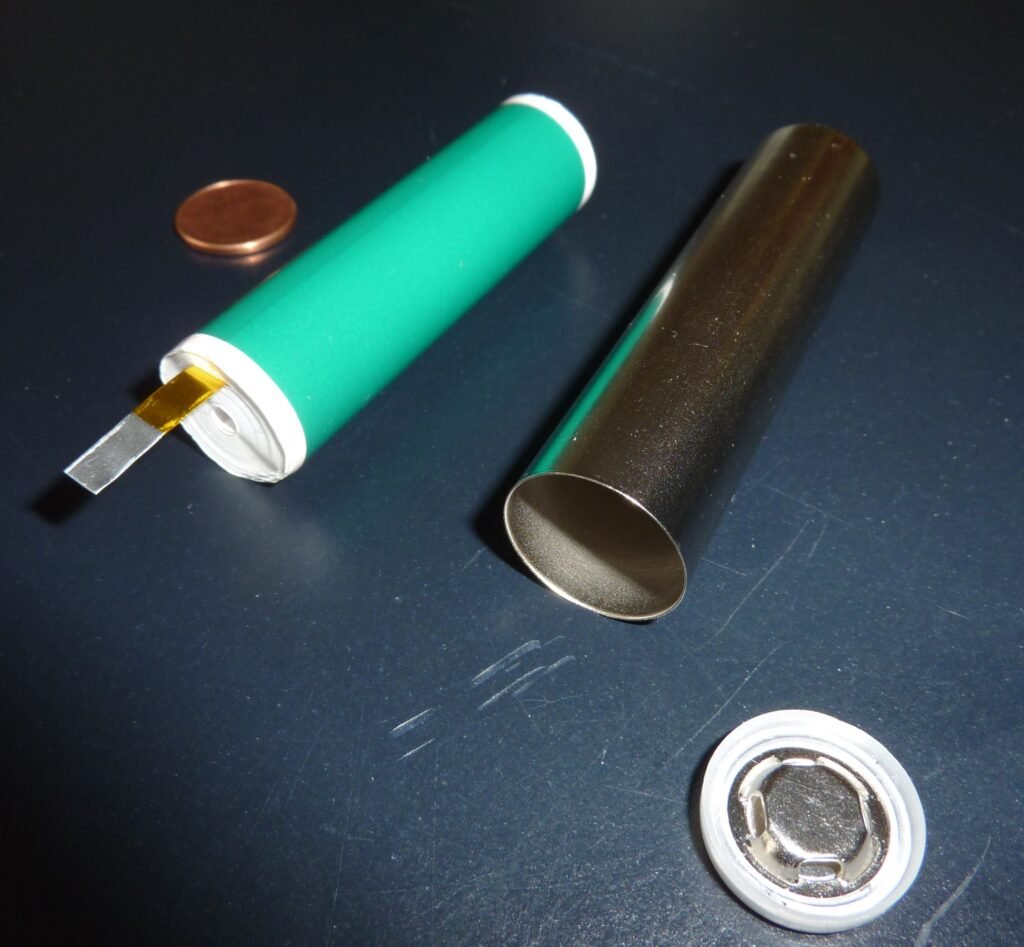
An electric car battery works by shuttling lithium ions back and forth between two electrodes, releasing electrons that power the motor on the way out and pulling them back in while charging — and what looks like a single “battery” under the hood is really thousands of small cells wired together, running the same basic chemistry as a phone or laptop battery, just scaled up to move two tons of metal down a highway.
The Chemistry Behind Every Drive
Nearly every EV on the road today runs on a lithium-ion battery, built from three core ingredients: a positive cathode, usually a blend of nickel, manganese, and cobalt oxides; a negative anode, typically graphite; and a liquid electrolyte between them that lithium ions can move through. When the car is running, lithium atoms in the anode shed an electron, which travels through an external circuit and the motor, generating the torque that turns the wheels, while the newly charged lithium ion drifts across the electrolyte to the cathode. Plug the car in, and the process runs in reverse: electricity from the wall pulls electrons back out of the cathode, and the ions migrate back to the anode to wait for the next drive.
From Single Cells to a Full Battery Pack
A single lithium-ion cell, roughly the size of a AA battery in a cylindrical design or a flat pouch, produces only a few volts on its own. To generate the several hundred volts an EV motor needs, automakers wire hundreds or even thousands of cells together into groups called modules, then bundle those modules into one large battery pack that sits low in the vehicle’s floor between the front and rear axles. That placement isn’t an accident: spreading a battery weighing close to 1,000 pounds along the floor lowers the car’s center of gravity, which is part of why EVs tend to feel so planted in corners.
Why Temperature Control Matters So Much
Lithium-ion cells are picky about temperature. Run them too hot and they degrade faster or, in rare worst cases, overheat dangerously; run them too cold and they can’t deliver power efficiently, which is why EV range often drops in winter. Every modern pack includes a thermal management system, usually coolant channels running beneath or between the cells, paired with sensors that monitor individual cell temperatures. Some packs actively heat the battery in cold weather, warming the cells before a road trip so they can accept a fast charge.
How Braking Puts Energy Back In
Unlike a gas engine, an EV’s electric motor can run in reverse, acting as a generator whenever the driver lifts off the accelerator or brakes. This process, called regenerative braking, converts the car’s forward momentum back into electricity and routes it into the battery instead of dissipating it as heat the way friction brakes do. It’s a major reason EVs are so efficient in stop-and-go city driving: where a gas car wastes energy at every red light, an EV recaptures a meaningful share of it.
Why Batteries Slowly Lose Capacity
Every charge and discharge cycle causes microscopic wear inside a lithium-ion cell, tiny structural changes at the electrodes that slightly reduce how much charge they can hold. Automakers design around this: EV batteries are engineered to retain the large majority of their original capacity after 10 to 20 years, and battery management software helps by avoiding extreme charge levels as the pack ages. It’s also why manufacturers increasingly turn to chemistries like lithium iron phosphate, or LFP, alongside nickel-based blends — different cathode recipes trade energy density against longevity and cost, giving automakers more ways to balance range, price, and lifespan.