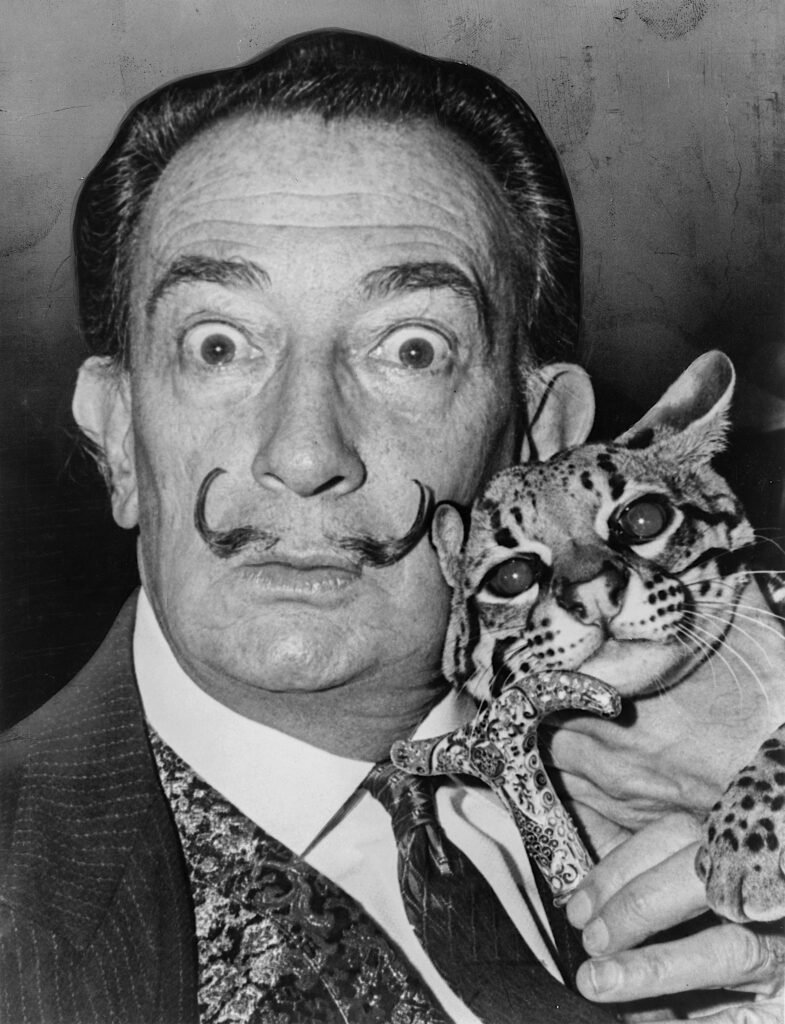
Surrealism is a twentieth-century cultural and artistic movement that sought to unlock the creative potential of the unconscious mind, rejecting rational control over art and writing in favor of dreamlike imagery and chance. Formally founded in Paris in 1924, it grew to encompass painting, literature, photography, and film, and remains one of the most recognizable movements in modern art.
n
Andre Breton’s manifesto
n
French writer Andre Breton published the Surrealist Manifesto on October 15, 1924, defining Surrealism as ‘psychic automatism in its pure state,’ intended to express the actual functioning of thought free from rational control or aesthetic and moral concerns. Breton drew on Sigmund Freud’s theories of the unconscious mind and on the irrational, rule-breaking spirit of the earlier Dada movement, and his manifesto named precursors such as the Marquis de Sade and the poet Lautreamont. Notably, a rival surrealist figure, Yvan Goll, had published a separate manifesto using the identical title just two weeks earlier, reflecting real competition over who could claim to define the new movement.
n
Techniques and precursors
n
Surrealist writers and artists developed specific techniques meant to bypass conscious control, including automatic writing, in which text is produced as quickly and unreflectively as possible, and automatic drawing. Visually, the movement drew heavily on earlier ‘metaphysical’ paintings by Giorgio de Chirico, created in the 1910s, whose eerily empty, dreamlike city squares and classical statuary anticipated Surrealism’s fascination with uncanny, dream-logic imagery before the movement was formally named.
n
Diverse visual approaches
n
Surrealist painters pursued notably different visual strategies within the same movement. Salvador Dali became famous for meticulously rendered, hyperrealistic dreamscapes with melting or distorted objects, while Max Ernst experimented with collage and frottage, a rubbing technique used to generate unexpected textures, and Rene Magritte favored sharply rendered but logically impossible arrangements of ordinary, everyday objects, demonstrating how widely the movement’s core idea, that art should reveal the unconscious, could be visually interpreted.
n
Surrealism beyond painting
n
Surrealist ideas extended well beyond painting into film, most famously in Un Chien Andalou, a 1929 short film made by Dali and director Luis Bunuel built from a sequence of deliberately illogical, shocking images, as well as into literature and photography, where artists such as Man Ray applied surrealist ideas to the camera through darkroom experimentation and unconventional composition.
n
Legacy and influence
n
Surrealism emerged in the years following Cubism‘s fragmentation of pictorial space, and while the two movements pursued very different goals, Cubism’s earlier break from strict visual realism helped create an artistic climate in which Surrealism’s even more radical departure from objective representation could flourish. Surrealist imagery and ideas continued to influence later art movements and have remained a persistent reference point in popular culture, advertising, and film long after the movement’s formal period of activity.
n
Surrealism and politics
n
Many Surrealists, including Breton himself, aligned closely with radical left-wing politics during the 1920s and 1930s, viewing the movement’s assault on rational, bourgeois thought as inseparable from a broader political revolution. Breton briefly joined the French Communist Party and later corresponded and collaborated with the exiled Soviet revolutionary Leon Trotsky, co-authoring a 1938 manifesto on art and politics with him while Trotsky was living in Mexico, illustrating how seriously core Surrealist figures treated their movement as political as well as artistic.
n
The 1936 MoMA exhibition
n
Surrealism reached a much wider American audience through ‘Fantastic Art, Dada, Surrealism,’ a major 1936 exhibition organized by the Museum of Modern Art in New York, which introduced many American viewers to the movement’s key figures and works for the first time and helped set the stage for New York to later become a major hub for Surrealist and Surrealist-influenced artists fleeing Europe before and during World War II.
n
Surrealist objects and exhibitions
n
Beyond painting and film, Surrealists also produced three-dimensional ‘surrealist objects,’ ordinary items transformed into disturbing or dreamlike sculptures, such as Meret Oppenheim’s 1936 fur-covered teacup, saucer, and spoon, a work that unsettled viewers precisely by applying a soft, organic material to objects normally associated with hard, clean surfaces. Large international Surrealist exhibitions held throughout the 1930s and beyond helped the movement maintain a public presence and recruit new participants even as its original Parisian core gradually dispersed.
n
Women artists, including Leonora Carrington, Remedios Varo, and the photographer Lee Miller, made major contributions to Surrealism despite often being overshadowed in early accounts of the movement that focused mainly on its male founders, and later scholarship has worked to give their work the same critical attention long given to Breton, Dali, and Magritte.
n
Surrealism’s broader cultural reach also owes much to its striking, instantly recognizable visual language, which has made its imagery, from melting clocks to bowler-hatted figures, a continuing reference point in advertising, fashion, and popular visual culture well outside the art world.
n
By the time Breton died in 1966, the organized movement he had led for over four decades had already splintered into numerous smaller offshoots and rival factions, but its central ambition, treating the unconscious mind as a legitimate and rich source of artistic material, had permanently entered the broader vocabulary of modern art.
n
FAQs
n
Is Surrealism the same as Dadaism? No, though the two are closely related; Dada emerged slightly earlier as a deliberately irrational, often nihilistic protest movement, while Surrealism, which drew directly on Dada’s rule-breaking spirit, focused more specifically on using art to access the unconscious mind rather than simply rejecting established artistic and social norms.
n
Did Surrealism have a defined end date? Not precisely; the movement’s organized activity gradually declined after World War II as many of its original members scattered or pursued independent paths, but Surrealist ideas and imagery have continued to influence art and culture well beyond any single end point.
Key facts
- Formally founded by Andre Breton's Surrealist Manifesto, published October 15, 1924
- Drew on Freud's theories of the unconscious and Dada's irrational spirit
- Dali, Ernst and Magritte pursued very different surrealist visual techniques
- Un Chien Andalou (1929) extended surrealism into film
Related concepts
Quick checkWho published the Surrealist Manifesto and when?Show answer
Andre Breton, on October 15, 1924, defining Surrealism as psychic automatism free from rational control.
Sources
- Wikipedia, Surrealist Manifesto
- EBSCO Research Starters, Surrealism Is Born
- The Metropolitan Museum of Art, Surrealism
Editorially reviewed by Specialty Digest Editorial TeamLast reviewed November 1, 2026Researched and drafted with AI assistanceReport an issue