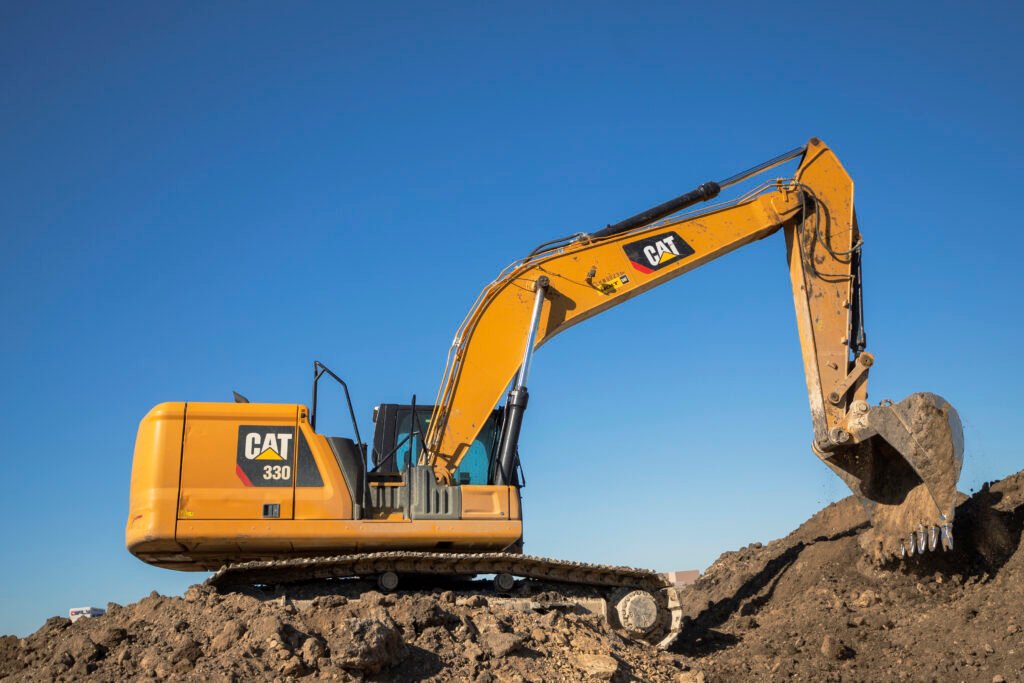
Hydraulics is the branch of mechanical engineering that uses pressurized liquid, almost always a specialized oil, to transmit force and generate motion in machines. Hydraulic systems power equipment ranging from excavators and cranes to aircraft landing gear and the brakes in nearly every car, valued across industries for their ability to generate enormous, precisely controllable force from relatively compact mechanical components.
The Basic Principle Behind Hydraulics
Hydraulic systems rely on a fundamental property of liquids: because liquids are essentially incompressible, pressure applied at one point in a sealed fluid system transmits almost instantly and equally throughout that fluid, a relationship described by Pascal’s principle. By connecting a small piston to a larger piston through fluid-filled tubing, a relatively small input force applied over a small area can produce a much larger output force over a larger area, which is why hydraulic systems can lift loads far heavier than a person could move directly, using only modest input force applied at a pump, hand lever, or foot pedal.
Key Components of Hydraulic Systems
A typical hydraulic system includes a pump that pressurizes fluid drawn from a reservoir, valves that direct pressurized fluid to specific actuators and control flow rate and direction, and actuators, usually cylinders or motors, that convert fluid pressure back into mechanical force or motion. Hoses and rigid tubing carry fluid between components, while filters keep dirt and other contaminants that could damage precision-machined parts out of the circulating system, and seals prevent the high-pressure fluid from leaking at every joint and moving part.
Advantages of Hydraulic Power
Hydraulic systems can generate very high force in a compact package, since fluid pressure rather than a bulky mechanical lever arm does the work of multiplying force, which makes hydraulics well suited to heavy equipment where space and weight are limited relative to the force required. Hydraulic actuators also offer smooth, precisely controllable motion and can hold a load steadily in place without drifting, since the incompressible fluid resists movement unless a valve deliberately releases pressure.
Common Applications
Construction and mining equipment, including excavators, bulldozers, cranes, and dump trucks, rely heavily on hydraulics to move massive buckets, blades, booms, and loads with smooth, precise operator control. Aircraft use hydraulic systems to move flight control surfaces and extend and retract landing gear, where reliability under extreme temperature and pressure conditions is absolutely critical. Standard automotive braking systems use hydraulic pressure to apply even force to all four wheels simultaneously from a single pedal input, while industrial presses use hydraulics to stamp, mold, forge, or shape materials with tremendous, finely controllable force.
Maintenance Challenges
Hydraulic systems require careful maintenance because contamination, even tiny particles of dirt or metal shavings, can damage the precision-machined internal surfaces of pumps and valves, while fluid leaks not only waste energy but can create safety and environmental hazards. Operators must also manage fluid temperature, since hydraulic fluid can thin out and lose effectiveness when too hot or thicken and flow poorly when too cold, and regular fluid analysis, including checking for metal particles and moisture content, helps detect developing problems such as contamination or component wear before a costly failure occurs.
History of Hydraulic Technology
While simple hydraulic devices date back to antiquity, the modern hydraulic press was developed in the late eighteenth century by Joseph Bramah, who applied Pascal’s principle of pressure transmission to create a practical, reliable force-multiplying machine for industrial use. The widespread adoption of hydraulics in heavy machinery accelerated through the twentieth century as manufacturing improved seal technology and fluid formulations, making hydraulic systems reliable enough for the demanding, continuous-duty applications found in modern construction, agricultural, aerospace, and heavy industrial equipment worldwide.
Hydraulics Versus Pneumatics
Hydraulics is often compared with pneumatics, a related technology that uses pressurized air instead of liquid to transmit force. Pneumatic systems are generally lighter, cleaner, and mechanically simpler since leaked air causes little harm compared to leaked hydraulic fluid, making pneumatics common in applications such as factory automation and pneumatic tools where lower force requirements and cleanliness matter more than raw power. Hydraulics remains the preferred choice wherever very high force and precise control under heavy load are required, since air, unlike hydraulic fluid, compresses significantly under pressure, which makes pneumatic systems less precise and noticeably less rigid when holding a fixed position under heavy load.
Electrohydraulic Control Systems
Modern hydraulic equipment increasingly integrates electronic sensors and controllers with traditional hydraulic components, creating electrohydraulic systems that combine the raw power of hydraulics with the precision and programmability of electronic control. Sensors continuously monitor pressure, position, temperature, and flow throughout the system, feeding that data to a controller that adjusts valves electronically rather than relying solely on an operator’s manual lever inputs, enabling more consistent, repeatable, and often safer operation in applications ranging from industrial presses to the complex hydraulic systems used in modern aircraft, construction equipment, and heavy manufacturing machinery.
FAQs
Why can a small hydraulic input generate a much larger output force?
Because pressure transmits equally throughout a sealed, incompressible fluid, connecting a small piston to a larger piston lets a modest input force over a small area produce a much larger force over the larger piston’s area.
Why is fluid contamination a major concern in hydraulic systems?
Even tiny particles of dirt or metal can damage the precision-machined internal surfaces of pumps and valves, causing leaks, reduced efficiency, overheating, or complete component failure if not caught and addressed in time.
Quick checkWhy can a small hydraulic input generate a much larger output force?Show answer
Because pressure transmits equally throughout a sealed, incompressible fluid, connecting a small piston to a larger one lets a modest input force produce a much larger output force.
Editorially reviewed by Specialty Digest Editorial TeamLast reviewed November 2, 2026Researched and drafted with AI assistanceReport an issue