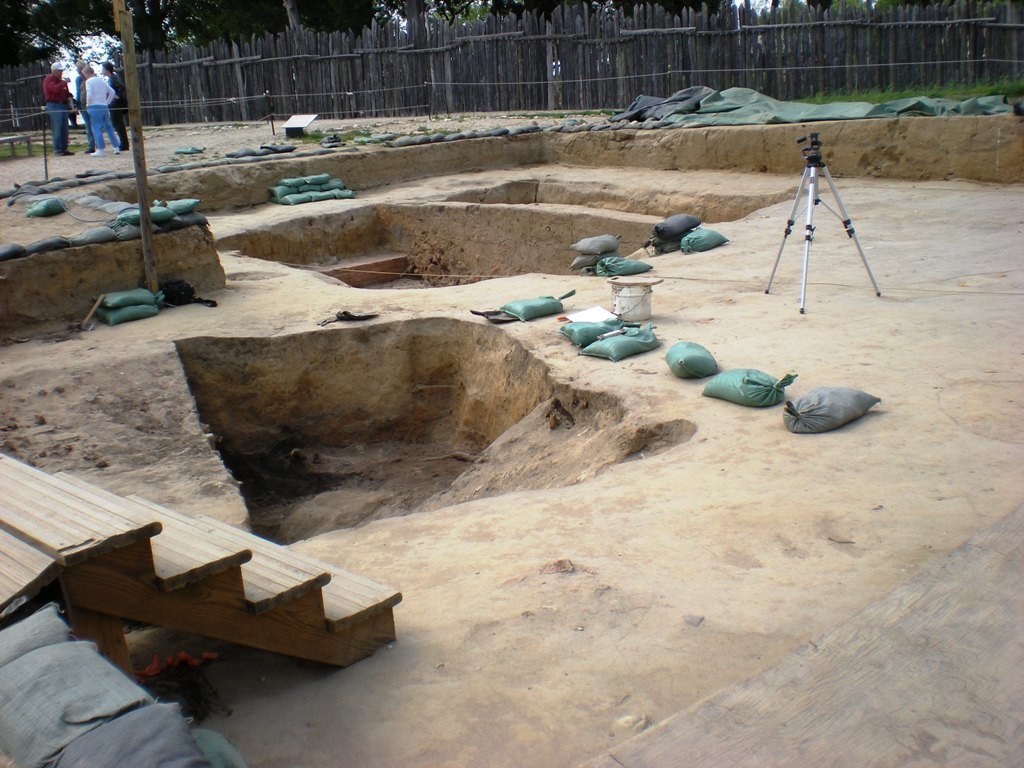
Excavation is the systematic digging and recording of an archaeological site to recover and document the remains buried within it. Unlike simply digging a hole to find objects, excavation treats the physical act of removing soil as a form of data collection in itself: every layer, every find, and every spatial relationship is measured and recorded as it is uncovered, because the process of digging destroys the very evidence it reveals.
That destructiveness is the defining fact of excavation. A deposit can only be dug once. Once a layer is removed, it cannot be put back for a colleague to re-examine or for a better technique to be applied later. This is why excavation is governed by far more paperwork, photography, and measurement than popular depictions suggest, and why many archaeologists argue that a site left unexcavated, protected from looting and development, often preserves more long-term scientific value than one dug with inadequate recording.
Planning Before Digging
Most excavations begin long before a trowel touches soil. Archaeologists first assess a site using surveys, aerial or satellite imagery, geophysical techniques such as ground-penetrating radar, and small test interventions like shovel test pits or narrow test trenches. These methods help estimate a site’s extent, depth, and likely significance without committing to full-scale digging, which is expensive, slow, and irreversible. Only after this assessment do teams decide whether, where, and how extensively to open up larger excavation areas.
Two broad strategies dominate actual digging. Open-area excavation removes stratigraphic layers across a wide horizontal exposure, which is well suited to revealing building plans, settlement layouts, and spatial relationships between features. Trench or test-pit excavation instead samples a site through narrower cuts, which is faster and cheaper but reveals less about how features relate to one another across space. Many large projects combine both, using test pits to characterize a site before committing resources to open-area work in the most promising locations.
Recording as You Dig
Modern excavation follows the stratigraphic principle of removing the most recent layer first and working downward, documenting each distinct context, such as a floor, wall, or pit fill, before removing it. Teams record each context’s soil color, texture, and composition, photograph it from multiple angles, and draw scaled plans and sections. Finds are bagged and labeled with their precise context and, increasingly, their exact three-dimensional coordinates, recorded using total stations, GPS units, or photogrammetry rather than hand-measured tape and string alone.
This level of documentation exists so that a site’s full stratigraphic sequence and artifact distributions can be reconstructed and reanalyzed long after the physical digging is finished. Permits, legal protections, and in many countries formal consultation with descendant or Indigenous communities are now standard prerequisites before invasive excavation begins, reflecting both the field’s recognition that digging is irreversible and the fact that excavated sites often hold cultural and ancestral significance well beyond their value as scientific data.
After the Dig
Excavation does not end when the last trench is backfilled. Post-excavation analysis, cleaning, cataloguing, and interpreting finds, cross-checking stratigraphic records, and producing a final site report, often takes years longer than the fieldwork itself and is widely considered just as essential. A site excavated but never properly written up and published is sometimes described as effectively lost to the wider discipline, since the physical evidence is gone and only the records remain to reconstruct what was found.
Tools of the Trade
Despite popular images of brushes and dental picks, most excavation work is done with far blunter tools. Mattocks, shovels, and pickaxes remove overburden and less sensitive layers quickly, while trowels become the primary instrument once a team reaches a context that needs careful, controlled removal. Sieving or screening excavated soil through mesh recovers small finds, such as beads, fish bones, or seeds, that would otherwise be missed by eye, and flotation, which separates light organic material like charred seeds from soil using water, has become a standard technique for recovering evidence of ancient diet and plant use that earlier generations of excavators often discarded along with the dirt.
The scale of a project shapes which tools dominate. A rescue excavation ahead of construction, working under tight deadlines before a site is destroyed by development, may rely more heavily on machinery to remove overburden before hand excavation begins on more sensitive layers beneath. A long-term research excavation at a well-protected site, by contrast, can afford to proceed far more slowly, sometimes spending an entire season on a single context if its stratigraphic relationships are unusually complex or its contents unusually significant.
FAQs
Why is excavation considered destructive?
Because removing a layer of soil is irreversible. Once a context is dug away, it cannot be re-examined, so all information about it must be captured through recording before it disappears.
What is the difference between open-area and trench excavation?
Open-area excavation exposes a wide horizontal surface, revealing spatial relationships between features, while trench or test-pit excavation samples a site through narrower cuts, which is faster but shows less about how features connect across space.
Do archaeologists need a permit to excavate?
In most countries, yes. Legal permits, and often consultation with descendant or Indigenous communities, are standard requirements before excavation can begin, reflecting the irreversible and sometimes culturally significant nature of the work.
What happens after the physical digging is finished?
Post-excavation work, including cleaning, cataloguing, analysis, and writing a final report, typically continues for years and is considered essential to making the excavation’s findings usable by other researchers.
In the news
Quick checkWhy is archaeological excavation considered a destructive process?Show answer
Because digging removes a layer of soil permanently; once a context is excavated it cannot be re-examined, so all information must be recorded as it is uncovered.
Editorially reviewed by Specialty Digest Editorial TeamLast reviewed November 2, 2026Researched and drafted with AI assistanceReport an issue