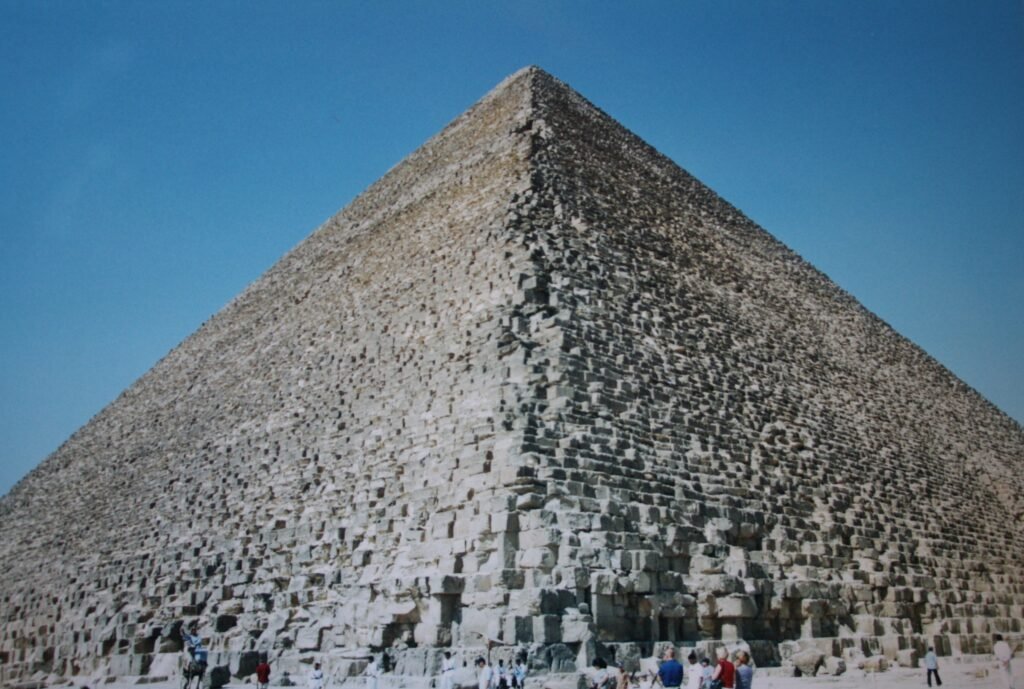
The pyramids of Egypt were built by tens of thousands of ordinary Egyptians working in organized, paid, fed, and medically cared-for labor crews — not by enslaved people, and not by any lost civilization. That answer doesn’t come from guesswork. It comes from decades of excavation at Giza, where archaeologists have found the workers’ own villages, bakeries, tools, and eventually their own tombs, built in a place of honor right beside the monuments they raised.
Where the slave myth actually came from
The idea that slaves built the pyramids traces back to two sources, and neither one is Egyptian. One is a loose mental association with the Book of Exodus, which describes enslaved Israelites laboring on building projects for a much later pharaoh, in a different place and a different era entirely. The other is the Greek historian Herodotus, writing around 450 BCE — roughly 2,000 years after the Great Pyramid was actually finished — who claimed 100,000 enslaved workers built it. Herodotus had no access to Old Kingdom records, and modern Egyptology has never found evidence to back up his number. Twentieth-century films did the rest, cementing an image of whipped slaves hauling stone that archaeology simply doesn’t support.
What archaeologists actually found at Giza
In 1990, an American tourist’s horse stumbled over a buried mud-brick wall near the pyramids. That accident led archaeologists, under Zahi Hawass, then Egypt’s chief official for the Giza Monuments, to a sprawling settlement just south of the site: bakeries, breweries, and gallery-style barracks built to house rotating crews of workers. Administrative records and inscriptions found there put the workforce for the Great Pyramid, built for the pharaoh Khufu around 2560 BCE, at roughly 20,000 laborers at its peak, backed by another 16,000 people supplying food and materials — evidence of a planned, provisioned workforce, not a captive one.
The laborers themselves were organized into units called phyles, groups of up to about 200 men, split further into smaller gangs of ten to twenty that competed against each other and gave themselves names like “Friends of Khufu.” Skilled stoneworkers, engineers, and craftsmen appear to have worked year-round, while farmers filled in seasonally during the Nile’s annual flood, when their fields sat underwater and there was no farming to do. Inscriptions found inside the pyramids themselves, including logs kept by an official named Merer describing his crew ferrying limestone blocks by boat, point to skilled, coordinated labor — the kind of record-keeping and pride of work that forced, undifferentiated toil doesn’t produce.
How the workers lived, and how they were buried
Pottery, bread molds, and animal bones recovered from the site show the workers ate a substantial diet of bread, beef, goat, sheep, and beer, which was a dietary staple in ancient Egypt rather than a luxury. Their skeletons show real signs of hard physical labor — arthritis, healed fractures — but the healing itself is the telling part: bones were properly set, and some remains even show evidence of surgery, meaning this workforce had access to organized medical care. Average lifespan for a laborer ran around 30 to 35 years, roughly in line with life expectancy for ordinary Egyptians at the time.
The strongest evidence against the slave-labor story, though, is where the workers ended up after death. Roughly 600 worker graves and about 30 larger tombs for overseers and craftsmen sit in a cemetery directly beside the pyramids — a position of genuine honor in ancient Egyptian belief, reserved for people considered worthy of a dignified afterlife. Enslaved people were never given burials like that, stocked with supplies for the next world. The men who built the pyramids were.