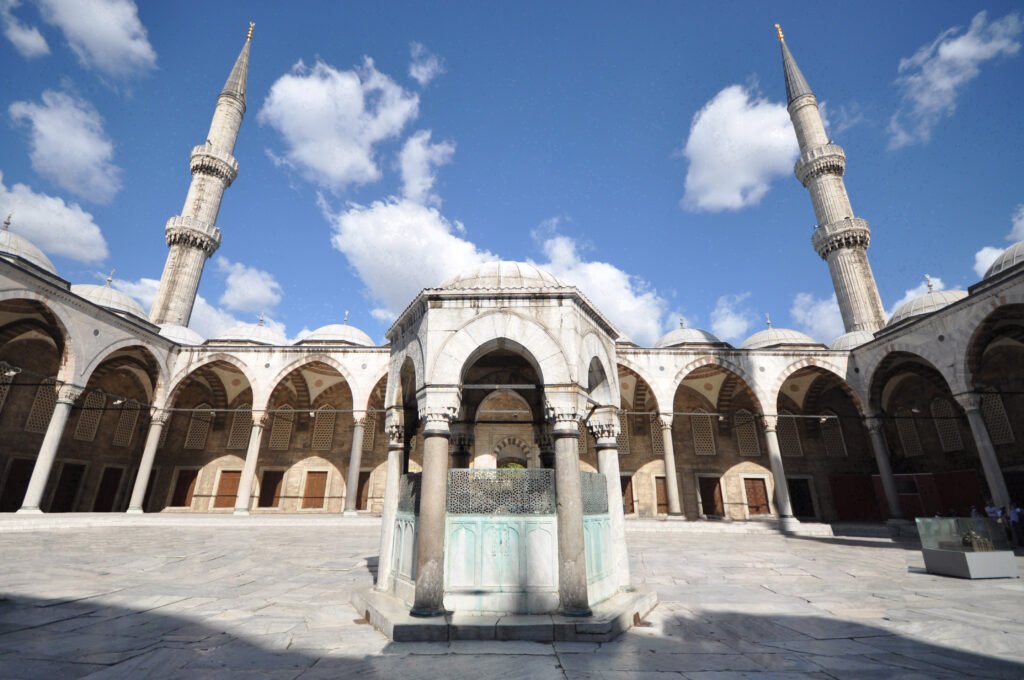
Islam is a monotheistic religion founded in seventh-century Arabia, based on the teachings of the Prophet Muhammad as recorded in the Quran, which Muslims believe to be the literal word of God, known in Arabic as Allah, revealed to Muhammad over approximately two decades. It is the world’s second-largest religion by number of adherents, with major populations concentrated in the Middle East, North Africa, and South and Southeast Asia, though Muslim communities exist on every inhabited continent today, including sizable and growing populations in Europe and North America.
Muhammad, born around 570 CE in the city of Mecca, is regarded by Muslims as the final prophet in a long line that includes earlier figures also recognized in Judaism and Christianity, such as Abraham, Moses, and Jesus. According to Islamic tradition, Muhammad began receiving revelations from God through the angel Gabriel around 610 CE, which continued until his death in 632 CE, and these revelations were later compiled, after his death, into the Quran, Islam’s central and most authoritative religious text.
The Five Pillars
Islamic practice centers on five core obligations known as the Five Pillars. Shahada is the simple, central declaration of faith, affirming that there is no god but God and that Muhammad is God’s final messenger. Salat requires five daily prayers performed at set, fixed times throughout the day, oriented physically toward the city of Mecca. Zakat is an obligation to give a portion of one’s wealth to charitable causes, reflecting the religion’s strong and consistently emphasized obligation to care for the poor and vulnerable members of the community. Sawm requires fasting from dawn to sunset during the month of Ramadan, Islam’s holiest month, commemorating the specific period during which the first verses of the Quran are believed to have been revealed to Muhammad. Hajj is the pilgrimage to Mecca, required at least once in a lifetime for Muslims who are physically and financially able to undertake the journey.
Major Branches: Sunni and Shia
Islam’s two major branches, Sunni and Shia, trace their origins to a dispute over leadership following Muhammad’s death in 632 CE. Sunni Muslims, who make up roughly eighty-five to ninety percent of the global Muslim population, held that leadership should pass to a qualified successor chosen by the community, while Shia Muslims held that leadership should have passed specifically through Muhammad’s family line, beginning with his cousin and son-in-law Ali. This early political and theological disagreement gradually developed over subsequent generations into two distinct religious traditions, each with some differences in religious practice, legal interpretation, and religious authority, though both branches continue to share the Quran, the Five Pillars, and the same core monotheistic foundation underlying the wider faith.
Scripture, Law, and Scholarship
Beyond the Quran itself, Islamic tradition also draws heavily on the Hadith, the collected records of Muhammad’s sayings and actions, used alongside the Quran to guide religious practice and develop Islamic law, known as Sharia. Islamic legal and theological scholarship developed into a sophisticated and varied tradition over subsequent centuries, producing several distinct schools of legal interpretation and a rich, centuries-long history of philosophy, science, and scholarship that flourished particularly during what is often called the Islamic Golden Age, roughly from the eighth through the thirteenth centuries, when Muslim scholars working across a vast, multilingual region made significant and lasting contributions to mathematics, medicine, astronomy, optics, and philosophy, often building on and transmitting earlier Greek, Persian, and Indian knowledge.
Daily Life and Worship
For practicing Muslims, the Five Pillars shape much of daily and yearly religious life. The call to prayer, sounded from mosques five times a day, structures the daily rhythm of observant communities, and the mosque itself typically serves as both a place of prayer and, in many communities, a wider center of religious education and social life. Ramadan, the month of fasting, is also typically marked by increased communal prayer, charitable giving, and family gatherings, culminating in the festival of Eid al-Fitr, which celebrates the end of the fasting month with communal prayer, large family feasting, and the giving of gifts, especially to children.
The Hajj pilgrimage to Mecca brings together Muslims from around the world in one of the largest annual religious gatherings on Earth, with several million pilgrims each year performing a shared sequence of rituals at sites associated with the Prophet Abraham and the Prophet Muhammad. For many Muslims, completing the Hajj represents a significant spiritual milestone, often undertaken later in life once the obligation’s financial and physical requirements have genuinely been met, and returning pilgrims, often carrying the honorific title hajji or hajja, are traditionally honored within their communities for having fulfilled this core religious duty.
FAQs
What are the Five Pillars of Islam?
Shahada, the declaration of faith; Salat, daily prayer; Zakat, charitable giving; Sawm, fasting during Ramadan; and Hajj, pilgrimage to Mecca.
What is the difference between Sunni and Shia Islam?
The two branches split over a dispute following Muhammad’s death about who should lead the Muslim community, with Sunnis favoring a qualified successor chosen by the community and Shias favoring leadership through Muhammad’s family line.
What is the Quran?
Islam’s central religious text, believed by Muslims to be the literal word of God revealed to the Prophet Muhammad through the angel Gabriel over approximately two decades.
What is Sharia?
Islamic law, developed from the Quran and the Hadith, the collected records of Muhammad’s sayings and actions, guiding religious practice and legal interpretation across different schools of thought.
In the news
Quick checkWhat are the Five Pillars of Islam?Show answer
Shahada (declaration of faith), Salat (daily prayer), Zakat (charitable giving), Sawm (fasting during Ramadan), and Hajj (pilgrimage to Mecca).
Editorially reviewed by Specialty Digest Editorial TeamLast reviewed November 2, 2026Researched and drafted with AI assistanceReport an issue