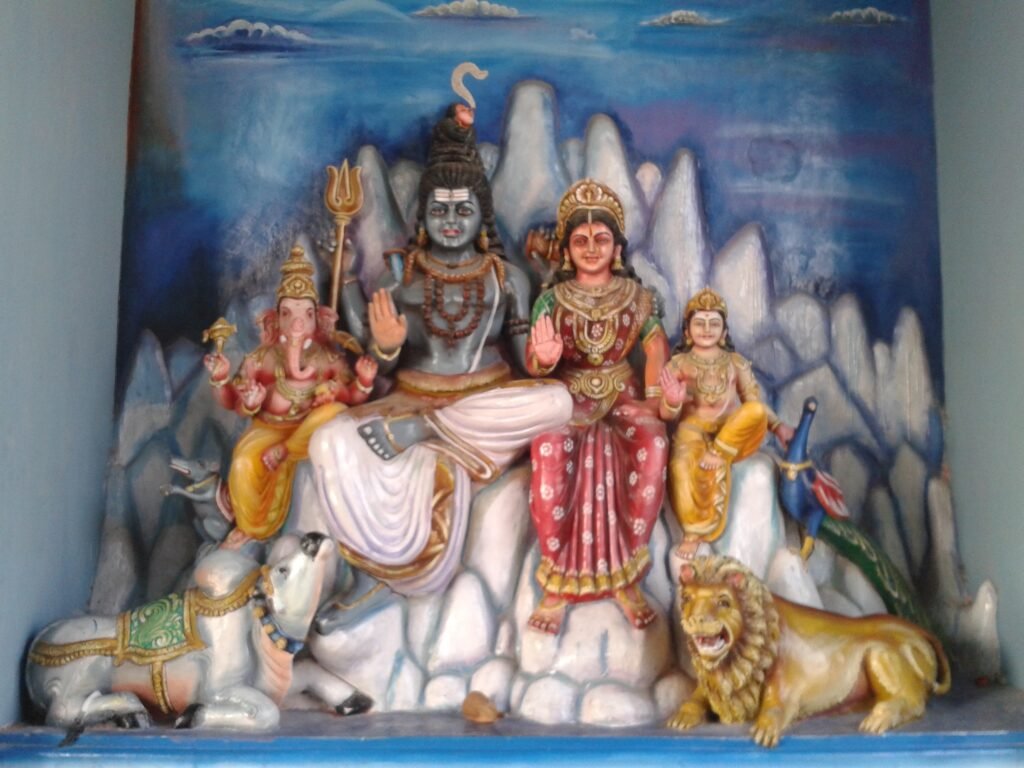
Hinduism is a major religious and philosophical tradition originating in the Indian subcontinent, encompassing an unusually diverse range of beliefs, practices, and deities rather than a single unified doctrine or founding figure. It is the world’s third-largest religion by number of adherents, with the large majority of its followers living in India, though significant Hindu communities also exist across South and Southeast Asia and in diaspora communities scattered throughout the wider world.
Unlike many other major world religions, Hinduism has no single founder, central religious authority, or single holy book that all its traditions treat as uniquely authoritative. Its oldest scriptures, the Vedas, date back to roughly 1500 BCE and form the foundation for a long and expanding body of later texts, including the philosophical Upanishads, the epic poems Mahabharata and Ramayana, and the Bhagavad Gita, a philosophical dialogue embedded within the Mahabharata that remains one of Hinduism’s most widely read and influential texts.
Core Concepts: Dharma, Karma, and Samsara
Several interconnected concepts run through most Hindu traditions despite their considerable internal diversity. Dharma refers to one’s duty or righteous way of living, which traditionally varies according to a person’s particular role, stage of life, and social position, rather than being a single fixed set of rules applied identically to every person in every circumstance. Karma holds that intentional actions generate consequences that shape a person’s circumstances, both within this life and across future rebirths, linking individual conduct directly to one’s ongoing spiritual trajectory.
Samsara describes the cycle of birth, death, and rebirth that souls are understood to pass through across many lifetimes, shaped by the accumulated weight of past karma. Moksha, liberation from this cycle, represents the ultimate spiritual goal in most Hindu traditions, understood variously as union with a universal divine reality, release from the limitations of individual embodied existence, or the realization of one’s deepest true nature, depending on the specific philosophical school involved.
Deities and Major Traditions
Hinduism encompasses a vast range of deities and devotional traditions, often understood by practitioners as different manifestations or aspects of a single ultimate reality called Brahman, rather than as entirely separate, competing gods. Major traditions include Vaishnavism, centered on devotion to the god Vishnu and his incarnations, including Krishna and Rama; Shaivism, centered on devotion to the god Shiva; and Shaktism, centered on devotion to the divine feminine, often worshipped as the goddess Devi in her many forms. These traditions coexist within the broader Hindu fold, and many practitioners draw on elements of more than one simultaneously rather than treating them as mutually exclusive.
Practice and Daily Life
Hindu religious practice varies enormously by region, community, and individual tradition, but commonly includes puja, ritual worship performed at home shrines or temples, often involving offerings of food, flowers, or incense to a chosen deity. Major festivals, including Diwali, the festival of lights, and Holi, the festival of colors, are celebrated widely across Hindu communities and have also become increasingly visible and widely celebrated well beyond South Asia in recent decades. Pilgrimage to sacred sites, particularly along rivers considered holy such as the Ganges, and yoga and meditation practices rooted in Hindu philosophical traditions, also remain significant and deeply valued elements of religious and spiritual life for many practitioners today.
Scripture and Philosophical Schools
Hindu scripture is traditionally divided into two broad categories. Shruti texts, meaning “that which is heard,” include the Vedas and are considered to carry the highest and most direct spiritual authority, believed by many traditions to have been divinely revealed to ancient sages rather than authored by any ordinary human. Smriti texts, meaning “that which is remembered,” include the epics, the Bhagavad Gita, and a wide range of later philosophical, legal, and devotional writings, generally considered authoritative but secondary to the Vedas in formal religious status, even though many of these texts are far more widely read and influential in everyday practice.
Over centuries, Hindu philosophy developed into several distinct schools of thought, often described collectively as darshanas, meaning “viewpoints” or “perspectives.” These schools debated questions about the nature of reality, the self, and the relationship between the individual soul and the ultimate divine reality, Brahman, with some, such as Advaita Vedanta, arguing for a radical, ultimate non-duality between the individual self and Brahman, while others maintained that meaningful distinctions between the self and the divine persist even within a state of spiritual liberation. This philosophical diversity is part of why Hinduism is often described less as a single religion in the Western sense and more as a broad family of related spiritual and philosophical traditions sharing common scriptural roots and core concepts.
FAQs
What is moksha in Hindu belief?
Liberation from the cycle of birth, death, and rebirth, known as samsara, representing the ultimate spiritual goal in most Hindu traditions.
Does Hinduism have a single founder or holy book?
No. Unlike many other major world religions, Hinduism has no single founder or central authority, and comprises a broad family of related traditions drawing on a large body of scripture.
What is the relationship between karma and samsara?
Karma holds that intentional actions generate consequences shaping future circumstances, and this accumulated karma is understood to drive the ongoing cycle of rebirth described as samsara.
What are the major devotional traditions within Hinduism?
Vaishnavism, centered on the god Vishnu and his incarnations; Shaivism, centered on the god Shiva; and Shaktism, centered on the divine feminine worshipped as the goddess Devi.
Quick checkWhat is moksha in Hindu belief?Show answer
Liberation from the cycle of birth, death, and rebirth, known as samsara, representing the ultimate spiritual goal in most Hindu traditions.
Editorially reviewed by Specialty Digest Editorial TeamLast reviewed November 2, 2026Researched and drafted with AI assistanceReport an issue