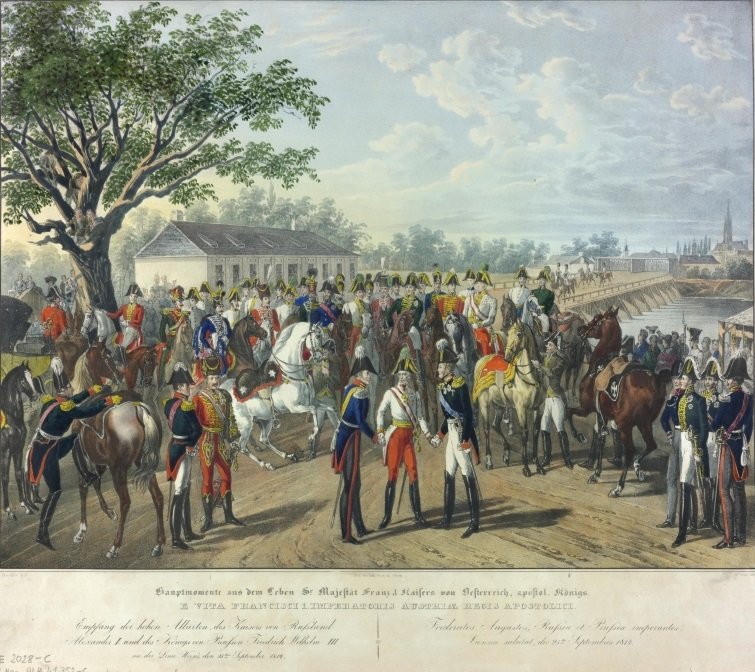
Balance of power is a theory of international relations holding that states can best secure their own survival by preventing any single state from accumulating so much military strength that it can dominate all the others. The core logic is that if one state grows significantly more powerful than its neighbors, those neighbors have a strong incentive to build up their own capabilities or form a coalition against it, restoring something closer to a stable equilibrium among the competing states. Realist scholars treat this equilibrium as inherently stabilizing, since an aggressor facing a roughly matched coalition of opponents has far less to gain from attacking than one facing a divided or much weaker field of rivals, at least according to the theory’s core logic.
Historical origins
The underlying logic of balancing against a dominant power appears as early as ancient Greece, where Thucydides described smaller city-states banding together against a rising hegemon such as Athens or Sparta. The phrase itself entered European political vocabulary through the Italian Renaissance, when the historian Bernardo Rucellai used it in his account of the Italian Wars to describe how rival city-states maneuvered against whichever power seemed to be gaining the upper hand. Balance of power thinking shaped the negotiations surrounding the 1648 Peace of Westphalia and was explicitly written into the 1713 Treaty of Utrecht, which aimed to prevent the union of the French and Spanish crowns from upsetting the European equilibrium. From the mid-17th century through the Congress of Vienna in 1814 and 1815, balance of power calculations are widely credited, or blamed, for driving much of the continent’s diplomacy and its recurring wars.
Internal and external balancing
States pursuing a balance of power strategy generally have two broad options. Internal balancing means building up a state’s own military and economic capacity, through measures such as increased defense spending, conscription, or industrial mobilization, without relying on outside help. External balancing means forming alliances with other states that share an interest in checking the same rising power, pooling combined military strength that no single member could realistically muster alone against a much larger rival. Kenneth Waltz, the founder of the neorealist school of international relations theory, argued that balancing behavior of one kind or another tends to emerge reliably wherever at least two significant powers compete for security, since states cannot safely assume that a dominant rival will use its strength benignly.
Criticisms of the theory
Balance of power theory has drawn sustained criticism on both historical and conceptual grounds. Diplomat and scholar Henry Kissinger observed that genuinely stable, functioning balance of power systems have actually existed only rarely across history, and other scholars have noted that such systems frequently collapse into a single dominant empire rather than persisting in equilibrium indefinitely. Critics such as the 19th-century British politician Richard Cobden dismissed the whole concept as a chimera, a vague and ultimately empty idea invoked to justify whatever policy a state already wanted to pursue, and the political scientist Ernst Haas catalogued the philological, semantic, and theoretical confusion surrounding the term’s many competing definitions. Other critics argue the theory has a worse historical track record than its defenders claim, contending that balancing behavior has caused or prolonged wars at least as often as it has prevented them, since an arms race triggered by one side’s attempt to balance can itself become a source of instability and miscalculation.
The post-Cold War puzzle
The balance of power theory faces a particularly sharp empirical challenge from the period following the end of the Cold War, when the United States emerged as the world’s dominant military power without triggering the kind of broad counterbalancing coalition the theory would predict, an outcome many realist scholars did not anticipate when the Cold War ended. Major powers such as China, Russia, and the European Union have at times hedged against American dominance in specific ways, but none has built the kind of comprehensive counter-alliance that classical balance of power theory anticipates in response to a single state’s overwhelming strength. Researchers have offered competing explanations for this apparent anomaly, including the argument that American power, unlike that of past hegemons, has not posed a direct enough territorial threat to potential balancers to justify the cost of confronting it, and the more skeptical argument that balance of power simply is not the universal empirical law its proponents have claimed.
FAQs
What is the basic idea behind balance of power theory?
That states prevent any one state from dominating the rest by building up their own strength or forming coalitions, restoring a rough equilibrium that makes aggression less attractive.
What is the difference between internal and external balancing?
Internal balancing means a state builds up its own military and economic capacity, while external balancing means forming alliances with other states to pool combined strength.
Who is most associated with modern balance of power theory?
Kenneth Waltz, the founder of neorealism, argued balancing behavior reliably emerges wherever two or more significant powers compete for security.
Why is American post-Cold War dominance considered a puzzle for the theory?
Because no comprehensive counterbalancing coalition formed against the United States despite its overwhelming power, which classical balance of power theory would normally predict.
Did the balance of power system prevent major wars in Europe?
Not reliably. Critics point out that balance of power calculations are widely credited, or blamed, for driving much of the diplomacy and recurring conflict in Europe between 1648 and the Congress of Vienna.
Key facts
- Traces to ancient Greek city-states banding together against a rising hegemon
- Shaped the Peace of Westphalia (1648) and the Treaty of Utrecht (1713)
- States pursue internal balancing (self-strengthening) or external balancing (alliances)
- Kenneth Waltz's neorealism gave the theory its most influential modern formulation
Quick checkWhat is the basic idea behind balance of power theory?Show answer
That states prevent any one state from dominating the rest by building strength or forming coalitions, restoring a rough equilibrium.
Sources
- Wikipedia: Balance of Power (International Relations)
Editorially reviewed by Specialty Digest Editorial TeamLast reviewed November 2, 2026Researched and drafted with AI assistanceReport an issue