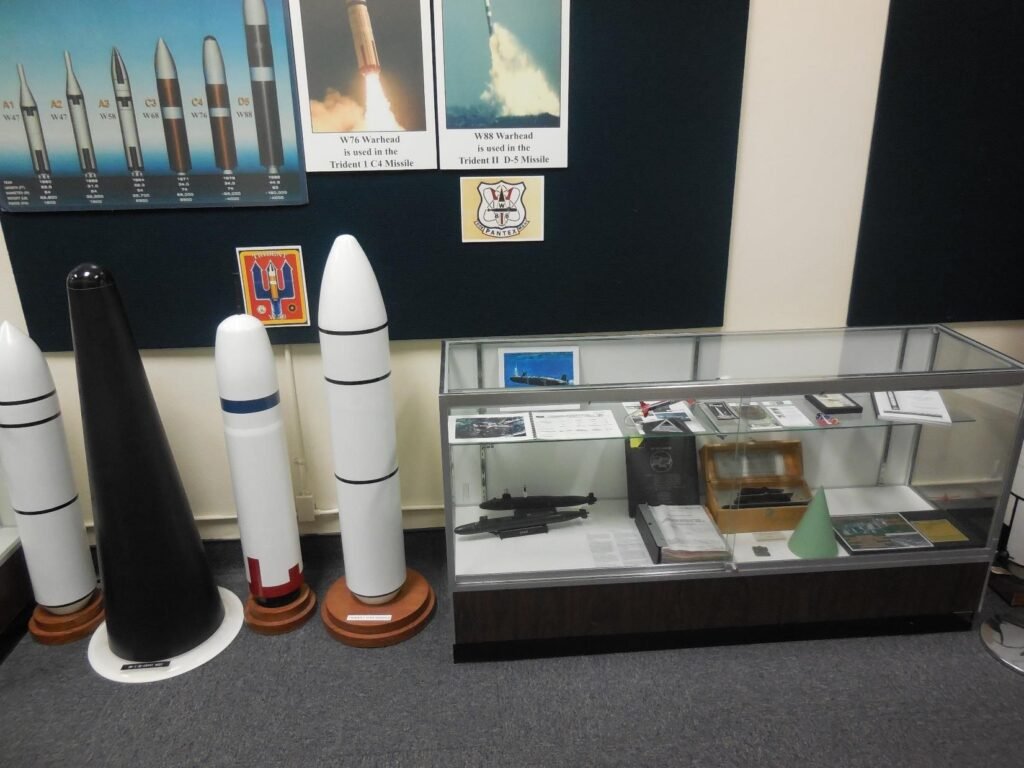
Deterrence theory studies how the threat of retaliation or punishment can convince an adversary not to take an unwanted action in the first place. It is most strongly associated with nuclear strategy, where it describes how the threat of devastating retaliation can discourage a rival state from launching an attack, but the underlying logic applies to conventional military strategy, criminal justice, and everyday life as well. Deterrence works by trying to preserve an existing situation rather than change it, which sets it apart from compellence, a related concept describing the use of threats to force an adversary to alter its behavior rather than simply discourage a specific action.
The logic of rational deterrence
Rational deterrence theory treats a potential attacker’s decision as a cost-benefit calculation, arguing that deterrence succeeds when the expected costs of an action clearly outweigh its expected benefits in the mind of the party being deterred. For deterrence to work reliably, the threatened punishment must be credible, meaning the defending state must be seen as both capable of carrying out the threatened retaliation and genuinely willing to do so if challenged, since a threat that is not believed provides little actual restraint on an adversary’s behavior. This requirement for credibility is precisely why states investing in deterrence often spend heavily on visibly demonstrating both the capability and the resolve to follow through on their threats, rather than relying on the threat alone.
Cold War origins and nuclear deterrence
While deterrence as a general strategic concept predates the Cold War by centuries, the overwhelming majority of deterrence scholarship developed specifically in response to nuclear weapons, with the core theoretical literature appearing mostly between the late 1940s and the mid-1960s. The arms race between the United States and the Soviet Union, which moved from early fission weapons to far more powerful thermonuclear designs, pushed both superpowers toward strategies centered explicitly on deterring the other from ever launching a first attack. American strategy shifted over the following decades, moving from early Cold War containment thinking toward a period of relative detente once both sides had achieved rough nuclear parity, then back toward a renewed military buildup under the Reagan administration in the 1980s, before Reagan and Soviet leader Mikhail Gorbachev jointly declared in 1985 that a nuclear war cannot be won and must never be fought, a statement widely seen as a turning point toward the arms reductions of the following years.
Mutual assured destruction and second-strike capability
Mutual assured destruction describes a condition in which a full-scale nuclear attack by either superpower would trigger a retaliatory strike devastating enough to destroy the attacker as well, making any such attack irrational for either side to launch in the first place. This condition depends critically on each side possessing a reliable second-strike capability, meaning enough surviving weapons and delivery systems after absorbing an initial attack to still inflict catastrophic retaliation, which is precisely why both superpowers invested heavily in submarines, mobile missile launchers, and other survivable delivery systems designed to endure a first strike. Extended deterrence applies this same basic logic beyond a state’s own territory, as when the United States extends a so-called nuclear umbrella over allied countries, promising that an attack on an ally could trigger the same retaliatory response as a direct attack on the United States itself.
Criticisms and limits
Critics have long questioned whether real-world decision makers actually behave as the rational-actor model of deterrence assumes, pointing to historical cases where deterrence failed not because the threatened punishment was insufficient but because of misperception, overconfidence, or sheer emotion overriding careful cost-benefit calculation. Even strong proponents of nuclear deterrence, including former US Secretary of Defense Robert McNamara, later acknowledged that luck, as much as careful strategic management, helped the world avoid nuclear war during moments of acute danger such as the 1962 Cuban Missile Crisis. The stability-instability paradox further complicates the picture, suggesting that a stable nuclear standoff between two heavily armed powers can actually make smaller conventional conflicts and proxy wars between them more likely, precisely because both sides feel confident that minor conflicts are unlikely to escalate all the way to a nuclear exchange. Critics have also argued that deterrence offers little protection against non-state actors such as suicide attackers, who may not share the same assumptions about self-preservation that make deterrence theory work against a rational state adversary.
FAQs
What is the difference between deterrence and compellence?
Deterrence aims to prevent an adversary from taking a specific action, while compellence uses threats to force an adversary to actively change its current behavior.
What is mutual assured destruction?
A condition in which a full-scale nuclear attack by either side would trigger retaliation devastating enough to destroy the attacker too, making such an attack irrational to launch.
What is extended deterrence?
A strategy in which a state, often through a nuclear umbrella, extends its deterrent protection to cover allied countries rather than only its own territory.
Why do critics say deterrence may not work against non-state actors?
Because deterrence assumes a rational actor weighing costs and benefits, an assumption that may not hold for actors such as suicide attackers who do not share ordinary assumptions about self-preservation.
What does it mean for a deterrent threat to be credible?
A credible threat is one the defending state is seen as both capable of carrying out and genuinely willing to carry out if challenged, since an unbelieved threat provides little real restraint on an adversary.
Key facts
- Deterrence aims to preserve the status quo; compellence aims to change it
- Most core scholarship developed during the Cold War, roughly late 1940s to mid-1960s
- Mutual assured destruction depends on each side having a reliable second-strike capability
- Stability-instability paradox suggests nuclear stalemate can make smaller conflicts more likely
Quick checkWhat is the difference between deterrence and compellence?Show answer
Deterrence prevents an adversary from taking an action, while compellence uses threats to force a change in current behavior.
Sources
- Wikipedia: Deterrence Theory
Editorially reviewed by Specialty Digest Editorial TeamLast reviewed November 2, 2026Researched and drafted with AI assistanceReport an issue