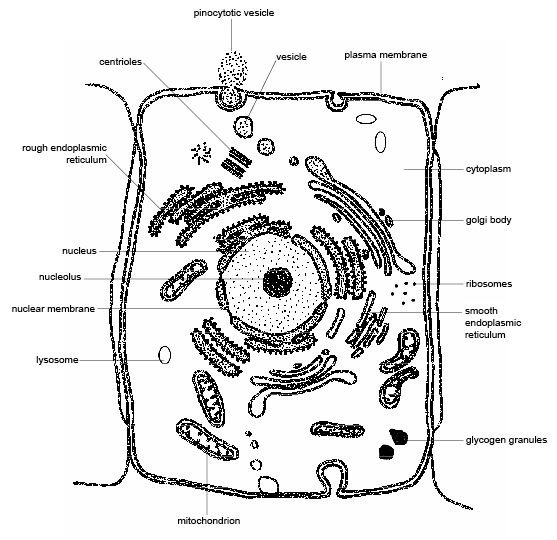
A cell is the smallest structural and functional unit of life, capable of carrying out all the basic processes that define something as living, including metabolism, growth, and reproduction. Every known living organism is composed of one or more cells, from single-celled bacteria to the roughly 37 trillion cells that make up an adult human body, and the cell theory, established in the nineteenth century, holds that all living things are made of cells, that the cell is the basic unit of life, and that cells arise only from pre-existing cells through division. Studying cells, a field called cell biology or cytology, has revealed the shared machinery underlying nearly all life on Earth. The English scientist Robert Hooke first coined the term cell in 1665 after observing the boxlike compartments of cork tissue under an early microscope, though it was not until nearly two centuries later that Matthias Schleiden and Theodor Schwann generalized the idea into a formal theory applying to all living organisms.
Prokaryotic versus eukaryotic cells
Biologists divide cells into two broad categories based on their internal organization. Prokaryotic cells, found in bacteria and archaea, are relatively simple and lack a nucleus or other membrane-bound organelles, with their genetic material floating freely within the cell. Eukaryotic cells, found in plants, animals, fungi, and protists, are typically larger and more complex, organizing their genetic material inside a membrane-bound nucleus and compartmentalizing other functions into specialized organelles such as mitochondria. The evolutionary transition from prokaryotic to eukaryotic cells, believed to have occurred roughly two billion years ago when one simple cell engulfed another that became its mitochondria, ranks among the most significant events in the history of life, since it is this endosymbiotic event, as biologists call it, that ultimately made possible the far greater complexity found in plants, animals, and every other eukaryotic organism alive today.
Key organelles and their functions
The nucleus, present in eukaryotic cells, houses the cell genetic material and directs most of its activities by controlling which genes are active at any given time. Mitochondria, often called the powerhouse of the cell, convert nutrients into adenosine triphosphate, the molecule cells use as their primary energy currency, through a process called cellular respiration. Ribosomes, found in both prokaryotic and eukaryotic cells, assemble proteins by reading instructions carried by messenger RNA. Plant cells additionally contain chloroplasts, which capture sunlight and convert it into chemical energy through photosynthesis, and a rigid cell wall that provides structural support absent in animal cells, which instead rely solely on a flexible outer cell membrane. The cell membrane itself, found in every type of cell, is built from a double layer of lipid molecules studded with proteins that control precisely which substances are allowed to enter or leave the cell at any given moment.
How cells reproduce and specialize
Cells reproduce through division, with most cells in the body undergoing mitosis, a process that produces two genetically identical daughter cells from a single parent cell, supporting growth and tissue repair. A separate process called meiosis produces reproductive cells, such as sperm and egg cells, that carry only half the usual amount of genetic material so that offspring receive a full set upon fertilization. In multicellular organisms, cells also specialize through a process called differentiation, in which cells with identical genetic material take on dramatically different structures and functions, becoming skin cells, nerve cells, or muscle cells depending on which genes are switched on or off during development.
Why the cell matters to modern science
Understanding cells underlies nearly every area of modern biology and medicine, since most diseases, including cancer, involve some breakdown in normal cellular processes such as division or energy production. Stem cell research exploits the ability of certain undifferentiated cells to develop into many different cell types, offering potential treatments for conditions ranging from spinal cord injury to diabetes, since these cells can in principle be directed to replace damaged tissue that the body cannot otherwise repair on its own. Cell biology also underpins biotechnology, since techniques such as recombinant DNA technology and gene editing, including tools such as CRISPR, all operate by manipulating processes that occur inside living cells, whether by inserting new genetic instructions or by correcting existing ones. The continued miniaturization of microscopy and genetic sequencing technology has allowed scientists to study individual cells in unprecedented detail, revealing that even cells of the same type can behave quite differently from one another, an insight that has given rise to an entire field known as single-cell biology devoted to cataloguing this previously invisible variation.
FAQs
What is the basic unit of life?
The cell is considered the basic structural and functional unit of life, since every known living organism is composed of at least one cell.
What is the difference between a prokaryotic and a eukaryotic cell?
Prokaryotic cells, found in bacteria and archaea, lack a nucleus and other membrane-bound organelles, while eukaryotic cells, found in plants, animals, and fungi, organize their genetic material inside a nucleus and compartmentalize functions into specialized organelles.
What do mitochondria do?
Mitochondria convert nutrients into adenosine triphosphate, the molecule cells use as their main energy source, through a process called cellular respiration, which is why they are often called the powerhouse of the cell.
How many cells are in the human body?
Estimates place the number at roughly 37 trillion cells in an average adult human body, though the exact figure varies depending on body size and the counting method used.
Key facts
- The basic structural and functional unit of all known life
- Cell theory holds all living things are made of cells arising from pre-existing cells
- Prokaryotic cells (bacteria, archaea) lack a nucleus; eukaryotic cells have one
- Mitochondria convert nutrients into ATP, the cell's energy currency
- Adult human body contains roughly 37 trillion cells
Quick checkWhat is the difference between mitosis and meiosis?Show answer
Mitosis produces two genetically identical daughter cells for growth and repair, while meiosis produces reproductive cells carrying half the usual genetic material.
Sources
- National Human Genome Research Institute, Cell; Britannica, Cell biology
Editorially reviewed by Specialty Digest Editorial TeamLast reviewed November 2, 2026Researched and drafted with AI assistanceReport an issue