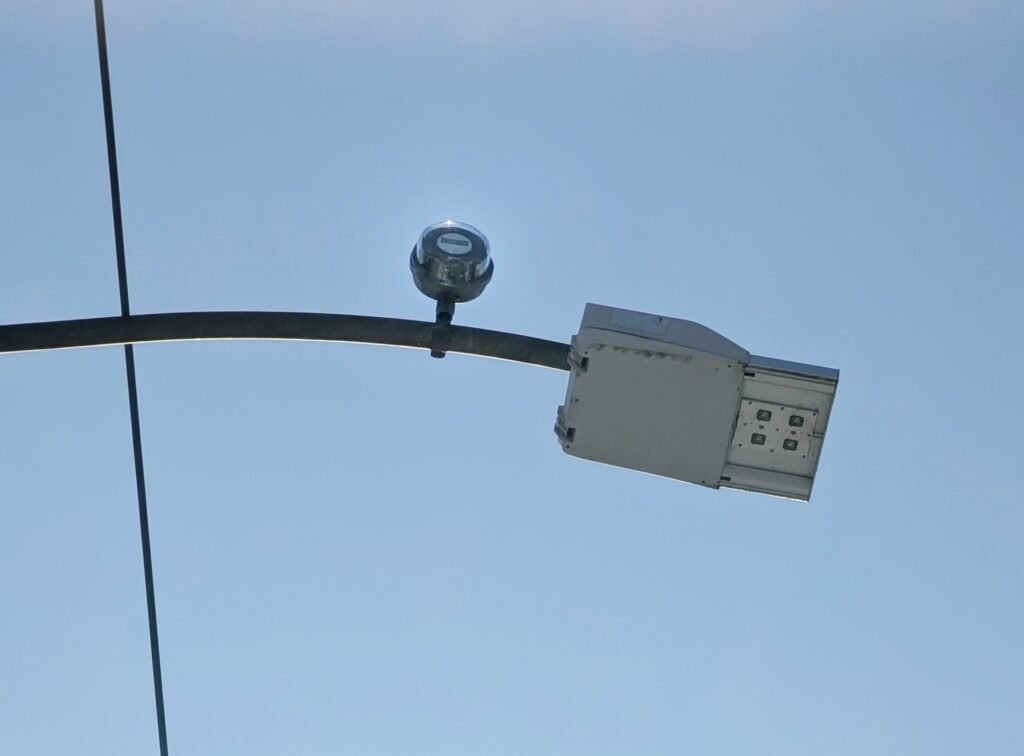
A smart city is an urban area that uses networked digital technology, sensors, and data analysis to monitor and manage its infrastructure, services, and resources more efficiently, with the stated goal of improving quality of life, reducing waste, and making municipal operations more responsive. The term covers an unusually broad range of applications, from traffic lights that adjust timing based on real-time congestion to citywide sensor networks tracking air quality, water leaks, and energy use, unified by the basic idea that collecting and acting on real-time data can make a city run better than relying on fixed schedules and periodic manual inspection alone.
Core Application Areas
Smart mobility is among the most visible smart city application, encompassing adaptive traffic signal systems, real-time public transit tracking, smart parking systems that direct drivers to open spaces, and increasingly the data infrastructure needed to support autonomous vehicles and shared micromobility. Smart utilities use networked meters and sensors to detect water leaks before they become major losses, balance electricity load across a smart grid, and optimize street lighting to dim automatically when streets are empty. Smart governance applications include digital permitting systems, 311-style service request platforms that let residents report problems and track resolution, and open data portals that publish city datasets for public and commercial use. Environmental monitoring networks track air quality, noise, and flood risk in near real time, feeding information back into both public alerts and long-term planning decisions.
Leading Examples
Singapore is frequently cited as one of the most comprehensively instrumented smart cities, running an extensive sensor network under its Smart Nation initiative that covers transportation, utilities, and public safety. Barcelona earned early recognition for its smart lighting, irrigation, and waste-collection systems, while South Korea’s purpose-built city of Songdo was designed from the ground up around integrated digital infrastructure rather than retrofitting an existing city. Many Western cities, including Amsterdam, Copenhagen, and several North American municipalities, have pursued more incremental smart-city programs layered onto existing infrastructure rather than building new cities outright, reflecting the much higher practical cost and political difficulty of retrofitting dense, already-built urban areas compared to designing a greenfield city from scratch.
Data, Privacy, and Governance Concerns
The same sensor networks and data collection that make smart city applications possible also raise significant privacy and governance concerns, since cameras, location tracking, and behavioral data collection at city scale create a surveillance infrastructure that can be repurposed well beyond its original traffic-management or utility-efficiency goals. Civil liberties advocates have pushed back against several proposed smart city projects specifically over concerns about who controls the resulting data, how long it is retained, and what access law enforcement or private corporate partners might gain to it. Toronto’s Sidewalk Labs project, a high-profile proposed smart neighborhood developed by a Google-affiliated company, was ultimately cancelled in 2020 following sustained public criticism over data governance, illustrating that technical feasibility alone does not guarantee a smart city project will proceed.
Equity and Practical Limits
Critics also note that smart city initiatives can disproportionately benefit wealthier, already well-served neighborhoods if sensor deployment and investment follow existing patterns of municipal spending, potentially widening rather than narrowing service gaps across a city. Smart city technology also depends on reliable internet connectivity and electrical infrastructure that not every neighborhood or every city can afford to deploy and maintain, meaning the same digital tools that promise efficiency gains can also become one more dimension along which better-resourced areas pull further ahead. Despite these tensions, municipal adoption of at least some smart city technology, particularly in traffic management and utility monitoring, has become close to standard practice among mid-size and large cities worldwide, even where more ambitious citywide integration projects remain rare.
Funding and Procurement Models
Smart city projects are funded and built through a variety of models, ranging from direct municipal capital budgets to public-private partnerships in which a private technology or infrastructure company installs and sometimes operates sensor networks in exchange for a long-term service contract or access to the resulting data. Some cities have pursued dedicated smart city bonds or grants from national infrastructure programs specifically earmarked for digital upgrades, while others roll smart technology into broader infrastructure replacement projects, such as installing networked streetlight controls at the same time old lighting fixtures are due for replacement anyway. The choice of funding and procurement model matters enormously for governance outcomes, since a public-private partnership that gives a private vendor ongoing control over collected data raises different accountability questions than a project funded and operated entirely through public capital budgets.
The 15-Minute City Concept
A related planning idea that has gained prominence alongside smart city technology is the 15-minute city, which aims to let residents reach most daily needs, work, groceries, schools, and healthcare, within a short walk or bike ride of home rather than relying on technology alone to manage traffic generated by longer car trips. Smart city sensor data has proven useful for testing and refining 15-minute city proposals, since planners can use real mobility data to identify which neighborhoods already function this way and which ones lack nearby services entirely. The two concepts are complementary rather than competing: smart technology manages the traffic and services that still exist within a city, while 15-minute city planning tries to reduce how much of that traffic needs to happen in the first place.
Several major cities have now formally adopted the 15-minute framework as an explicit planning goal rather than treating it as an informal aspiration.
Key facts
- Array
Quick checkWhy was Toronto's Sidewalk Labs smart city project cancelled?Show answer
The Google-affiliated project was cancelled in 2020 after sustained public criticism over who would control the data it collected and how it might be used beyond its original purpose.
Sources
- Array
Editorially reviewed by Specialty Digest Editorial TeamLast reviewed November 3, 2026Researched and drafted with AI assistanceReport an issue