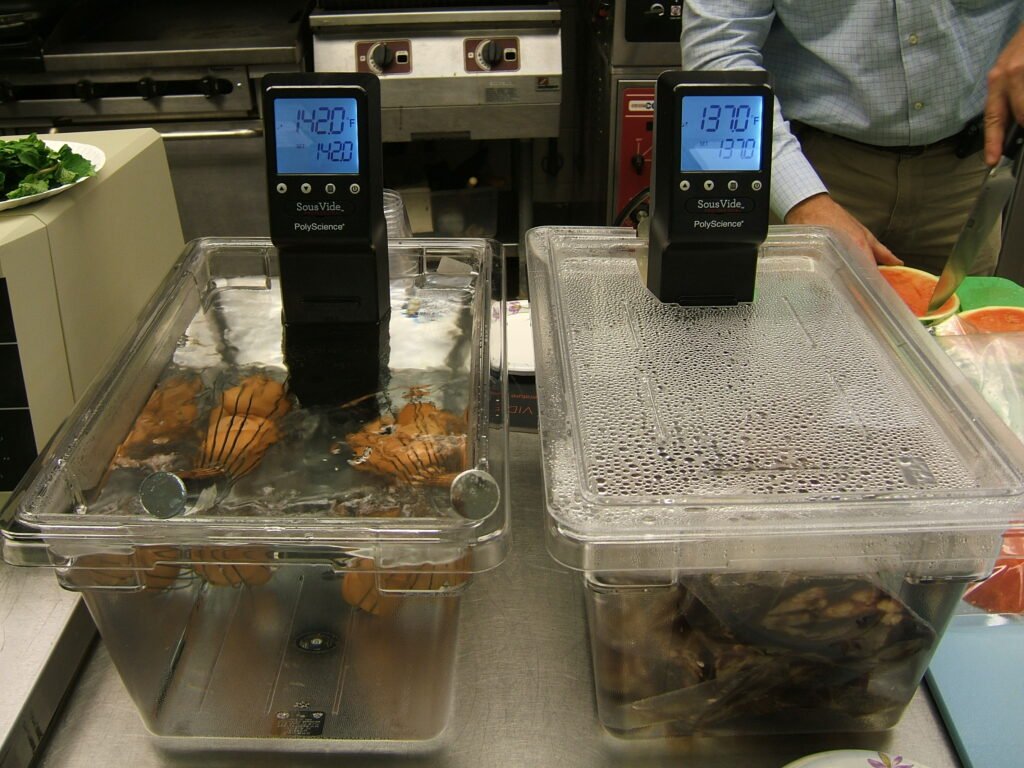
Sous vide, French for under vacuum, is a cooking technique in which food is sealed in an airtight bag and cooked for an extended period in a precisely controlled water bath held at a specific, relatively low temperature, allowing food to cook evenly throughout to an exact desired level of doneness without the risk of overcooking that higher, less controlled cooking temperatures can create. Originally developed in professional kitchens, sous vide equipment has become increasingly accessible to home cooks as prices for precision water bath devices have fallen substantially in recent years.
How Sous Vide Achieves Precise Doneness
Because sous vide cooking water temperature is held constant at the exact target temperature desired for the finished food, the food itself cannot exceed that temperature no matter how long it remains in the water bath, eliminating the risk of overcooking that occurs with conventional cooking methods where food continues cooking and can quickly pass the desired doneness point if not removed from heat at precisely the right moment. This characteristic makes sous vide particularly valuable for proteins such as steak, where achieving a precise, consistent level of doneness throughout an entire cut, from edge to center, is otherwise difficult to achieve reliably using conventional high-heat cooking methods.
The Vacuum Sealing Component
Sealing food in an airtight bag before sous vide cooking serves several purposes beyond the technique namesake vacuum removal of air, including preventing water from diluting flavors or affecting texture, allowing marinades, seasonings, and aromatics sealed in the bag to infuse the food more thoroughly during the extended cooking time, and ensuring even heat transfer by eliminating air pockets that could otherwise create inconsistent cooking within the sealed package. While true vacuum sealing using a dedicated vacuum sealer machine is common in professional and serious home cooking applications, a simplified water displacement method using a standard zip-top bag can achieve similar results for many home cooking applications without specialized equipment.
Finishing and Food Safety Considerations
Because sous vide cooking temperatures are often too low to produce browning or the Maillard reaction flavor development associated with seared or roasted food, many sous vide preparations, particularly meats, receive a brief high-heat finishing step, such as a quick sear in a very hot pan, immediately after the sous vide cooking process to develop a flavorful, browned exterior while preserving the precisely cooked interior. Food safety considerations are particularly important in sous vide cooking, since the technique often involves holding food at temperatures within a range where certain bacteria can grow if cooking time and temperature are not carefully calculated according to established food safety guidelines for the specific food and desired doneness level.
Commercial and Home Adoption
Sous vide cooking became widespread in professional restaurant kitchens particularly valuable for consistently producing large quantities of precisely cooked food, such as hundreds of identical steak orders during a busy dinner service, each cooked to exactly the same specified doneness regardless of order volume or kitchen chaos during peak service times. The technique subsequent spread to home kitchens has been driven largely by the declining cost and increasing convenience of consumer precision cooking devices, which have made what was once an exclusively professional technique accessible to home cooks interested in achieving restaurant-quality results for proteins and other foods that particularly benefit from sous vide precise temperature control.
Equipment Used in Sous Vide Cooking
Sous vide cooking requires a precision temperature control device, either a standalone water bath unit or an immersion circulator that clips onto an existing pot or container and circulates water to maintain uniform temperature throughout, paired with either a dedicated vacuum sealer or the simpler water displacement method using ordinary resealable bags for less demanding applications. Commercial kitchens often use larger-capacity water bath systems capable of cooking many portions simultaneously, while home cooking devices have become increasingly compact and affordable, contributing significantly to the technique growing popularity among home cooking enthusiasts over the past decade.
Texture and Flavor Outcomes Unique to Sous Vide
Sous vide cooking produces textural outcomes distinct from conventional cooking methods, often yielding notably tender results in tougher cuts of meat that benefit from extended cooking at precisely controlled lower temperatures, a process that can achieve tenderness comparable to traditional slow-cooking methods while still maintaining more control over final doneness than many conventional slow-cooking approaches allow. Some critics of the technique note that certain foods, particularly vegetables, can sometimes develop a texture some diners find less appealing than conventionally cooked versions, prompting chefs to carefully match sous vide application to foods where the technique genuine strengths, such as consistent doneness in proteins, outweigh any textural tradeoffs compared to traditional cooking methods.
Matching the technique to the right dish remains the key skill chefs develop when deciding where sous vide genuinely improves a final result.
Influence on Modern Restaurant Menus
Sous vide influence on contemporary restaurant cooking extends beyond kitchens that use the technique directly, since the precise, consistent doneness it popularized has raised general diner expectations for protein cookery across the industry, pushing even kitchens that rely on traditional methods to achieve comparably precise and consistent results through careful technique and temperature monitoring. This broader influence illustrates how a single technique, once primarily confined to high-end professional kitchens, can reshape culinary standards and expectations across the wider restaurant and home cooking landscape over time.
Key facts
- Array
Quick checkWhy does sous vide prevent overcooking food?Show answer
The water bath is held at the exact target temperature, so food cannot exceed that temperature no matter how long it remains in the bath.
Sources
- Array
Editorially reviewed by Specialty Digest Editorial TeamLast reviewed November 3, 2026Researched and drafted with AI assistanceReport an issue