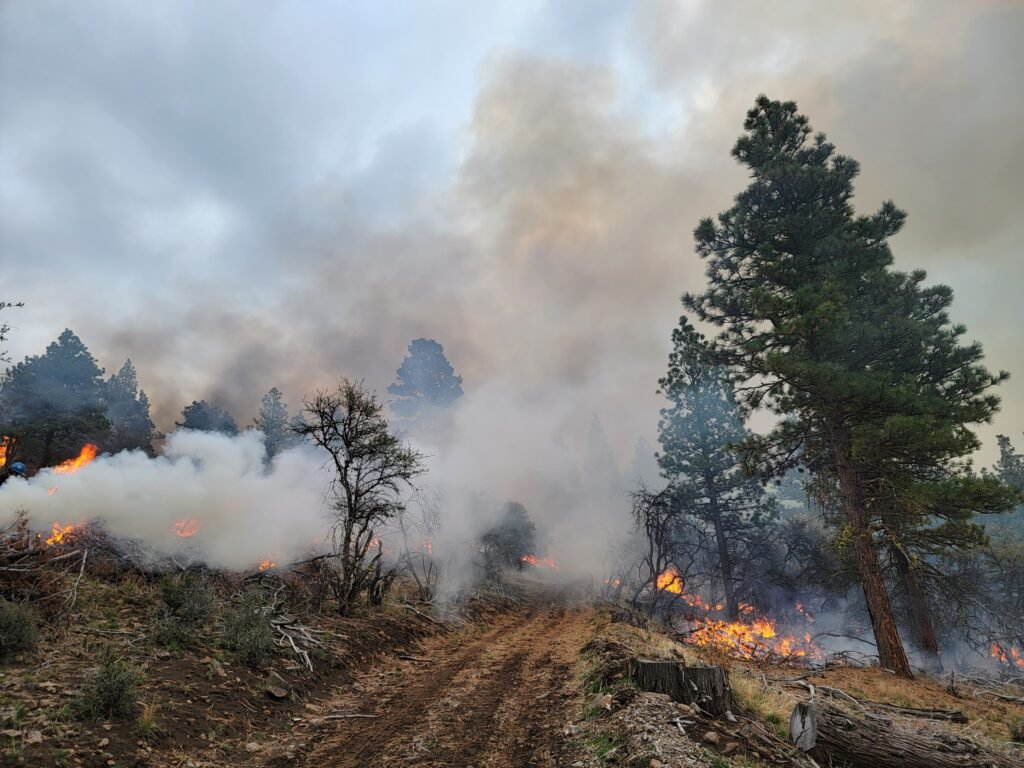
Prescribed burning is the deliberate, controlled application of fire to forest or grassland areas under carefully managed conditions to achieve specific ecological or land management objectives.
Ecological Objectives
Managers use prescribed fire to reduce accumulated dead vegetation and underbrush that could otherwise fuel a dangerous wildfire, to recycle nutrients into the soil, and to maintain fire-adapted ecosystems such as longleaf pine savannas and tallgrass prairies that depend on periodic burning to prevent encroachment by shade-tolerant competitors. Many plant and animal species native to fire-prone landscapes have evolved specific adaptations, such as thick bark or fire-triggered seed release, that depend on recurring low-intensity burns.
Planning and Execution
A prescribed burn is carried out according to a detailed written plan that specifies acceptable weather conditions, wind direction, humidity levels, and fuel moisture, since burning outside this narrow window can allow a fire to escape control or fail to achieve the intended ecological effect. Trained crews establish firebreaks, monitor weather continuously during the burn, and maintain suppression resources on standby in case conditions change unexpectedly.
Relationship to Wildfire Prevention
By periodically removing accumulated fuel in a controlled manner, prescribed burning reduces the intensity and spread potential of future wildfires, making it one of the most effective tools available for protecting communities and forests in fire-prone regions. Decades of fire suppression in some landscapes allowed fuel loads to build up far beyond historical levels, a legacy that prescribed burning programs are now working to gradually reverse.
Challenges and Public Acceptance
Smoke management, narrow weather windows, and the risk of an escaped fire all constrain how often and where prescribed burns can be conducted, and public concern over smoke or fire risk sometimes limits the scale of burning programs even where ecological need is clear. Agencies increasingly invest in public education campaigns to explain the long-term safety benefits of prescribed fire relative to the far greater risks posed by unmanaged fuel accumulation.
Seasonal Timing Considerations
Burn plans specify not just weather conditions but seasonal timing, since a burn conducted in early spring before new growth emerges produces different ecological effects than one conducted in late summer when vegetation is drier and fire behavior more intense. Some ecosystems, such as certain prairie and savanna types, respond best to burns timed to coincide with or precede the growing season of native fire-adapted plants, while discouraging fire-sensitive invasive species that lack the same adaptations.
Training and Certification of Burn Crews
Personnel conducting prescribed burns typically must complete specialized training and certification covering fire behavior, weather interpretation, and suppression techniques, since the margin for error in a controlled burn is narrow and the consequences of an escape can be severe. Agencies responsible for prescribed burning programs generally maintain strict qualification standards for burn bosses, the individuals with final authority over whether a planned burn proceeds on a given day.
Indigenous Fire Management Traditions
Many indigenous communities practiced deliberate, periodic burning of landscapes for thousands of years before modern fire suppression policy interrupted these traditions, using fire to manage game habitat, encourage useful plant growth, and reduce fuel loads long before the term prescribed burning existed. Growing recognition of this traditional knowledge has led some fire management agencies to partner directly with indigenous fire practitioners, blending traditional ecological knowledge with modern burn planning and safety protocols.
Measuring Ecological Outcomes
Researchers and land managers monitor burned sites afterward for indicators such as understory plant diversity, wildlife activity, and fuel load reduction, comparing these outcomes against unburned control areas to assess whether a given burn achieved its intended ecological goals. This monitoring feeds back into future burn planning, helping managers refine burn timing, frequency, and intensity for specific ecosystems over successive fire seasons.
As wildfire risk continues to grow in many fire-adapted landscapes, prescribed burning programs are increasingly viewed not as an optional management tool but as a necessary long-term investment in reducing the frequency and severity of future catastrophic fires.
Air Quality and Smoke Regulation
Because smoke from prescribed burns can affect air quality for nearby communities, many jurisdictions require burn permits that account for projected smoke dispersion, and burn managers coordinate timing with air quality agencies to avoid stacking smoke impacts on days when other burns or wildfires are already affecting regional air quality. This coordination has become increasingly important as prescribed burning programs expand in scale to address growing wildfire risk.
Funding and Resource Constraints
Prescribed burning programs often compete for the same limited personnel and equipment used for wildfire suppression, meaning agency budgets and staffing decisions directly affect how much prescribed burning can be accomplished in a given fire season, particularly during years when active wildfires draw resources away from planned burn operations.
Ultimately, the growing scale of prescribed burning programs reflects a broader shift in fire policy, from a near-exclusive focus on suppression toward a more balanced approach that treats fire as a tool to be managed rather than an enemy to be eliminated entirely.
Public trust built through transparent communication about both the risks and the long-term safety benefits of controlled fire remains as important to the future of prescribed burning programs as the technical fire science itself.
With wildfire seasons growing longer and more severe in many regions, prescribed burning’s role as a preventive tool is likely to keep expanding rather than remaining a niche practice confined to a handful of fire-adapted ecosystems.
Securing adequate, stable funding for fuel treatment and prescribed fire work, rather than funding fire response only after a catastrophic event occurs, remains one of the clearest policy levers available for reducing long-term wildfire risk.
Key facts
- Reduces fuel loads that could feed severe wildfires;Maintains fire-adapted ecosystems like longleaf pine savanna;Requires a detailed weather and fuel-moisture burn plan
Quick checkWhy is prescribed burning used as a wildfire prevention tool?Show answer
Because it removes accumulated fuel in a controlled way, reducing the intensity of future wildfires
Sources
- U.S. Forest Service fire management guidelines
Editorially reviewed by Specialty Digest Editorial TeamLast reviewed November 3, 2026Researched and drafted with AI assistanceReport an issue