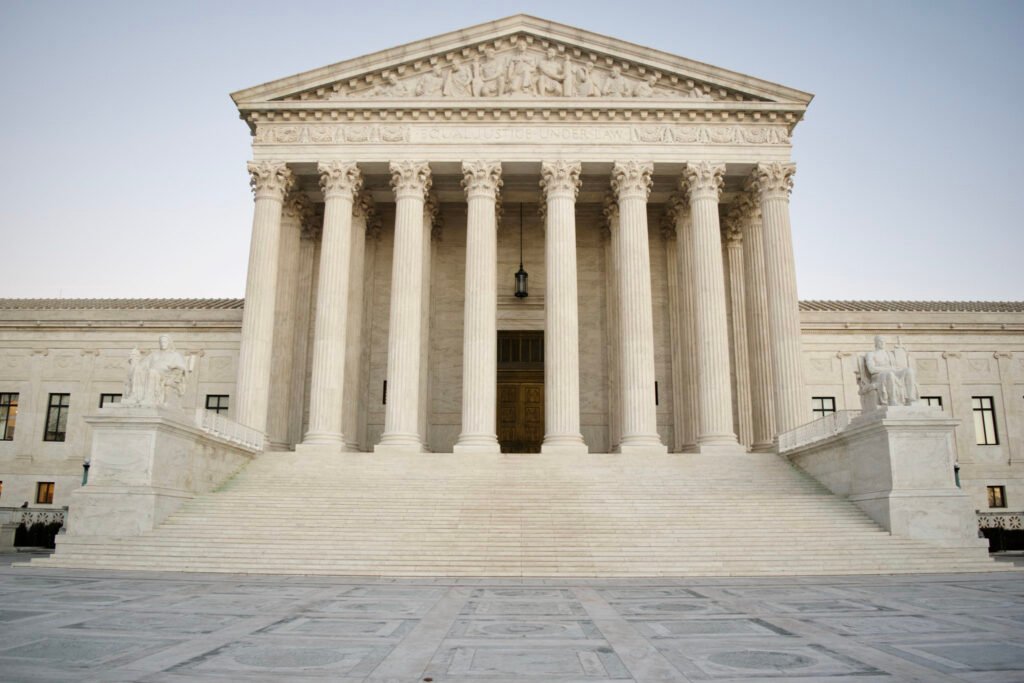
Prior restraint describes government efforts to stop speech before it reaches an audience, a practice that courts in many democracies view with deep skepticism.
A Strong Presumption Against It
Legal systems that protect press freedom generally require the government to meet an extremely high bar before a court will block publication in advance.
Landmark Cases
One of the most cited examples allowed a newspaper to publish a classified government study despite an attempt to halt publication, reinforcing the principle that subsequent punishment is preferred over advance censorship.
The Pentagon Papers Example
A widely studied case arose when a major newspaper obtained a classified government study detailing decisions behind a long and controversial war, and the government sought a court order blocking publication on national security grounds. The court ultimately sided with the newspaper, holding that the government had not met the extraordinarily heavy burden required to justify blocking publication in advance, a ruling that remains a central reference point in press freedom law.
National Security Claims
Governments most often invoke prior restraint in cases touching national security, arguing that publication would cause immediate and irreparable harm. Courts applying a strong presumption against prior restraint generally require concrete, specific evidence of grave harm rather than a general assertion that disclosure could be damaging, since vague claims could otherwise justify blocking almost any sensitive story.
Prior Restraint Outside National Security
Attempts at prior restraint also arise in other contexts, such as a business seeking to block a story it fears will damage its reputation, or an individual seeking to stop publication of embarrassing but true information. Courts in press-protective jurisdictions generally reject these requests too, directing the aggrieved party toward a defamation or privacy claim after publication rather than an injunction beforehand.
Chilling Effects of the Doctrine Itself
Even an unsuccessful attempt to obtain a prior restraint order can delay publication and impose significant legal costs on a news organization, which is one reason press advocates argue that the mere threat of such litigation can chill reporting on sensitive topics even when the underlying legal doctrine strongly favors the press.
Economic Considerations
Fighting a prior restraint request in court can be expensive and time-sensitive, often requiring emergency legal filings within hours, which means a well-resourced news organization is far better positioned to defend publication than a smaller outlet facing the same threat. This disparity has led some press organizations to offer emergency legal assistance specifically for prior restraint situations.
Looking Ahead
As information spreads instantly across borders through online platforms, a prior restraint order issued in one jurisdiction may have little practical effect if the material has already been published elsewhere, raising questions about how meaningful the doctrine remains in a globally connected media environment.
International Perspectives
Protection against prior restraint varies significantly from one legal system to another, with some countries embedding a strong presumption against advance censorship directly into constitutional law, and others permitting government bodies far greater latitude to block publication, particularly around matters labeled as national security or public order. Journalists working across borders sometimes face a situation where a story freely publishable in one country would trigger an immediate injunction request in another, forcing careful legal strategy about where and how a sensitive story is first released.
Related Specialties
Prior restraint doctrine connects closely with broader press freedom law, national security reporting, and defamation law, since all three areas ultimately address how far government and private parties may go in controlling what a news organization is permitted to publish.
Practical Guidance for Editors
When a government body or private party threatens legal action to block a story before publication, experienced editors typically move quickly to consult media counsel, document the newsroom reasoning for publishing, and resist informal pressure to delay a story indefinitely while a legal threat is evaluated. Many organizations maintain a relationship with a media law firm specifically so that an emergency legal response can be mounted on short notice if a prior restraint threat ever materializes close to a planned publication date.
Media scholars often note that the mere act of seeking a prior restraint order can generate far more public attention for the material in question than the original story would have received on its own, a phenomenon sometimes described informally as drawing extra attention to exactly the information a party hoped to suppress by going to court in the first place.
Editors who have lived through a serious prior restraint dispute often describe it as one of the most stressful experiences of a career, combining tight legal deadlines with intense pressure from both the newsroom and outside counsel to make the right call under enormous time pressure.
A newsroom that has rehearsed its response to a prior restraint threat in advance, through a tabletop exercise with legal counsel, tends to respond far more calmly and effectively than one encountering the situation completely cold for the first time.
A story that survives a serious prior restraint challenge intact often becomes a reference point newsroom lawyers cite for years afterward when advising on similarly difficult publication decisions.
A newsroom that documents its publication reasoning at the time a decision is made, rather than reconstructing it afterward, is far better positioned if that decision is later challenged in court.
A single well-argued court ruling against a prior restraint request can discourage similar attempts for years afterward, shaping how aggressively future parties pursue the same legal strategy.
A newsroom that wins a prior restraint fight still absorbs real cost in time, legal fees, and delayed publication, even when the final outcome favors the press.
Key facts
- Array
Quick checkHow does prior restraint differ from punishing speech after publication?Show answer
Prior restraint blocks speech before it happens, while subsequent punishment allows publication to occur and addresses it afterward through penalties or liability.
Sources
- Array
Editorially reviewed by Specialty Digest Editorial TeamLast reviewed November 3, 2026Researched and drafted with AI assistanceReport an issue