Specialty Digest

DISCOVER IDEAS THAT SHAPE OUR WORLD

Section

Entrepreneurship

The latest Specialty Digest coverage in Entrepreneurship.

Entrepreneurship

Entrepreneurship
A solo founder works on a laptop, bootstrapping a startup without outside investors.

What Is Bootstrapping a Startup?

Bootstrapping means funding a startup through customer revenue, personal savings, credit cards, or other self-generated resources instead of raising money from outside investors like venture capital firms or angel investors. Companies like Mailchimp, Basecamp, and Zapier all built billion-dollar-plus businesses this way in their early years, growing on their own money and their customers’ money


What Is Bootstrapping a Startup? Read More »

No investors, no board, no outside cash: how founders build companies on their own money and their customers' money.

Entrepreneurship
Two entrepreneurs discuss their business plan over coffee at a cafe table.

How Do You Actually Write a Business Plan?

Writing a business plan means picking a format that matches your goal — a detailed traditional plan for lenders and careful planners, or a one-page lean plan for founders who need to move fast — and then using that document to answer four hard questions about your people, your market, your environment, and your real

How Do You Actually Write a Business Plan? Read More »

Forget the hundred-page binder: the SBA and Harvard Business Review agree that a good business plan is about clear thinking, not paperwork.

Entrepreneurship
A group of founders meets around a table to discuss plans for their minimum viable product.

What Is a Minimum Viable Product?

A minimum viable product is not a stripped-down, buggy version of a real idea — it’s a deliberate experiment built to answer one question as cheaply as possible: will anyone actually want this? The “minimum” refers to effort, not quality, and the “viable” half of the phrase matters just as much as the first. Where

What Is a Minimum Viable Product? Read More »

The startup world's most misunderstood term, explained: why an MVP is about learning fast, not shipping small.

Entrepreneurship
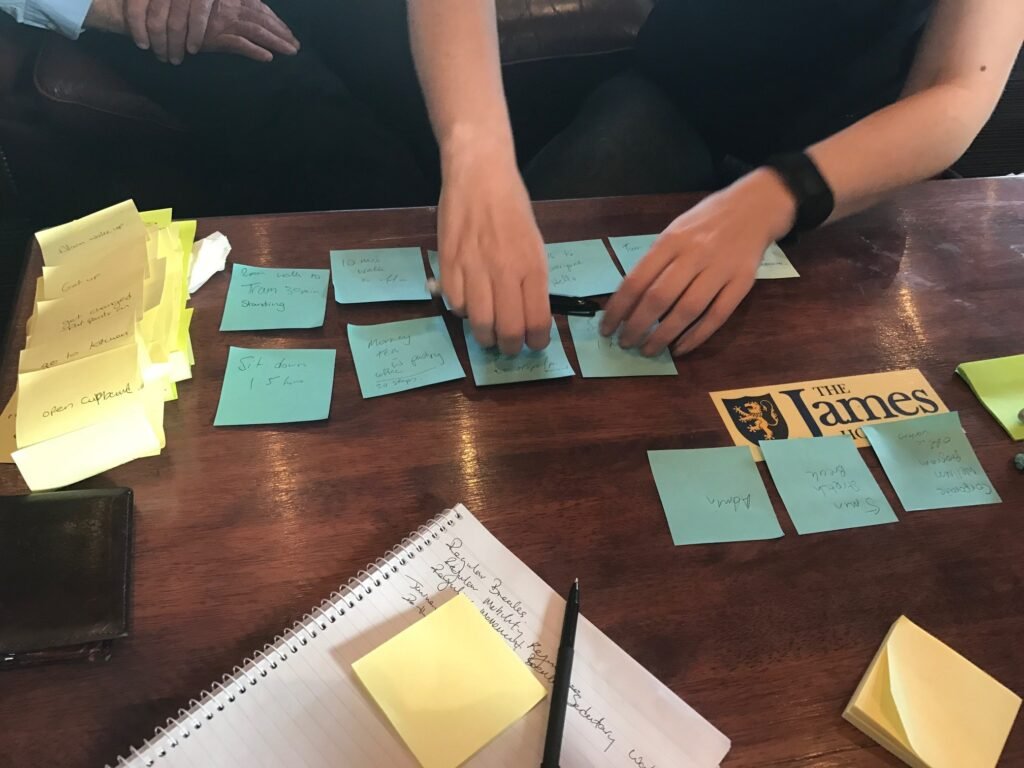
A team reviewing customer feedback and sticky notes while validating an early business idea.

How Do You Validate a Business Idea Before You Build It?

You validate a business idea by finding out whether real people will change their behavior, and ideally hand over money, before you spend months building anything. Most startups fail for a quieter reason than a bad product: nobody wanted it, and that fact does not surface until the founder has already spent the time and

How Do You Validate a Business Idea Before You Build It? Read More »

Most startups do not fail on execution — they fail because nobody wanted it. Here is how to find that out before you spend months building.

Entrepreneurship
Small team of founders and early employees collaborating around a laptop in an early-stage startup workspace

Founders Should Worry Less About Their Pitch and More About Their First Ten Customers

The obsession with fundraising narrative often crowds out the harder, more useful work — the unglamorous job of getting ten strangers to pay for something that doesn’t fully work yet. Spend a few hours in any early-stage accelerator and you’ll notice the imbalance immediately: founders can recite their fundraising narrative — market size, wedge, moat

Founders Should Worry Less About Their Pitch and More About Their First Ten Customers Read More »

The obsession with fundraising narrative often crowds out the harder, more useful work.