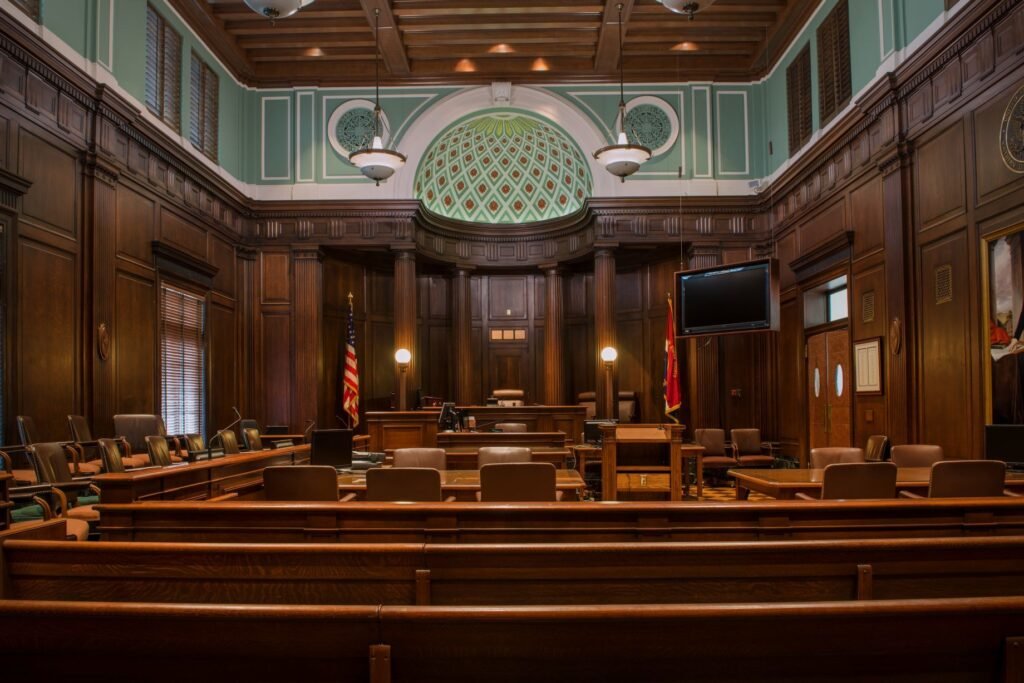
The U.S. court system actually runs as two separate systems working in parallel — a federal judiciary and 50 individual state judiciaries — and which one handles a given case depends entirely on what kind of legal question is being asked. Almost every dispute in the country, from a speeding ticket to a constitutional challenge, has to find its way through one of these two tracks.
Why there are two court systems, not one
State courts handle the overwhelming majority of legal matters: most criminal cases, family law, probate, contract disputes and personal injury claims. Federal courts have a narrower, specific job. According to the U.S. Courts website, they hear cases involving the U.S. Constitution, federal laws and treaties, disputes between states, bankruptcy, and cases where the federal government itself is a party. The two systems overlap only at the edges, mainly when a state court case raises a federal constitutional question. That split isn’t a historical accident; it’s built into the Constitution’s balance between federal and state power, and it means the specific court a case lands in can shape the outcome, from which laws apply to how long the process takes.
How the federal courts are structured
The federal judiciary has three tiers. At the bottom are 94 U.S. district courts, spread across the states and territories, where federal trials actually happen — juries hear evidence, witnesses testify, and judges rule on the law. Above them sit 13 U.S. courts of appeals, or circuit courts, which don’t retry cases but instead review whether the district court applied the law correctly. At the top is the U.S. Supreme Court, the only court created directly by the Constitution, which has the final word on federal law but hears only a small fraction of the cases it’s asked to review each year.
How a case actually moves through the system
A federal case typically starts in a district court, where it’s tried and decided. The losing side can appeal to the circuit court covering that district, which reviews the trial record for legal errors rather than re-hearing testimony. From there, a party can ask the Supreme Court to take the case, but the Court accepts only a small number of the thousands of petitions it receives every year, reserving its limited attention for cases of major legal significance or where lower courts disagree with one another. State systems generally mirror this same trial → appeal → state supreme court structure, just under different names in different states, so the shape of the process is more consistent nationwide than the labels suggest.
How judges get to the bench
The path to the bench differs sharply between the two systems. Federal judges are nominated by the President and confirmed by the Senate, and once confirmed, they serve for life during “good behavior” — a design meant to insulate their rulings from political pressure. State judges reach the bench through a much wider variety of methods: some are elected directly by voters, some are appointed for fixed terms, and some are appointed for life, depending on each state’s constitution. That difference reflects a basic split in philosophy: federal courts are built for independence from politics, while many state systems build in direct accountability to the public that elects them.
For most people, a legal problem will never leave the state system. But when a case touches federal law or the Constitution, it can climb from a local courthouse all the way to the nation’s highest court — a journey the framers built in as one more check on how the law actually gets applied.