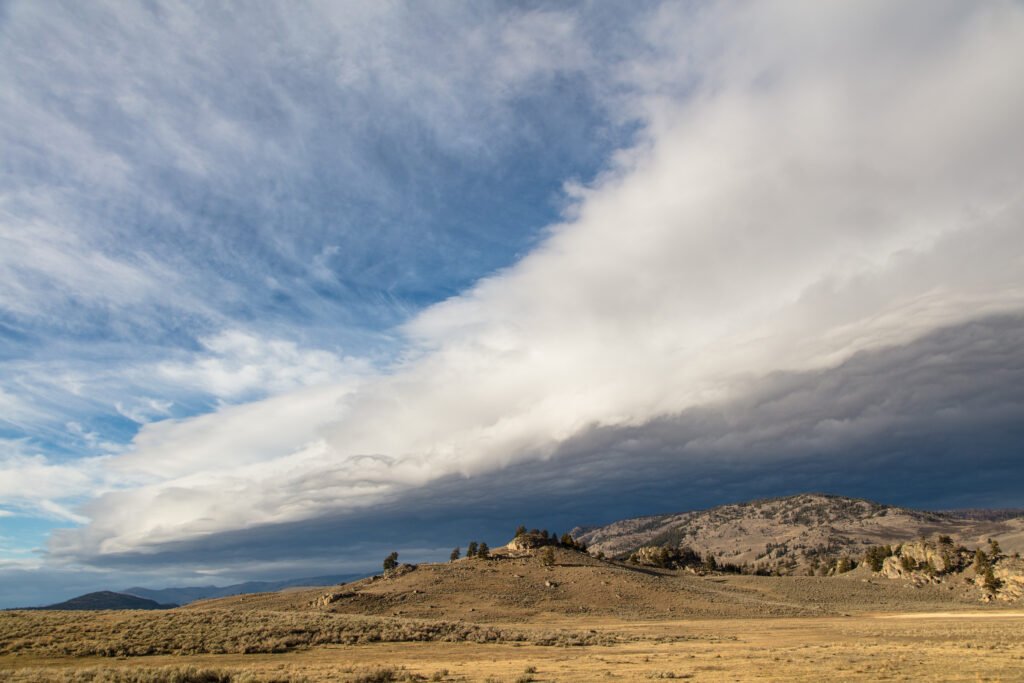
Weather is the short-term condition of the atmosphere — what’s happening right now or in the next few days — while climate is the average of that weather over decades at a given location. As the National Oceanic and Atmospheric Administration puts it, “climate is what you expect, weather is what you get,” and mixing the two up is why a single blizzard or a single heat wave so often gets misread as proof of something about the planet’s long-term trend.
Weather Changes by the Hour, Climate by the Decade
Weather is defined by how fast it moves. Conditions can shift from minute to minute, hour to hour, and season to season, according to NOAA, which is why a forecast is only reliable a few days out even with satellites and radar. Climate, by contrast, is calculated over 30 years or more, according to the National Environmental Satellite, Data, and Information Service (NESDIS). That 30-year window smooths out any single freak storm or unusually mild winter, leaving behind the pattern those events happened within.
Scale Matters as Much as Time
The two concepts also differ in geographic reach. Weather can vary block to block — one side of a city gets a downpour while a few miles away stays dry. Climate operates at a regional or zonal scale, shaped by consistent factors like latitude, elevation, and ocean currents, which is how deserts, rainforests, and tundra come to occupy predictable bands across the globe. NESDIS points to Hawaii’s Big Island as an extreme example: despite covering only about 4,000 square miles, its mountains create ten or eleven distinct climate zones, from dry lava fields to rainforest, because elevation changes the long-term averages so sharply within a small area.
Why Confusing the Two Distorts the Bigger Picture
This is where mixing them up causes real damage to public understanding. A single cold snap says nothing about the 30-year trend, just as a single heat wave doesn’t prove it either; climate scientists look at the accumulated record, not any one data point, before describing a shift in the pattern itself. Record highs and lows are themselves climate data, compiled over time, which is why meteorologists can call a given day “record-setting” only by comparing it to a long historical baseline, not to yesterday’s forecast.
A Quick Way to Keep Them Straight
A useful habit is to ask what timescale a claim is really about. If someone points to today’s forecast, they’re describing weather. If they’re pointing to how a region’s temperatures or rainfall have shifted over 30 years, they’re describing climate. Both are real, both are useful, and neither one substitutes for the other — which is exactly why NOAA keeps repeating the distinction to students and journalists alike.
- NOAA Ocean Service, “What is the difference between weather and climate?” Article.
- NOAA National Environmental Satellite, Data, and Information Service (NESDIS), “What’s the Difference Between Weather and Climate?” Article.
- Photo: Jacob W. Frank / National Park Service, Public Domain, via Wikimedia Commons.