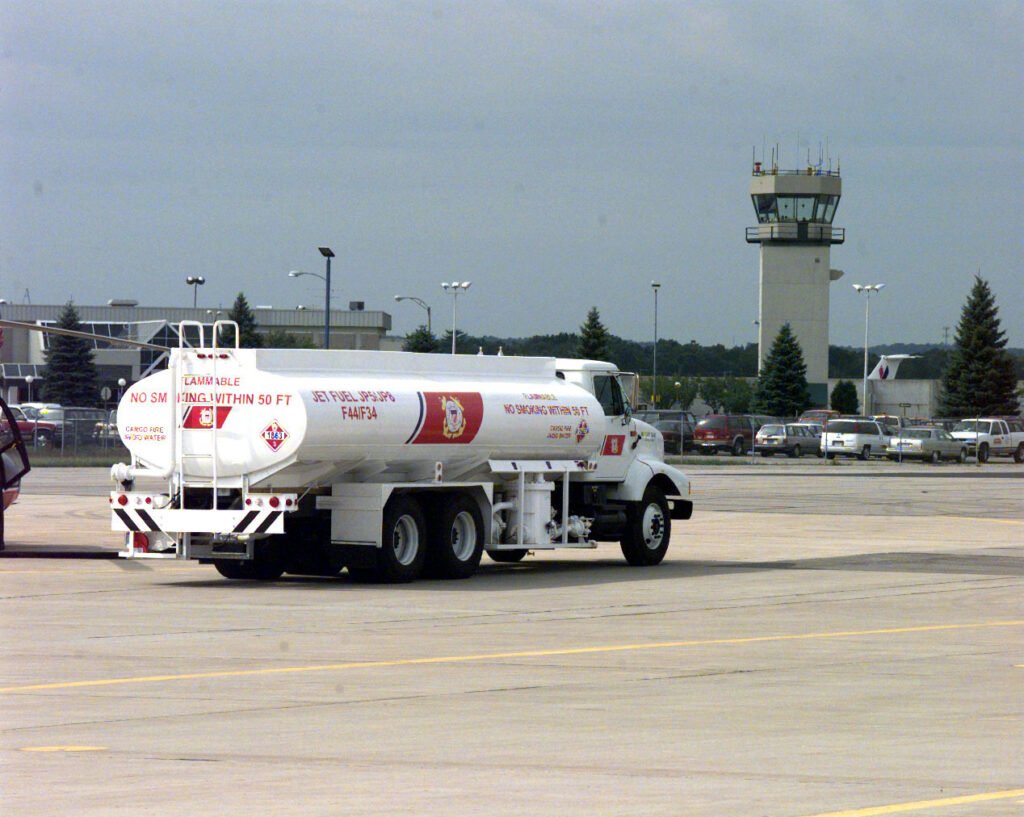
Types of Aviation Fuel
Aviation fuel comes in two main categories suited to different aircraft engine types. Jet fuel, a kerosene-based fuel most commonly designated Jet A, powers the turbine engines used by commercial airliners, business jets, and most helicopters. Aviation gasoline, commonly called avgas, is a specially formulated high-octane gasoline used in the piston engines found in smaller general aviation aircraft.
Fuel as an Airline Operating Cost
Fuel represents one of the largest operating expenses for commercial airlines, often rivaling or exceeding labor costs depending on fuel price fluctuations. Airlines closely monitor fuel efficiency across their fleets and have driven demand for newer, more fuel-efficient aircraft designs partly to reduce this significant and often volatile cost category.
Fuel Hedging
Many airlines use financial hedging strategies to manage exposure to volatile jet fuel prices, locking in future fuel costs through financial contracts to provide more predictable budgeting even when actual market fuel prices fluctuate significantly. The effectiveness of fuel hedging varies, and poorly timed hedges have at times cost airlines more than simply paying market prices.
Sustainable Aviation Fuel
Sustainable aviation fuel, produced from renewable feedstocks rather than petroleum, is increasingly promoted as a way to reduce aviation’s carbon emissions without requiring entirely new aircraft or engine designs, since it can often be blended with conventional jet fuel and used in existing aircraft. Production volumes remain limited relative to total aviation fuel demand, and cost remains higher than conventional jet fuel.
Fuel Efficiency and Aircraft Design
Aircraft manufacturers continuously pursue fuel efficiency improvements through lighter airframe materials, more aerodynamically efficient wing designs, and more fuel-efficient engines, since even small percentage gains in fuel efficiency translate into substantial cost savings across an airline’s fuel bill given how much fuel a large fleet consumes over a year.
Fuel Supply Chain and Airport Infrastructure
Jet fuel must be transported to airports and stored in large quantities, requiring dedicated fuel farms, pipeline connections, or trucking delivery systems at major airports, with fuel supply reliability becoming a critical operational concern particularly at airports with limited storage capacity or remote locations far from refining infrastructure.
Fuel Price Volatility and Airline Planning
Jet fuel prices track global crude oil markets closely, and the resulting volatility makes fuel one of the most unpredictable major cost categories airlines must plan around, prompting many carriers to build fuel price scenarios directly into their route planning and fleet investment decisions.
Fuel Quality Control and Testing
Aviation fuel undergoes rigorous quality testing and contamination control throughout the supply chain, from refinery production through storage and final delivery to an aircraft, since fuel contamination or quality issues could cause engine failure in flight, making fuel quality assurance a critical safety function rather than a purely commercial concern.
Alternative and Electric Propulsion Research
Beyond sustainable aviation fuel, researchers and manufacturers are also exploring hydrogen and battery-electric propulsion for smaller aircraft, though significant technical hurdles around energy density and range currently limit these alternatives mainly to short-haul and smaller aircraft applications rather than long-haul commercial flights.
Fuel Tankering Practices
Some airlines practice fuel tankering, carrying extra fuel on a flight to avoid refueling at a destination airport with higher fuel prices, a practice that can reduce fuel costs but also increases aircraft weight and therefore fuel burn on that flight, requiring airlines to calculate carefully whether the practice actually saves money on a given route.
Airline Fuel Conservation Programs
Many airlines run dedicated fuel conservation programs covering practices such as optimized flight routing, reduced aircraft weight through lighter cabin equipment, and more efficient taxi and approach procedures, treating fuel efficiency as an ongoing operational discipline rather than solely a function of aircraft and engine technology choices.
Regional Variation in Fuel Costs
Jet fuel prices vary meaningfully by region and airport due to differences in local taxes, supply infrastructure, and transportation costs to reach a given airport, a variation that airlines factor into decisions about fuel tankering and route planning on a route-by-route basis.
Fuel and Aircraft Range Planning
Fuel capacity and weight directly determine an aircraft’s maximum range, requiring airlines to balance how much fuel, cargo, and passenger weight an aircraft carries on a given route, since maximum takeoff weight limits mean extra fuel for range can sometimes come at the cost of reduced payload capacity.
Fuel Taxation and Policy
Aviation fuel taxation varies significantly across jurisdictions, with international flights historically benefiting from fuel tax exemptions under longstanding international aviation agreements, though growing attention to aviation emissions has prompted some governments and regions to reconsider these traditional tax treatment arrangements.
Fuel Procurement Strategies
Airlines negotiate fuel supply contracts across their network of destination airports, balancing the advantages of large centralized contracts against the flexibility of sourcing fuel from multiple suppliers, decisions that interact closely with an airline’s broader fuel hedging and tankering strategies.
Outlook for Aviation Fuel
Growing investment in sustainable aviation fuel and efficiency technology is likely to shape aviation fuel strategy for years to come, even as conventional jet fuel remains dominant for the foreseeable future.
Balancing cost, reliability, and emissions considerations will likely keep fuel strategy near the top of airline operational priorities for the foreseeable future.
How airlines navigate this balance will shape both ticket prices and environmental outcomes across the industry in the years ahead.
That balance will likely define the next era of commercial flight.
Airlines, regulators, and fuel producers will all play a role in how that balance ultimately unfolds.
Each incremental step toward more sustainable and efficient fuel use adds up across an industry operating at this global scale.
Key facts
- Array
Quick checkWhat is the difference between jet fuel and aviation gasoline?Show answer
Jet fuel is a kerosene-based fuel for turbine engines used by most commercial aircraft, while aviation gasoline is a specially formulated gasoline for piston engines in smaller aircraft.
Sources
- Array
Editorially reviewed by Specialty Digest Editorial TeamLast reviewed November 4, 2026Researched and drafted with AI assistanceReport an issue