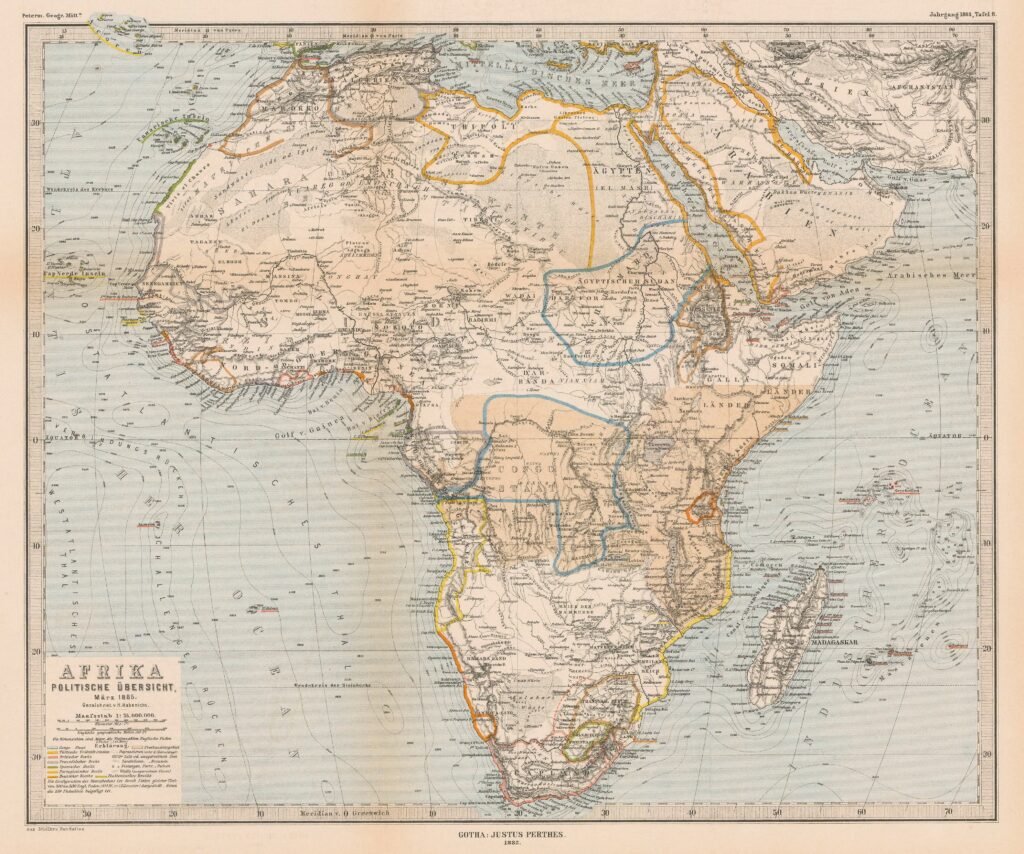
Colonialism is the practice by which a state extends political, economic, and often settlement control over a foreign territory and its people, typically subordinating the colonized population’s own institutions, resources, and sovereignty to the interests of the colonizing power. It is closely related to, but not identical with, imperialism, a broader term for domination of one state or people over another that does not always involve direct settlement or formal colonial administration.
Major waves of colonialism reshaped much of the world between the fifteenth and twentieth centuries. European powers, including Spain, Portugal, Britain, France, and the Netherlands, established colonies across the Americas beginning in the late fifteenth century, followed by extensive colonization of Africa and Asia that intensified particularly during the nineteenth century, a period often called the “Age of Empire” or, in Africa’s case, the “Scramble for Africa” following the 1884-85 Berlin Conference, where European powers formally divided much of the African continent among themselves with little regard for existing political or ethnic boundaries.
Mechanisms of Control
Colonial powers governed their territories through varying mechanisms. Direct rule placed colonial officials from the ruling country in charge of local administration, while indirect rule governed through existing local leaders and institutions, co-opted to serve colonial interests, a method Britain used extensively in parts of Africa and India. Both approaches typically involved extracting resources and labor from colonized territories, whether through plantation agriculture, mineral extraction, forced labor systems, or taxation designed to push colonized populations into wage labor or cash-crop production that benefited the colonial economy.
Colonial rule also frequently involved deliberate efforts to reshape colonized societies culturally and religiously, including the spread of the colonizer’s language, legal systems, and often Christian missionary activity, sometimes alongside active suppression of local languages, religions, and customs. These efforts varied significantly in intensity and approach across different colonial powers and territories, but they left lasting linguistic, legal, and institutional legacies still visible in many formerly colonized countries today.
Resistance and Decolonization
Colonial rule faced resistance throughout its history, ranging from localized uprisings to organized independence movements, though the pace and success of resistance varied considerably by region and period. Decolonization accelerated dramatically after World War II, which had weakened European colonial powers economically and militarily while also undermining the ideological legitimacy of empire, particularly as colonized soldiers who had fought for the Allies returned home demanding the same rights and self-determination promised in wartime rhetoric. Most former colonies in Asia and Africa achieved formal independence between the late 1940s and the 1970s, though the process was frequently accompanied by violence, partition, and long-term political instability tied directly to how colonial borders and institutions had been constructed.
Postcolonial Theory
Scholars working in postcolonial theory, including Frantz Fanon, Edward Said, and later theorists such as Gayatri Chakravorty Spivak, have analyzed colonialism’s lasting effects on formerly colonized societies, examining how colonial-era power structures, economic dependencies, and ways of representing colonized peoples have persisted well beyond formal independence. Said’s concept of “Orientalism,” for instance, describes how Western scholarship and culture historically constructed distorted, often demeaning images of colonized Eastern societies that served to justify colonial domination. This body of scholarship argues that understanding global inequality, migration patterns, and even contemporary international relations requires grappling seriously with colonialism’s long historical shadow rather than treating it as a closed chapter.
Settler Versus Extractive Colonialism
Historians commonly distinguish between settler colonialism, in which colonizing populations migrated in large numbers and sought to permanently replace or displace Indigenous populations on the land, as occurred across much of the Americas, Australia, and parts of southern Africa, and extractive or exploitation colonialism, in which a smaller colonial administration and workforce focused primarily on extracting resources, labor, and trade value from a territory without large-scale permanent settlement, a pattern more typical of much of colonial Africa and Asia. These categories are not absolute, and many colonial territories combined elements of both approaches at different times, but the distinction matters for understanding the very different long-term demographic, political, and economic legacies colonialism left behind in different parts of the world.
Economic historians continue to debate colonialism’s precise long-term economic effects on both colonizing and colonized societies. Some argue that colonial extraction significantly enriched European economies and financed their industrial development, while others emphasize that the relationship was more complex and varied enormously by time, place, and colonial policy. What is less disputed is that colonial-era borders, infrastructure built primarily to serve extraction rather than local development, and institutions designed around colonial rather than local interests left many formerly colonized nations facing distinct structural challenges after independence, challenges that scholars argue are still relevant to understanding global economic inequality today.
FAQs
How does colonialism differ from imperialism?
Colonialism specifically involves establishing direct control and often settlement over a foreign territory, while imperialism is a broader term covering domination of one state over another that does not always involve direct colonial administration.
What was the Berlin Conference?
A meeting of European powers in 1884-85 that formalized the division of African territory among colonial powers, largely without regard to existing African political or ethnic boundaries.
What accelerated decolonization after World War II?
The war weakened European colonial powers economically and militarily, undermined the ideological justification for empire, and emboldened colonized populations, including returning soldiers, to demand independence.
What is “Orientalism” in postcolonial theory?
A concept developed by Edward Said describing how Western scholarship and culture historically constructed distorted images of colonized Eastern societies that helped justify colonial domination.
Quick checkHow does colonialism differ from imperialism?Show answer
Colonialism specifically involves establishing direct control and often settlement over a foreign territory, while imperialism is a broader term for domination that does not always involve direct colonial administration.
Editorially reviewed by Specialty Digest Editorial TeamLast reviewed November 2, 2026Researched and drafted with AI assistanceReport an issue