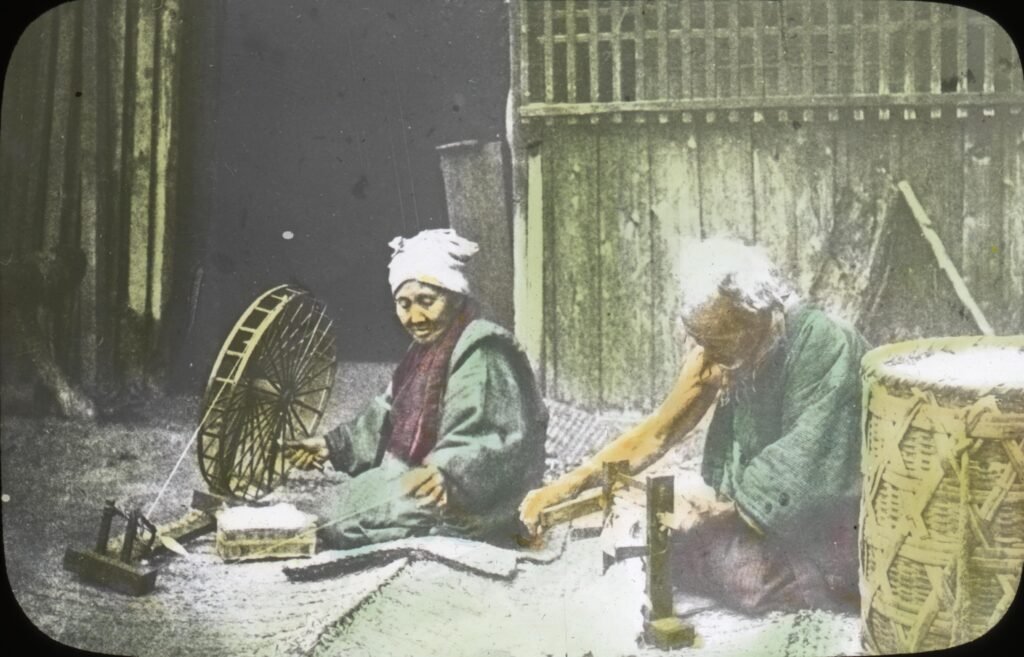
The Industrial Revolution was the transition from hand production and agrarian economies to machine-based manufacturing and factory systems, beginning in Britain in roughly 1760 and spreading through Europe and North America over the following century. It transformed how goods were made, how people worked and lived, and how economies grew, marking one of the most consequential turning points in human economic history.
Britain’s early lead is generally attributed to a combination of advantages: substantial coal and iron deposits that could fuel new machinery, capital accumulated through trade and colonial commerce, a labor force freed from some feudal constraints and available for wage work, and relatively stable political institutions that protected property rights and encouraged investment. Agricultural improvements in the preceding century had also increased food production, freeing up labor that might otherwise have remained tied to subsistence farming and allowing a growing population to move into industrial and urban work.
Key Innovations
The steam engine, improved significantly by James Watt in the 1760s and 1770s, became the period’s defining technology, providing a reliable, portable power source that did not depend on the location of rivers, the strength of wind, or the limits of animal and human muscle. Steam power drove new machinery in textile mills, where mechanized spinning and weaving dramatically increased cloth production while reducing the labor and time required, and later powered railways and steamships that transformed transportation and trade across entire continents. Iron and, later, steel production scaled up alongside these innovations, providing the raw material for machinery, railways, and the new factory buildings themselves.
These technologies reinforced one another in ways that accelerated change further. Cheaper, faster transportation via railways widened markets for factory-made goods, while growing factory output increased demand for coal, iron, and the machinery needed to extract and process them. This self-reinforcing cycle of innovation, production, and expanding markets is part of why the Industrial Revolution produced sustained economic growth of a kind not seen in earlier periods of human history.
Factories, Cities, and a New Working Class
The shift to factory production reorganized where and how people worked. Rather than producing goods at home or in small workshops on their own schedule, workers increasingly labored in large factories under fixed hours, close supervision, and standardized tasks, often for long shifts of twelve hours or more, under difficult, loud, and sometimes dangerous conditions. This drew huge numbers of people from rural areas into rapidly growing industrial towns and cities, producing severe overcrowding, poor sanitation, and public health crises that city governments initially struggled to address.
These conditions also gave rise to a distinct industrial working class, whose shared experience of factory labor eventually fueled organized responses, including early labor unions, strikes, and political movements demanding better wages, safer conditions, and limits on working hours, particularly for children, who were widely employed in early factories and mines. Reform legislation gradually followed over the nineteenth century, regulating child labor, working hours, and factory safety, though enforcement and the pace of improvement varied considerably from one country and industry to the next.
A Second Wave of Change
Historians often distinguish this first phase, centered on steam, textiles, coal, and iron, from a “Second Industrial Revolution” beginning around 1870, which introduced steel production at a much larger scale, electricity, the internal combustion engine, and chemical manufacturing, alongside new organizational methods like mass production and the assembly line. This second wave, centered increasingly in the United States and Germany as well as Britain, extended industrialization’s reach even further and laid the groundwork for the mass-production, consumer-driven economies that would define much of the twentieth century.
Global Reach and Lasting Costs
Industrialization did not develop in isolation. Britain’s factories depended heavily on raw materials, especially raw cotton, sourced from colonial and other overseas territories, and colonial markets provided outlets for manufactured goods in return, tying industrial growth closely to the broader structures of colonialism and global trade that were expanding at the same time. As other nations industrialized over the nineteenth century, competition for raw materials, markets, and strategic advantage became an important driver of imperial expansion, particularly in Africa and Asia, linking industrial and colonial history closely together.
The environmental and social costs of this transformation were substantial and are now widely studied alongside its economic benefits. Coal-burning factories and dense urban populations produced severe air and water pollution in industrial cities, while the long-term reliance on fossil fuels established during this period laid the foundation for the carbon emissions driving modern climate change. Historians continue to debate how evenly the benefits of industrialization were distributed between factory owners, workers, and colonized populations supplying raw materials, a debate that remains relevant to discussions of global economic inequality today.
FAQs
Roughly when and where did the Industrial Revolution begin?
In Britain, starting around 1760 and continuing into the early-to-mid nineteenth century, before spreading to continental Europe and North America.
What technology is most associated with the Industrial Revolution?
The steam engine, significantly improved by James Watt, which provided reliable mechanical power independent of water, wind, or animal and human muscle.
How did industrialization change where people lived and worked?
It drew large numbers of people from rural areas into growing industrial cities to work in factories, replacing home- and workshop-based production with centralized, machine-based manufacturing.
What was the “Second Industrial Revolution”?
A later wave of industrialization beginning around 1870, introducing large-scale steel production, electricity, the internal combustion engine, and mass production methods like the assembly line.
Quick checkRoughly when and where did the Industrial Revolution begin?Show answer
In Britain, starting around 1760 and continuing into the early-to-mid nineteenth century, before spreading to continental Europe and North America.
Editorially reviewed by Specialty Digest Editorial TeamLast reviewed November 2, 2026Researched and drafted with AI assistanceReport an issue