Constructivism is a learning theory holding that learners actively build their own understanding of new information by connecting it to existing knowledge and experience, rather than passively absorbing facts transmitted directly by a teacher.
Piaget’s cognitive constructivism
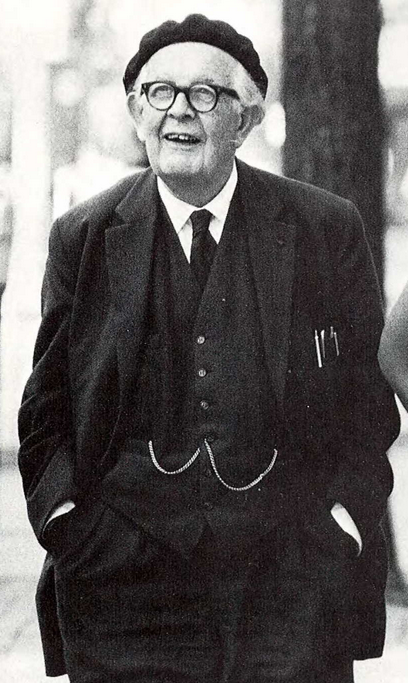
Swiss psychologist Jean Piaget laid much of the theoretical groundwork for constructivism through his research on how children’s thinking develops through distinct stages, arguing that children construct increasingly sophisticated mental models of the world through direct interaction with their environment, revising those models when new experiences do not fit existing understanding, a process Piaget called accommodation.
Vygotsky’s social constructivism
Soviet psychologist Lev Vygotsky extended constructivist ideas in a more social direction, arguing that knowledge construction happens primarily through interaction with others, language, and culture, rather than through a child’s solitary exploration alone. This social constructivist strand underlies concepts such as the zone of proximal development and scaffolding, where a more knowledgeable other actively supports a learner’s construction of new understanding.
Implications for teaching
Constructivist theory has influenced a wide range of instructional approaches that emphasize active student engagement over passive reception, including project-based learning, inquiry-based learning, and discussion-based teaching methods, all of which are designed to give students opportunities to build understanding through direct activity rather than only through listening to direct explanation.
Critiques and balance with direct instruction
Critics of constructivism-inspired teaching argue that minimally guided, purely discovery-based approaches can be inefficient, particularly for novice learners who lack the background knowledge to construct accurate understanding on their own without more structure. Many current instructional models now blend constructivist principles with more structured, explicit teaching elements, rather than treating constructivism and direct instruction as strictly incompatible approaches.
Classroom implications
Constructivist theory has shaped teaching practices that ask students to build understanding through activity rather than absorb it passively. Hands-on experiments in science class, group problem-solving in math, and open-ended writing assignments all reflect the constructivist assumption that students learn best by doing and reflecting rather than by watching a demonstration alone. Vygotsky’s version adds that learning is most effective when it happens through conversation with a more knowledgeable peer or teacher, which supports classroom practices like collaborative group work and guided discussion.
Textbook publishers and curriculum designers have incorporated constructivist principles into materials that pose questions before giving answers and that build new content on top of what students are expected to already know, aiming to let students construct connections rather than simply memorize isolated facts.
Criticisms of constructivist approaches
Critics, including advocates of direct instruction, argue that discovery-heavy constructivist methods can leave gaps in foundational knowledge, particularly for students who have not yet built the background knowledge needed to productively explore a topic on their own. Cognitive load theory has been used to argue that novices benefit more from explicit guidance than from open-ended discovery, because unguided exploration can overwhelm a working memory that has not yet automated basic skills. Supporters respond that constructivism does not require abandoning all structure, and that a teacher can still provide significant guidance while asking students to construct understanding rather than simply receive it.
The debate between constructivist and more direct approaches has repeated across subjects and decades, often described as the wider argument between discovery-based and explicit teaching methods in education research.
Despite the ongoing debate, constructivist ideas remain deeply embedded in widely used teaching frameworks, and most teacher preparation programs introduce Piaget and Vygotsky as foundational figures even when a given school’s curriculum leans more heavily toward explicit, teacher-directed methods in daily practice.
Social versus cognitive constructivism
The distinction between Piaget’s and Vygotsky’s versions of constructivism matters for how a classroom is organized. A teacher following Piaget’s cognitive constructivism might emphasize individual exploration, giving a child materials and time to construct understanding largely on their own as their cognitive structures mature through developmental stages. A teacher following Vygotsky’s social constructivism would instead emphasize structured collaboration, pairing students so that a more capable peer or an adult can guide a learner through tasks just beyond what they could do alone, a process Vygotsky called working within the zone of proximal development. Many modern classrooms blend both traditions, offering individual exploration time alongside structured group work and teacher-guided discussion.
Constructivism’s influence also extends into assessment design, where some educators have argued that traditional multiple-choice testing poorly captures constructed understanding and have pushed instead for performance-based assessments that ask students to apply knowledge to a new, unfamiliar situation.
Jean Piaget developed his stage theory of cognitive development across decades of observing children, including his own, and his broader framework of assimilation and accommodation remains a reference point in developmental psychology well beyond its classroom applications.
Vygotsky’s work was largely unknown in the West until decades after his death in 1934, since his writings in Russian were only translated into English in the 1960s and later, which is part of why his influence on American education theory arrived later than Piaget’s.
Maria Montessori’s educational method, developed independently in the early twentieth century, is sometimes grouped with constructivist approaches because it also emphasizes hands-on, self-directed activity over passive instruction, even though Montessori built her method before constructivist theory was formally articulated.
Later cognitive scientists have attempted to reconcile constructivist and direct instruction camps by proposing that explicit guidance and active construction are not opposites but can be sequenced together, with structured teaching introducing core ideas before students apply and extend them through guided, hands-on practice.
FAQs
What is the difference between Piaget’s and Vygotsky’s versions of constructivism? Piaget emphasized a child’s individual construction of knowledge through interaction with the environment, while Vygotsky emphasized construction through social interaction and language.
What instructional approaches are influenced by constructivism? Project-based learning, inquiry-based learning, and discussion-based teaching methods, among others.
Key facts
- Jean Piaget's research on children's cognitive development underlies cognitive constructivism.
- Lev Vygotsky's social constructivism emphasizes knowledge construction through social interaction.
- Constructivism has influenced project-based and inquiry-based teaching approaches.
Related concepts
Quick checkWhich psychologist’s work underlies social constructivism, emphasizing learning through social interaction?Show answer
Lev Vygotsky.
Sources
- General educational psychology reference; Piaget and Vygotsky literature
Editorially reviewed by Specialty Digest Editorial TeamLast reviewed November 2, 2026Researched and drafted with AI assistanceReport an issue