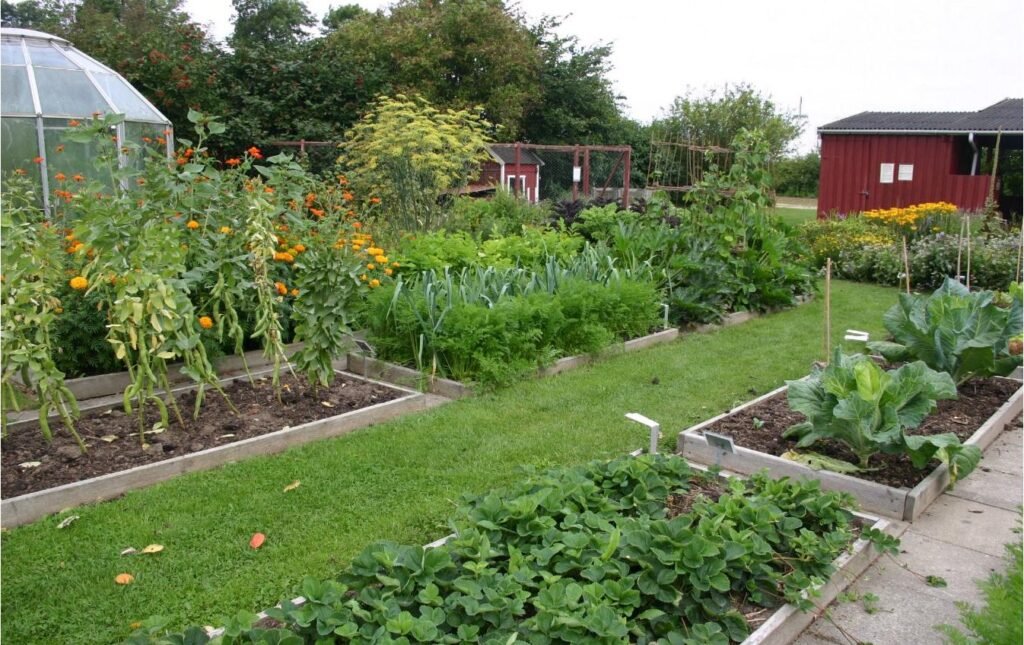
In simple terms
Crop rotation means growing a series of different crops in the same field in sequential seasons, instead of planting one crop there year after year. [1] A field might carry maize one season, a legume the next, then a cereal, before the cycle begins again.
It works because a crop does more than take nutrients out of soil. It also leaves residues and root channels behind, and it feeds whatever pests and diseases specialize in it. Change the crop and all of that changes with it. [1][2]
How it works
Most crops deplete soil nutrients as they grow. Some of those nutrients leave the farm in the harvest and the rest return as residue, which may or may not be available to the following crop. [2] Growers manage the balance by cycling crops with different nutrient demands, adding cover crops and working residues back in. [2] A legume in the sequence is the classic move, because it replenishes nitrogen for the crops that follow. [1]
Rotation also breaks biological cycles. Pathogens and pests accumulate when one species is cropped continuously, and taking their host away for a season interrupts that build-up. [1] Alternating deep-rooted and shallow-rooted plants improves soil structure. [1] Nitrogen is the other half of the calculation: rotation changes how quickly organic nitrogen becomes the mineral form plants can use, and it can cut nitrate leaching into surface water and groundwater by improving soil nitrogen supply and reducing the fertilizer applied. [1]
Why it matters
For a farmer the return is yield and lower input costs. Extension research in the southern United States reports yield increases of 10 to 15 percent in corn and soybean grown in rotation rather than continuously. [1] That is evidence from one region rather than a universal rate, and it should be read that way. Past the farm gate, rotation is a cheap way to keep fertilizer nitrogen out of rivers and wells, which makes it a water quality question too. [1]
Where you’ll see it
- Extension advice on which crop should follow which, and which pairings to avoid [1]
- Organic farm planning manuals, which build whole systems around the rotation [2]
- Disease management guidance, such as rotating corn and soybean against northern leaf blight [1]
- Smallholder farming worldwide, where a legume in the sequence stands in for bought nitrogen [1]
Example
A grower plants soybean after corn rather than corn again, easing nematode and disease pressure and leaving the next corn crop with more available nitrogen. [1]
Often confused with
Intercropping grows two crops together in one field at the same time, while rotation separates them in time. A cover crop is grown mainly to protect and feed the soil rather than to harvest, and often sits inside a rotation. [2]
Key facts
- Crop rotation is the practice of growing a series of different crops in the same area in sequential seasons.1
- Rotation reduces the build-up of pathogens and pests that occurs when one species is cropped continuously.1
- Legumes and green manures in a sequence replenish soil nitrogen for later crops.1
- Extension research in the southern United States reports yield increases of 10 to 15 percent in corn and soybean under rotation.1
- Most crops deplete soil nutrients as they grow, some leaving in the harvest and the rest returning as residue.2
Related concepts
Quick checkWhy does changing the crop interrupt pests and diseases?Show answer
Taking away their host species for a season stops the build-up that continuous cropping allows.
Sources
- North Carolina Cooperative Extension, NC State University. Advantages of Crop Rotation, John Cothren. 16 December 2014, updated 5 December 2022 (accessed Accessed 7 October 2026)
- USDA Sustainable Agriculture Research and Education (SARE). Crop Rotation Effects on Soil Fertility and Plant Nutrition, in Crop Rotation on Organic Farms: A Planning Manual, Anusuya Rangarajan. 2009 (accessed Accessed 7 October 2026)
Editorially reviewed by Specialty Digest Editorial TeamLast reviewed October 7, 2026Researched and drafted with AI assistanceReport an issue