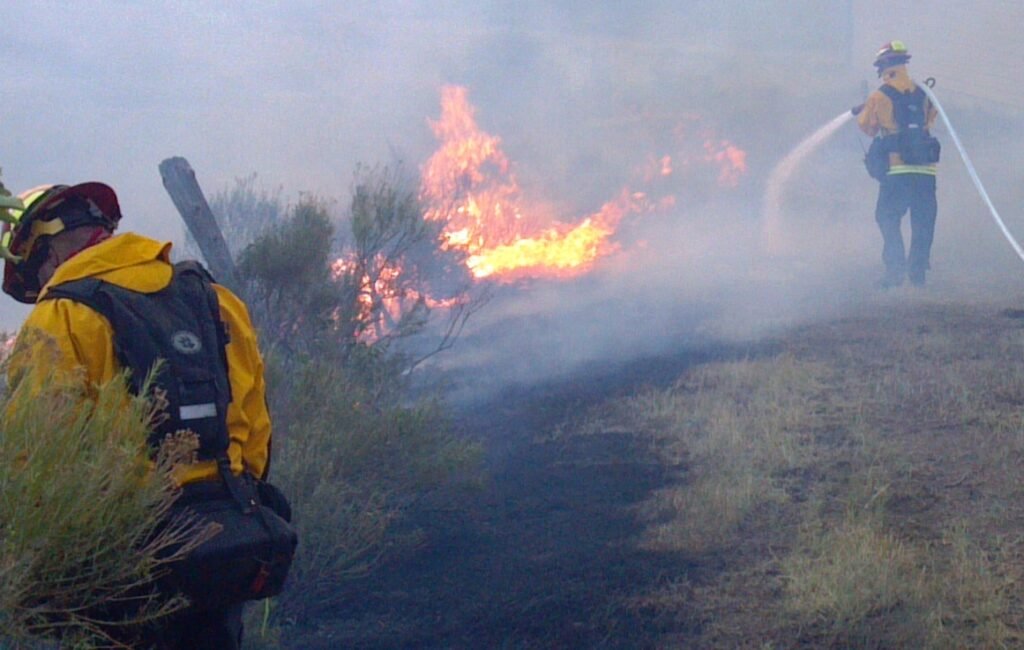
Forest fire management is the coordinated set of practices used to prevent, detect, and suppress unwanted wildfires while using controlled fire deliberately where it benefits forest health.
Prevention and Fuel Reduction
Fire managers reduce wildfire risk by thinning overcrowded stands, removing dead and downed material, and conducting prescribed burns that lower the volume of flammable fuel available to an accidental ignition, work increasingly concentrated near communities in the wildland-urban interface. Public education campaigns addressing careless ignition sources, from unattended campfires to equipment sparks, remain an important complement to physical fuel-reduction work.
Detection and Early Response
Modern fire detection combines ground patrols, fixed lookout towers, aircraft surveillance, and increasingly satellite-based thermal monitoring that can flag new ignitions within minutes, allowing suppression crews to respond before a small fire grows into an uncontrollable one. Rapid initial response is widely regarded as the single most effective factor in keeping fire suppression costs and damage low, since fires caught in their first hours are dramatically easier to contain than those that burn unchecked overnight.
Suppression Strategy
Suppression resources range from hand crews digging firebreaks and engine crews applying water or retardant to aircraft dropping fire retardant from above, with incident commanders choosing a strategy based on fire behavior, terrain, values at risk, and available resources rather than attempting full suppression in every case. In remote wilderness areas with low risk to structures, managers sometimes allow a fire to burn under monitored conditions rather than committing resources to full suppression.
The Suppression Paradox
Decades of aggressive full suppression in many fire-adapted forests allowed fuel loads to accumulate far beyond historical norms, setting the stage for larger and more destructive fires once ignition eventually occurs, a pattern now widely recognized as the suppression paradox. Addressing this legacy has driven growing investment in prescribed burning and mechanical fuel treatment as a longer-term complement to suppression-focused firefighting.
The Wildland-Urban Interface Challenge
As residential development expands into previously undeveloped forested and brushland areas, the wildland-urban interface has grown dramatically, placing more homes and lives at risk from wildfire and complicating fire management decisions that must now weigh structure protection alongside purely ecological considerations. Fire managers increasingly work with local governments on building codes, defensible space requirements, and evacuation planning specifically tailored to this expanding interface zone.
International Cooperation in Firefighting
Severe fire seasons increasingly exceed any single region’s firefighting capacity, prompting international mutual aid agreements that allow countries to share firefighting crews, aircraft, and equipment across borders during periods of extreme fire activity, a form of cooperation that has grown substantially as climate-driven fire seasons have lengthened and intensified in multiple regions simultaneously.
Post-Fire Recovery and Erosion Control
After a severe wildfire, land managers often implement emergency erosion control measures such as seeding, mulching, or constructing barriers on steep slopes to prevent catastrophic soil loss before vegetation naturally recovers, since burned slopes stripped of root structure and ground cover are highly vulnerable to erosion during the first heavy rains following a fire.
Climate Change and Changing Fire Regimes
Longer, hotter, and drier fire seasons linked to climate change are expanding the geographic range and extending the duration of fire risk in many regions, forcing fire management agencies to continuously update their understanding of historical fire regimes that were once used as a baseline for planning prescribed burns and suppression strategy.
Public-Private Coordination
Because wildfires frequently cross jurisdictional boundaries between public and private land, effective fire management increasingly depends on coordination agreements between government agencies, private landowners, and utility companies, particularly where power infrastructure has been identified as a significant ignition source in several major recent wildfire events.
Economic Cost of Catastrophic Fire
Beyond the direct cost of suppression operations, catastrophic wildfires impose enormous secondary economic costs through destroyed property, lost timber value, degraded water supplies, and long-term health impacts from smoke exposure, costs that increasingly factor into cost-benefit arguments favoring greater investment in prevention over reactive suppression spending alone.
Toward a More Resilient Approach
Combining prevention, prescribed fire, rapid detection, and coordinated suppression into a single integrated strategy, rather than relying on any one approach alone, has become the guiding philosophy for most contemporary fire management agencies working to adapt to a future of longer and more intense fire seasons.
Research Into Fire Behavior Modeling
Scientists continue refining computer models that predict how a fire will spread under given fuel, weather, and terrain conditions, giving incident commanders increasingly reliable forecasting tools that help position suppression resources ahead of a fire’s likely path rather than reacting purely after the fact.
Combining better prediction, faster detection, and well-funded prevention work offers the clearest path toward reducing the human and ecological toll of wildfire in the decades ahead.
That shift in philosophy, from fire as purely an enemy to fire as a tool requiring careful stewardship, may prove to be the most important development in forest fire management of the past half century.
Investing now in prevention and resilient fire-adapted landscapes offers communities a far better return than paying the far steeper costs of suppression and recovery after a catastrophic fire has already occurred.
As fire seasons lengthen worldwide, the lessons learned from decades of suppression, prescribed burning, and community preparedness will only become more valuable to apply consistently across at-risk landscapes.
Few management challenges reward patient, sustained investment as clearly as fire prevention does when measured against the alternative cost of a single severe fire season.
Fire management agencies that embrace this patient approach tend to fare far better when the next inevitable fire season arrives.
Key facts
- Combines fuel reduction, early detection, and suppression strategy;Rapid initial response is key to limiting fire damage and cost;Decades of suppression caused dangerous fuel buildup in many forests
Quick checkWhat is the suppression paradox in forest fire management?Show answer
Aggressive wildfire suppression over decades allowed fuel to accumulate, setting up larger and more destructive future fires
Sources
- U.S. Forest Service and National Interagency Fire Center guidance
Editorially reviewed by Specialty Digest Editorial TeamLast reviewed November 3, 2026Researched and drafted with AI assistanceReport an issue