Grade Separation as the Defining Feature
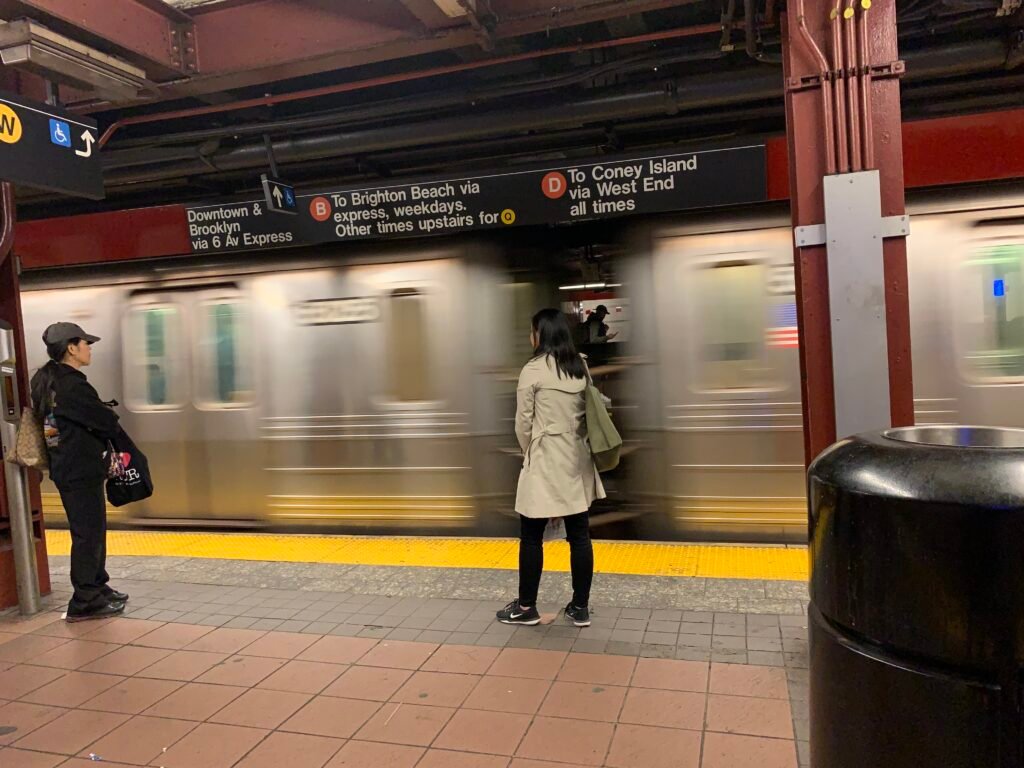
What most clearly distinguishes a metro system from light rail or buses is complete grade separation from other traffic, achieved through tunnels, elevated viaducts, or dedicated surface rights-of-way with no at-grade crossings, which allows metro trains to run at consistent high speed and frequency regardless of surface road congestion. This separation also allows metro systems to safely carry far more passengers per train and per hour than street-running modes, since trains do not need to slow for intersections, pedestrians, or mixed traffic, making metro the highest-capacity urban transit mode available short of commuter rail serving much longer distances.
Capital Cost and Construction Challenges
Building a metro system, particularly the tunneled sections common in dense city centers, requires enormous upfront capital investment, often requiring years of tunnel boring, station excavation, and utility relocation before a single train can run, which is why most metro expansions in established cities proceed line by line over decades rather than as a single comprehensive buildout. Construction costs vary dramatically by geology, with soft soil and high water tables, common in many coastal cities, requiring more expensive tunneling techniques than systems built through stable bedrock, a factor that partly explains why metro construction costs per mile differ so widely between cities.
Network Effects and Ridership
A metro system’s usefulness grows disproportionately as more lines are added and interconnect, since a denser network allows more origin-destination pairs to be served without transferring, and transfers themselves become faster and more convenient at well-designed interchange stations. This network effect has driven many cities to prioritize completing a connected core network before extending individual lines far into low-density suburbs, since a single isolated line typically generates lower ridership relative to its construction cost than a line that plugs into an already-useful network.
Signaling and Headway Limits
The minimum safe interval between trains on a metro line, known as headway, is governed by signaling technology, with older fixed-block signaling systems limiting trains to intervals of several minutes while modern communications-based train control can safely reduce headways to under two minutes on the busiest lines, substantially increasing the passenger capacity a single track can carry. Upgrading signaling on an existing line to allow shorter headways has become an increasingly attractive capacity-expansion strategy for metro operators facing overcrowding, since it can add significant capacity without the far greater expense of building additional tracks or tunnels.
Driverless or automated train operation, used on a growing number of newer metro lines, further supports shorter and more precisely controlled headways than human operators can reliably achieve, though retrofitting automation onto an older line with existing infrastructure and labor agreements presents a more complex challenge than designing it in from the start.
Ventilation and Underground Safety Systems
Underground metro stations and tunnels require extensive mechanical ventilation systems to manage heat generated by trains and passengers, maintain breathable air quality, and, critically, clear smoke rapidly in the event of a fire, a safety requirement that has grown more sophisticated following several serious underground fire incidents that prompted international reviews of tunnel ventilation and emergency evacuation standards. Modern metro systems design ventilation shafts and emergency smoke-extraction fans as integral parts of station architecture from the earliest planning stages, rather than retrofitting them after construction, since retrofitting adequate ventilation into an already-built tunnel is vastly more difficult and expensive.
Fare Evasion and Open Versus Closed Systems
Metro systems vary between closed-access designs, where riders must pass through a fare gate to reach the platform at all, and open systems relying on proof-of-payment and periodic inspection, with closed systems generally achieving lower fare evasion rates at the cost of slower, more expensive station construction and operation, since gates, turnstiles, and staffing all add complexity that open systems avoid.
Funding Models for Expansion
Metro expansion projects are financed through varying combinations of fare revenue bonds, dedicated sales or property tax increases approved by voter referendum, national government grants, and increasingly value-capture mechanisms that direct a portion of the rising property values near new stations back toward funding the line that created that value increase. Cities that have successfully built extensive metro networks over multiple decades, including Tokyo, Hong Kong, and several Chinese cities, have generally relied on some combination of these tools sustained consistently across multiple political administrations, since any single funding source alone has rarely proven sufficient to finance a comprehensive network.
Platform screen doors, now standard on many newer metro lines, further improve both passenger safety and ventilation efficiency by physically separating the platform from the track area except when a train is present and doors are aligned to open.
Accessibility Retrofits in Older Systems
Many of the world’s oldest metro systems, built decades before accessibility requirements became standard, face substantial challenges retrofitting elevators and step-free access into stations originally designed with only stairs, often requiring complex structural work in confined underground spaces and years of construction per station. Cities including London and New York have committed to multi-decade programs gradually adding elevators to their oldest stations, acknowledging that full system-wide accessibility in century-old infrastructure will take considerably longer to achieve than in networks built more recently with accessibility designed in from the start.
Rolling stock overhaul cycles, typically every several years, keep aging metro fleets running safely while newer, more energy-efficient trains are gradually phased in alongside them.
Peak-hour overcrowding on the busiest metro lines has prompted some operators to experiment with staggered employer work-start times to spread commuter demand across a longer morning window.
Key facts
- Array
Quick checkWhat makes a metro system different from light rail?Show answer
A metro system is fully grade-separated from other traffic, typically using tunnels or elevated tracks, allowing higher speeds and capacity than light rail that mixes with street traffic.
Sources
- Array
Editorially reviewed by Specialty Digest Editorial TeamLast reviewed November 4, 2026Researched and drafted with AI assistanceReport an issue