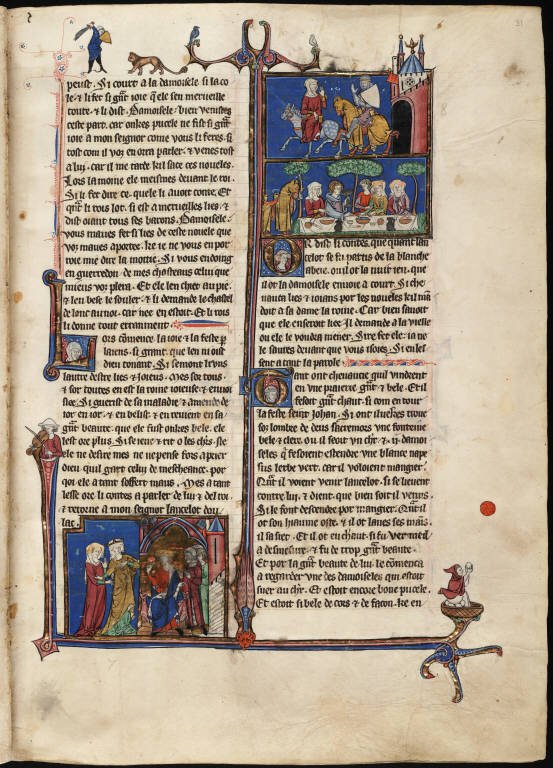
A narrative is an account of connected events, real or fictional, presented in a sequence that forms a story, typically involving characters, some form of conflict or change, and a structure that gives the events meaning beyond a bare list of what happened. Narrative is not limited to literature: it shapes how people tell personal stories, how historians organize the past, how journalists frame events, and how filmmakers structure a plot across a screenplay.
The academic study of narrative structure is called narratology, a field that examines how stories are built, organized, and told across different media and cultural traditions. Influential early narratologists, including the Russian formalist Vladimir Propp and later French theorists such as Gérard Genette and Tzvetan Todorov, analyzed recurring patterns in folk tales and literary fiction, proposing that many stories, despite surface differences, share underlying structural elements: recurring character roles, predictable sequences of events, and consistent ways that time and perspective can be manipulated within a telling.
The Classic Dramatic Arc
One of the most widely taught models of narrative structure traces back to Aristotle’s Poetics, which analyzed how Greek tragedy organized action into a beginning, middle, and end. The nineteenth-century German critic Gustav Freytag later formalized a related model, now commonly called Freytag’s Pyramid or the dramatic arc, which breaks a typical narrative into exposition, introducing characters and setting; rising action, in which complications and tension build; climax, the story’s turning point or point of greatest tension; falling action, in which consequences of the climax unfold; and resolution, in which the story’s central conflicts are settled.
Not every narrative follows this arc precisely, and many works of literature, film, and oral storytelling deliberately depart from it, but the model remains a useful baseline for analyzing how tension is built and released across a story, and it continues to inform how writing is taught and discussed across many different media.
Point of View and Nonlinear Structure
How a narrative is told shapes how it is experienced as much as what happens within it. A first-person narrator relates events through one character’s direct perspective, often with limited or biased knowledge, while a third-person narrator stands outside the action, sometimes following one character closely and sometimes moving freely between several. An unreliable narrator, whose account readers have reason to doubt or question, can turn the basic act of narration itself into a source of tension or ambiguity within a story.
Narratives also need not unfold in strict chronological order. Flashbacks interrupt a story’s forward progress to reveal earlier events, frame narratives embed one story inside another, told by a narrator recounting it after the fact, and some works deliberately fracture chronology entirely, leaving readers or viewers to reconstruct a story’s underlying sequence of events from pieces presented out of order. These techniques can create suspense, highlight thematic connections between distant events, or mirror the way memory and understanding actually unfold for the characters involved.
Narrative Beyond Fiction
The concept of narrative extends well beyond novels, films, and oral stories. Historians necessarily construct a narrative when they select, organize, and connect historical events into a coherent account, decisions that shape how later readers understand cause and significance even when every individual fact included is accurate. In politics and social science, “narrative” describes a shared framework or storyline that groups of people use to interpret current events, often shaping public opinion and political behavior as much as the underlying facts themselves. This broader use of the term reflects a recognition that organizing information into a story, rather than a neutral list of facts, is a fundamental and unavoidable way that people make sense of complex events.
Recurring Character Roles
Vladimir Propp’s influential study of Russian folk tales identified a recurring set of character roles that appeared across many different stories regardless of their specific content, including a hero who undertakes a journey or task, a villain who creates conflict, and a helper who assists the hero along the way. Propp argued that these roles, and the functions characters serve within a plot, recur with striking consistency across a large sample of traditional tales, suggesting that certain narrative patterns reflect deep, widely shared structures in how people construct and recognize stories rather than being unique to any single culture or storyteller.
Later scholars extended this kind of structural analysis well beyond folk tales, applying similar ideas to modern novels, films, and even advertising and political messaging, all of which often rely on recognizable character roles and plot patterns to make a story feel coherent and satisfying to an audience. This does not mean every narrative is formulaic or predictable; rather, it suggests that even highly original stories often work with, against, or in deliberate tension with these familiar underlying patterns, using audience expectations about character roles and plot structure as a tool the storyteller can meet, subvert, or complicate for effect.
FAQs
What is narratology?
The academic study of narrative structure, examining how stories are built, organized, and told across different media and cultural traditions.
What is Freytag’s Pyramid?
A model of narrative structure dividing a typical story into exposition, rising action, climax, falling action, and resolution, based on earlier ideas from Aristotle’s analysis of Greek tragedy.
What is an unreliable narrator?
A narrator whose account readers have reason to doubt or question, which can turn the act of narration itself into a source of tension or ambiguity within a story.
Does the concept of narrative apply outside fiction?
Yes. Historians, journalists, and social scientists all construct narratives when they organize events into a coherent account, a process that shapes how readers understand cause and significance.
In the news
Quick checkWhat is narratology?Show answer
The academic study of narrative structure, examining how stories are built, organized, and told across different media and cultural traditions.
Editorially reviewed by Specialty Digest Editorial TeamLast reviewed November 2, 2026Researched and drafted with AI assistanceReport an issue