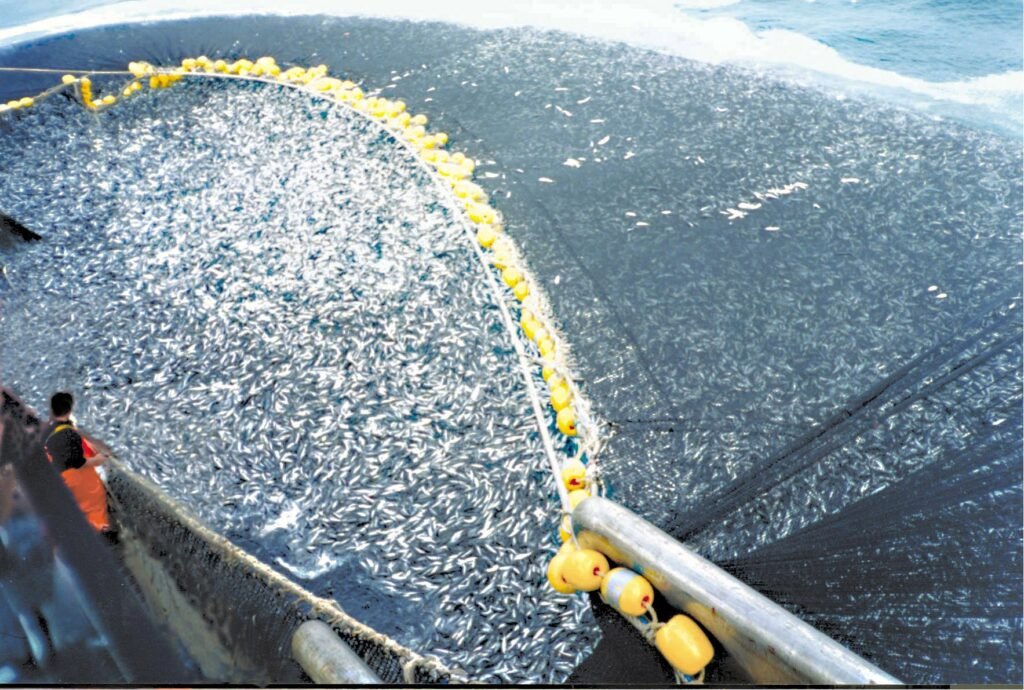
Overfishing is the harvesting of fish or other seafood from a body of water faster than the population can reproduce and replenish itself, so that the stock’s size and productivity decline over time. It is one of the most direct ways human activity can reshape an entire marine or freshwater ecosystem, since removing large numbers of one species at a key trophic level can ripple through the food web far beyond the target species itself.
Scale of the problem
The United Nations Food and Agriculture Organization’s State of World Fisheries and Aquaculture 2024 report found that just over one-third of the world’s assessed fish stocks, about 35 percent, were overexploited as of the most recent assessment year, with the remaining roughly two-thirds considered within biologically sustainable limits. That overexploited share has climbed steadily and substantially over time; as recently as the mid-1970s, only around 10 percent of assessed stocks were overexploited, which means the share of stocks being fished unsustainably has more than tripled over roughly five decades even as fisheries management tools have also improved.
Methods that drive overfishing
Industrial fishing fleets use highly efficient methods, including bottom trawling, which drags large nets along the seafloor, and purse seining, which encircles entire schools of fish with a net drawn closed from below, both capable of removing far more fish per trip than traditional small-scale fishing. These methods also generate bycatch, the unintentional capture of non-target species, including juvenile fish, sea turtles, and marine mammals, which are frequently discarded dead or dying and which can undermine a stock’s recovery even when the directly targeted species is managed under a quota. Illegal, unreported, and unregulated fishing, often called IUU fishing, compounds the problem by operating outside quota systems and monitoring entirely, making it especially difficult for regulators to know the true scale of removals from a given stock.
Ecological consequences
Removing large numbers of a heavily fished species can trigger a trophic cascade, a chain of indirect effects that moves through multiple feeding levels of a food web, in some cases allowing the prey of the overfished species to multiply unchecked or allowing a competing species to take its place in the ecosystem. Coral reef fisheries illustrate the risk clearly: reef fish that graze on algae help keep coral reefs from being overgrown, so overfishing those grazers can leave reefs more vulnerable to algal overgrowth on top of the other stresses, including warming water, that reefs already face. One of the most frequently cited historical examples is the collapse of the Atlantic northwest cod fishery off the coast of Newfoundland in the early 1990s, after decades of intensive industrial trawling; the fishery’s near-total collapse forced a moratorium that cost tens of thousands of jobs and the cod population still has not recovered to anywhere near its former abundance more than three decades later.
Management and recovery
Fisheries managers use several overlapping tools to try to keep harvests within sustainable limits: catch quotas that cap how much of a species can be legally landed in a season, size and seasonal restrictions that protect fish before they reproduce, and marine protected areas that close some waters to fishing entirely, giving stocks a refuge in which to recover and, often, to spill over into adjacent fished areas. Certification schemes such as the Marine Stewardship Council label seafood caught under verified sustainable practices, giving buyers a way to favor better-managed fisheries, though the effectiveness of any of these tools depends heavily on enforcement, since quotas and protected boundaries that exist only on paper do little to slow an overfished stock’s decline.
Aquaculture as a partial offset
As wild capture fisheries have plateaued or declined, aquaculture, the farming of fish, shellfish, and aquatic plants, has grown to supply a large and rising share of the seafood people eat worldwide, and the FAO’s own reporting now tracks aquaculture and capture fisheries together precisely because the two have become so intertwined in meeting global seafood demand. Aquaculture takes pressure off some wild stocks, particularly for species that farm well, such as shrimp, salmon, and various species of carp, but it introduces its own environmental trade-offs, including nutrient pollution from farm waste and, for some carnivorous farmed species, continued reliance on wild-caught fish ground into feed, which means aquaculture growth does not automatically translate into proportionally reduced pressure on wild stocks.
Can overfished stocks recover?
Recovery is possible but often slow and not guaranteed. Stocks that are given real relief from fishing pressure, through strict quotas, closures, or protected areas, can rebuild over years to decades depending on the species’ reproductive rate, but a stock that has collapsed as severely as northwest Atlantic cod can remain depressed long after fishing pressure eases, sometimes because the surrounding ecosystem has shifted into a different, more stable state in the meantime that no longer favors the original species’ recovery.
FAQs
What is bycatch, and why does it matter for overfishing? Bycatch is the unintentional capture of species other than the one being targeted, including juvenile fish, sea turtles, and marine mammals; because bycatch is often discarded dead, it can undermine a fishery’s sustainability even when the targeted species itself is managed under an apparently adequate quota.
Can an overfished stock fully recover once fishing pressure is reduced? Many stocks can rebuild substantially given enough time and sufficiently reduced fishing pressure, but recovery is not guaranteed and can take decades; some severely collapsed stocks, such as northwest Atlantic cod, have remained far below their historical abundance for more than thirty years.
Key facts
- About one-third, roughly 35 percent, of the world's assessed fish stocks were overexploited as of the most recent FAO assessment, up from around 10 percent in the mid-1970s.
- Bottom trawling and purse seining are highly efficient industrial methods that can remove far more fish per trip than traditional small-scale fishing.
- Bycatch, the unintentional capture of non-target species, can undermine a fishery's sustainability even when the targeted species is managed under a quota.
- The Atlantic northwest cod fishery off Newfoundland collapsed in the early 1990s after decades of intensive trawling and still has not recovered to its former abundance.
- Marine protected areas and catch quotas are among the main tools used to let overfished stocks recover.
Related concepts
Quick checkWhy has the share of overexploited global fish stocks more than tripled since the mid-1970s?Show answer
Industrial fishing capacity, including efficient methods like bottom trawling and purse seining, expanded faster than fisheries management kept pace, pushing more stocks past sustainable harvest limits over time; the FAO put the overexploited share at around 10 percent in the mid-1970s versus roughly 35 percent, about one-third, as of its most recent assessment.
Sources
- Food and Agriculture Organization of the United Nations. The State of World Fisheries and Aquaculture 2024. 2024 (accessed 2026-11-01)
Editorially reviewed by Specialty Digest Editorial TeamLast reviewed November 1, 2026Researched and drafted with AI assistanceReport an issue