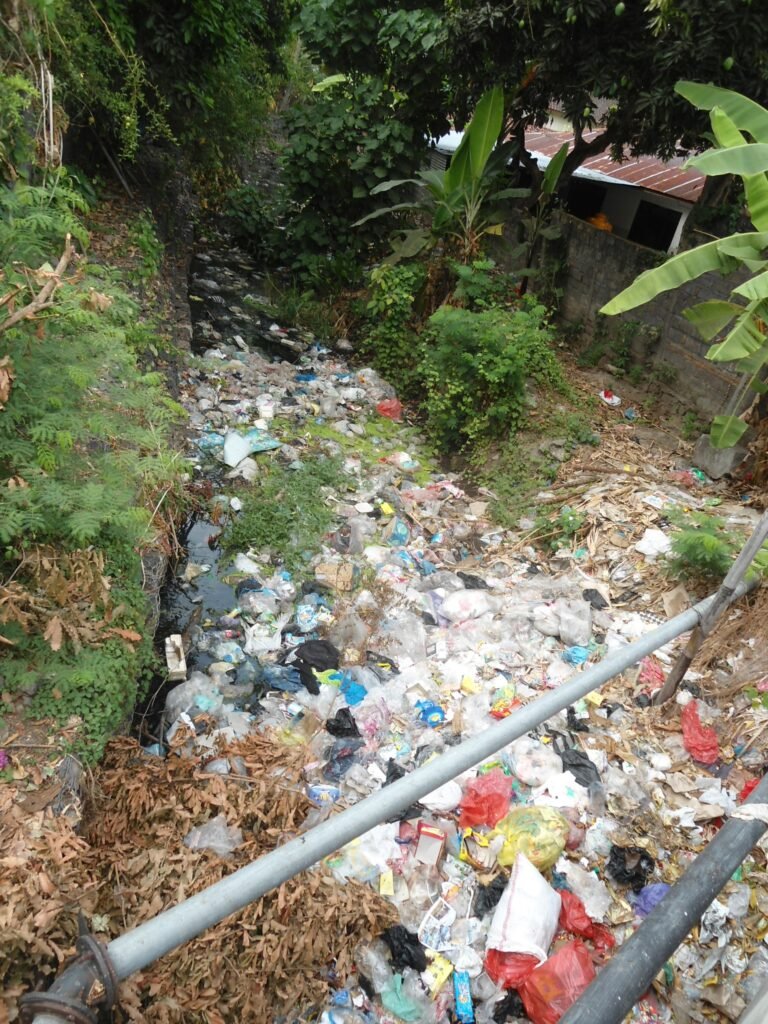
Water pollution is the contamination of groundwater, lakes, rivers, estuaries, or oceans by substances, or by energy such as heat, to a degree that interferes with the water’s beneficial uses or disrupts the natural functioning of the ecosystems that depend on it. It is one of the oldest recognized forms of environmental damage, since contaminated drinking water has threatened human health for as long as people have concentrated in settlements near rivers and lakes.
Point source versus nonpoint source pollution
Water pollution is generally classified by how it enters the water. Point-source pollution comes from a single, identifiable discharge, such as an industrial outfall pipe or a city sewer system, and is comparatively easy to regulate because the discharge can be monitored and treated at one location. Nonpoint-source pollution comes from broad, diffuse areas rather than a single pipe, agricultural fields, lawns, and urban streets among them, and is harder to control precisely because no single point of release exists to inspect or treat; despite that difficulty, nonpoint sources now account for a large share of water pollution problems in many regions, having become relatively more significant as point sources have been regulated more tightly over recent decades.
Major sources and contaminants
Domestic sewage is the leading source of disease-causing pathogens in water and a major contributor of the nitrogen and phosphorus compounds that drive excess nutrient pollution. Agricultural and lawn runoff carries fertilizers, pesticides, and animal waste into nearby waterways, while industrial wastewater can introduce toxic metals such as lead, mercury, and chromium. Construction-site erosion adds sediment that clouds water and smothers bottom-dwelling organisms, oil enters waterways through road and parking-lot runoff as well as accidental spills, and power-plant cooling systems can raise water temperature by as much as 15 degrees Celsius above ambient, a form of contamination known as thermal pollution. Mining operations, petroleum production, poorly sited landfills, and failing septic systems can additionally contaminate groundwater, which is a particular concern given how many people rely on it directly for drinking water.
Eutrophication and dead zones
Excess nitrogen and phosphorus entering a body of water can trigger eutrophication, a natural nutrient-enrichment process that human activity frequently accelerates into what is specifically called cultural eutrophication. The added nutrients fuel explosive algal blooms; when that algae dies and decomposes, the process consumes dissolved oxygen in the water, and anaerobic decomposition that follows can release harmful gases including methane and hydrogen sulfide. The resulting hypoxic, or oxygen-starved, zones can grow enormous: the seasonal dead zone that forms in the Gulf of Mexico, fed largely by agricultural runoff carried down the Mississippi River, has covered as much as 22,000 square kilometers in a single year, an area roughly the size of New Jersey, within which fish, shellfish, and other oxygen-dependent organisms either flee or die.
Human health and ecological effects
Contaminated water carries bacteria, viruses, and other pathogens that cause waterborne disease, and because roughly half of residents in some countries rely on groundwater for domestic supply, groundwater contamination carries outsized public health stakes. Suspended sediment blocks sunlight from reaching aquatic plants, disrupts fish spawning, and smothers bottom-dwelling invertebrates, while excessive groundwater withdrawal in coastal areas can let seawater intrude into freshwater aquifers and wells. Marine ecosystems absorb much of this damage indirectly, through sewage, industrial sludge, and oil reaching the ocean and harming everything from phytoplankton at the base of marine food chains to the fish and marine mammals several trophic levels above them.
Marine debris and plastic pollution
Beyond chemical contamination, solid waste, especially plastic bottles, bags, and packaging, has become one of the most visible forms of water pollution, washing up on shorelines far from where it was discarded and breaking down only very slowly once it enters the ocean. Floating and sunken debris entangles marine animals and is frequently mistaken for food by fish, seabirds, and sea turtles, while sunlight and wave action gradually fragment larger plastic items into microplastics, tiny particles now found throughout the water column and even in deep ocean sediment. Rivers act as a major delivery route for this debris, carrying waste generated far inland out to sea, which is why pollution control efforts increasingly focus upstream, on reducing what enters rivers in the first place, rather than only on cleanup at the coast where the problem becomes most visible.
Major historical incidents and responses
Large oil spills remain among the most visible forms of water pollution; the 1989 Exxon Valdez spill off the coast of Alaska released roughly 11 million gallons of crude oil into Prince William Sound and became a landmark case for both environmental damage and corporate liability. In response to incidents like it and to chronic pollution problems more broadly, governments have built regulatory frameworks such as the United States’ Clean Water Act to limit pollutant discharges, while wastewater treatment plants, vegetated buffer strips along farmland, and stricter industrial permitting all aim to intercept contaminants before they reach open water.
FAQs
What is the difference between point-source and nonpoint-source water pollution? Point-source pollution comes from a single identifiable discharge, such as a pipe, that can be monitored and treated directly, while nonpoint-source pollution comes from diffuse areas such as farmland or city streets with no single point of release to target.
Can water pollution be reversed? Many forms of water pollution can be reduced or reversed over time through reduced discharges, treatment, and natural recovery, though some damage, such as long-term groundwater contamination or sediment-smothered habitats, can take years to decades to fully recover even after the original source of pollution is stopped.
Key facts
- Water pollution splits into point-source, from a single identifiable discharge, and nonpoint-source, from diffuse areas such as farmland.
- Domestic sewage is the leading source of disease-causing pathogens and a major source of excess nutrients in water.
- Cultural eutrophication from excess nutrients can trigger algal blooms that deplete dissolved oxygen, creating hypoxic dead zones, including one in the Gulf of Mexico that has reached about 22,000 square kilometers.
- The 1989 Exxon Valdez spill released roughly 11 million gallons of crude oil into Prince William Sound, Alaska.
- Roughly half of residents in some countries rely on groundwater for drinking water, which raises the public-health stakes of groundwater contamination specifically.
This entry explains a medical term. It is not medical advice. If you are concerned about your health, speak with a qualified health professional.
Related concepts
Quick checkWhy can a Gulf of Mexico dead zone form every year even though it is not a permanent feature of the water?Show answer
Seasonal agricultural runoff carried down the Mississippi River delivers a fresh pulse of nitrogen and phosphorus each year, which fuels algal blooms whose decomposition consumes dissolved oxygen; because the trigger, nutrient-rich runoff, recurs annually, the resulting hypoxic zone also recurs rather than forming once and persisting on its own.
Sources
- Encyclopaedia Britannica. Water pollution. 2024 (accessed 2026-11-01)
Editorially reviewed by Specialty Digest Editorial TeamLast reviewed November 1, 2026Researched and drafted with AI assistanceReport an issue