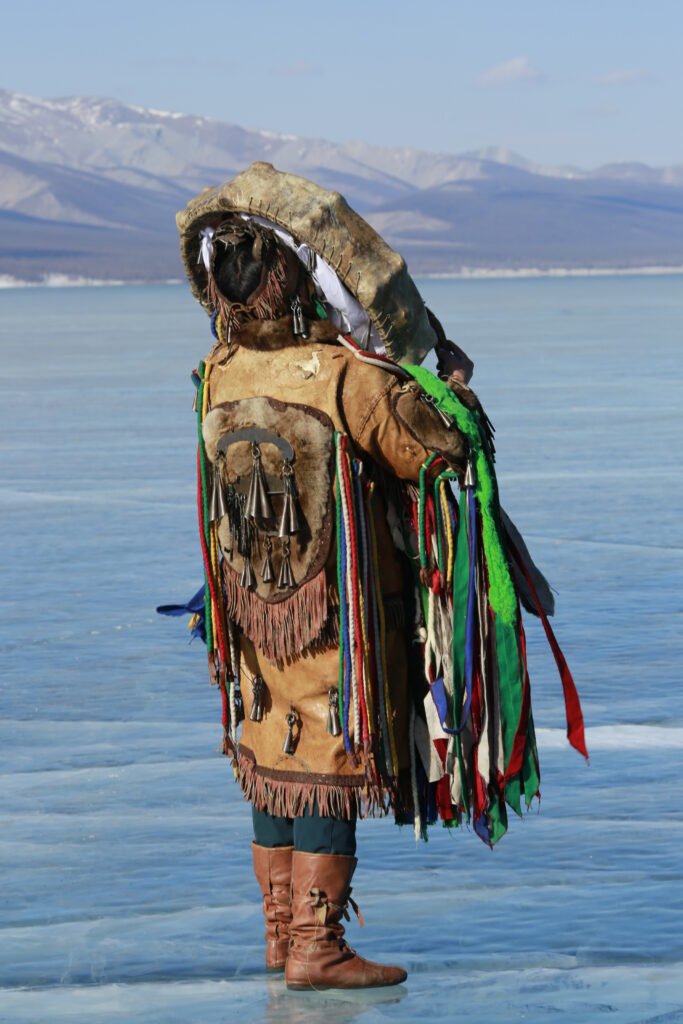
Overview
Shamanism refers to a broad family of spiritual practices found across many indigenous cultures in which a specialized practitioner, the shaman, mediates between the human community and the spirit world. The term originates from the Tungusic languages of Siberia but has been applied more broadly by anthropologists to similar practices found from the Americas to Asia and parts of Africa.
Core Features
Despite wide cultural variation, shamanic traditions generally share a belief that certain individuals can enter altered states of consciousness, often through drumming, chanting, fasting, or other ritual techniques, to travel to or communicate with spirit realms. Shamans are commonly consulted for healing illness, divining the future, and guiding the souls of the deceased.
Training and Role
Becoming a shaman often involves a period of intense personal crisis or illness interpreted as a spiritual calling, followed by training under an established practitioner. Once recognized, a shaman typically holds a respected and sometimes feared position within the community, serving as healer, counselor, and ritual specialist.
Cultural Variation
Shamanic practices differ significantly across regions, from the reindeer-herding cultures of Siberia to Amazonian plant-medicine traditions and Korean mudang rituals, and scholars debate how useful shamanism is as a single umbrella category given this diversity. Many indigenous communities prefer their own specific terms over the broader academic label.
Role Today
Shamanic practices continue in many indigenous communities worldwide, sometimes alongside other religious traditions introduced through colonization or conversion. Interest from outside observers has also led to new forms of neo-shamanism in Western countries, which draw selectively on traditional practices and remain a subject of debate among scholars and indigenous practitioners alike.
Healing and Ritual
A central function attributed to shamans across many cultures is healing, understood not purely in physical terms but as addressing spiritual imbalance, lost soul fragments, or intrusion by harmful spirits believed to cause illness. Healing rituals often combine physical remedies such as herbal medicine with symbolic or spiritual techniques, reflecting a worldview in which physical and spiritual wellbeing are deeply intertwined rather than treated as entirely separate domains.
Scholarly Debate
Anthropologists continue to debate how useful shamanism is as a single global category, since practices grouped under this label differ enormously in their cosmology, technique, and social role from one culture to the next. Some scholars argue the term risks flattening important cultural differences, while others find it a useful comparative tool for studying similar patterns of ritual specialization found independently across widely separated societies.
Initiation and Training
Becoming a shaman often follows an unusual or difficult life event interpreted by the community as a spiritual calling, such as a severe illness, a near-death experience, or a period of psychological crisis that is reframed as the beginning of a spiritual transformation. Formal training under an established shaman can last for years, involving the memorization of ritual knowledge, mastery of trance techniques, and gradual acceptance by the community as a legitimate practitioner.
Material Culture
Shamanic practice is often accompanied by distinctive material culture, including drums, masks, special garments, and ritual objects believed to hold spiritual significance or power. These objects frequently feature prominently in museum collections and ethnographic research, offering insight into the symbolic systems through which different cultures have understood the relationship between the visible and spirit worlds.
Contemporary Recognition
Growing academic and public interest in indigenous knowledge systems has brought renewed attention and, in some regions, legal recognition to traditional shamanic practitioners whose knowledge was previously dismissed or actively suppressed by colonial authorities. This shift reflects a broader reassessment of indigenous spiritual and ecological knowledge as a serious subject worthy of study and respect rather than dismissal.
Neo-Shamanism
Since the latter twentieth century, interest in shamanic techniques among non-indigenous practitioners in Western countries has given rise to neo-shamanic movements that draw selectively on traditional practices, often adapted substantially from their original cultural and ritual context. Indigenous communities and scholars have offered varied responses to this trend, ranging from cautious engagement to strong criticism of practices viewed as disconnected from their original meaning and context.
Preserving Traditional Knowledge
Many indigenous communities are now actively working to document and preserve shamanic knowledge threatened by generational change, migration, and the historical pressures of colonization and forced conversion. These preservation efforts often involve collaboration between community elders, younger practitioners, and researchers committed to respectful and community-led documentation.
Final Thoughts
Shamanism, understood broadly as a pattern of specialized spiritual mediation found across diverse cultures, continues to offer researchers insight into how human communities have historically organized healing, meaning-making, and relationships with the unseen world. Its persistence and ongoing adaptation across radically different cultural settings speaks to a deep and recurring human impulse toward specialized spiritual practice.
As academic and public interest in indigenous knowledge systems continues to grow, shamanic traditions are increasingly studied not as relics of the past but as living systems of knowledge still actively practiced and adapted today.
Researchers who spend time with contemporary shamanic practitioners frequently note the deep practical knowledge of local ecology and community wellbeing embedded within what outsiders might otherwise dismiss as purely symbolic ritual.
That practical dimension, grounded in generations of accumulated ecological and social observation, is increasingly recognized as a genuine form of expertise rather than simply folklore, prompting new forms of collaboration between traditional practitioners and contemporary researchers.
These exchanges continue to shape how both researchers and the wider public understand the role of specialized spiritual practice within human communities.
This ongoing documentation effort helps ensure the knowledge survives for future generations.
That continuity matters greatly to the communities involved.
Key facts
- Array
Quick checkWhat role does the shaman typically play within a community?Show answer
A shaman is generally understood as a specialized intermediary who enters an altered state of consciousness, often through drumming, chanting, or ritual, to communicate with spirits on behalf of the community, commonly for purposes such as healing illness, guiding souls, interpreting omens, or resolving conflicts between the human and spirit worlds.
Sources
- Array
Editorially reviewed by Specialty Digest Editorial TeamLast reviewed November 4, 2026Researched and drafted with AI assistanceReport an issue