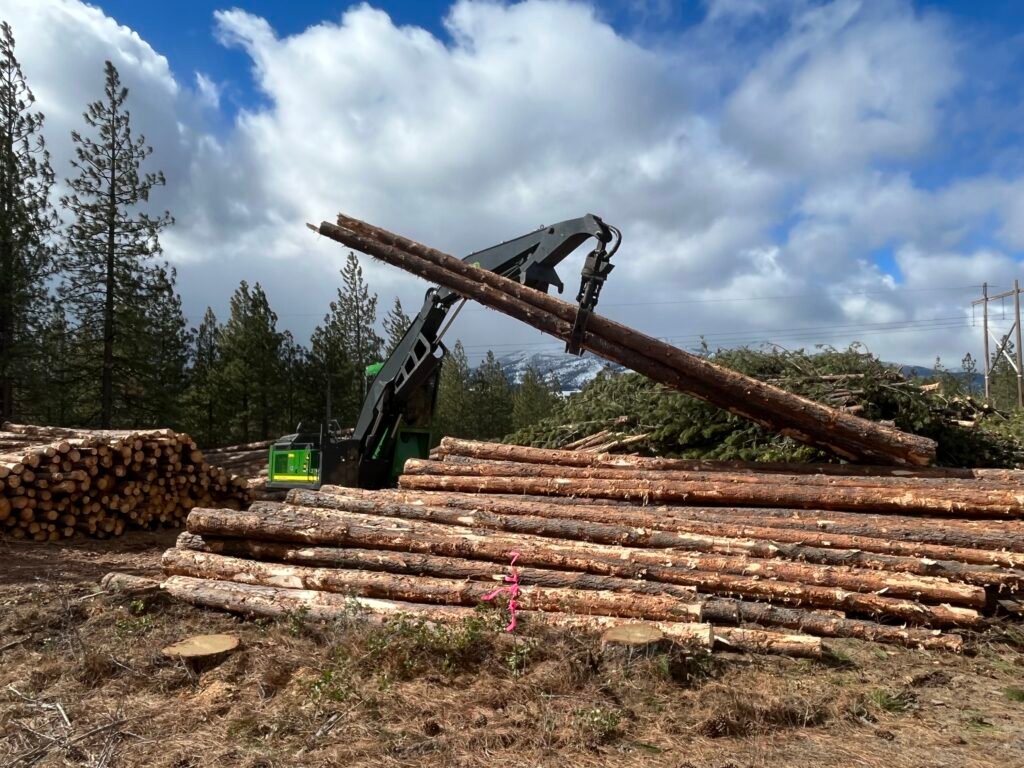
Timber harvesting is the process of felling, processing, and removing trees from a forest for commercial use, encompassing everything from tree selection and cutting to transporting logs to a mill.
Harvesting Operations
A typical harvest begins with marking or selecting trees according to a management plan, followed by felling using chainsaws or mechanized harvesters, then delimbing and bucking logs into standard lengths before they are transported by skidder or forwarder to a landing for loading onto trucks. Modern mechanized systems, including cut-to-length harvesters that fell and process a tree in a single pass, have dramatically increased efficiency compared with earlier manual chainsaw-based operations.
Planning and Permitting
Before any harvest begins, landowners or timber companies typically must secure permits, develop a harvest plan addressing erosion control and stream protection, and in many jurisdictions file notification with state or federal forestry agencies that may inspect the site during or after operations. These regulatory requirements vary significantly by country and region, with some areas requiring extensive environmental review and others relying primarily on landowner self-certification under general forestry rules.
Economic Role
Timber harvesting supplies raw material for lumber, paper, and engineered wood products, supporting rural employment and export economies in heavily forested regions, with harvest volumes and prices closely tied to construction activity and global trade conditions. Many forest-dependent communities rely heavily on the jobs generated not just by harvesting itself but by the sawmills, trucking, and processing industries that depend on a steady timber supply.
Minimizing Environmental Impact
Best management practices during harvesting include maintaining stream buffers, limiting operations during wet conditions that worsen soil compaction, and promptly stabilizing disturbed ground to prevent erosion, measures increasingly required under both regulation and voluntary certification standards. Advances in low-impact equipment and GPS-guided skid trail planning have further reduced the physical footprint of harvesting operations in many managed forests.
Worker Safety in Harvesting Operations
Timber harvesting remains one of the more hazardous occupations due to the combination of heavy machinery, falling trees, and often difficult terrain, prompting extensive safety regulation covering protective equipment, machine guarding, and mandatory training for felling and skidding operations. Despite these measures, logging continues to rank among the most dangerous jobs by injury and fatality rate in many countries, keeping worker safety a persistent priority for the industry.
Technology and Automation Trends
Increasing automation, including GPS-guided harvesters and remote-controlled equipment, is gradually reducing the physical risk to human operators while also raising the capital cost of entering the harvesting business, a shift that favors larger, better-capitalized logging contractors over smaller independent operators in many regions.
Transportation and Supply Chain Logistics
Getting harvested logs from a remote forest landing to a processing mill often requires substantial investment in forest road networks, and the condition and accessibility of these roads significantly affects harvesting cost and the economic viability of operating in more remote forest areas, particularly in regions with limited existing infrastructure.
Byproduct and Residue Utilization
Modern harvesting operations increasingly capture material once considered waste, including branches, bark, and low-grade wood, converting it into wood chips, pellets, or bioenergy feedstock rather than leaving it on site, improving both the economic return per acre harvested and reducing the fuel load left behind after a harvest.
Seasonal and Weather Constraints
Harvesting schedules must account for seasonal ground conditions, since operating heavy equipment on saturated soil during wet periods causes far more compaction and rutting damage than the same operation conducted on frozen or dry ground, leading many operations to concentrate harvesting activity during specific seasonal windows suited to local soil and climate conditions.
Labor and Workforce Trends
The timber harvesting workforce in many developed countries has aged and contracted over recent decades as fewer young workers enter the trade, prompting industry efforts to improve training pipelines, wages, and safety culture in hopes of attracting new workers to an industry facing a persistent skills and labor shortage.
Looking Ahead for Harvesting Practice
Continued advances in automation, data-driven harvest planning, and byproduct utilization suggest timber harvesting will keep becoming more efficient and less wasteful over time, even as the fundamental task of safely and sustainably removing trees from a forest remains as physically demanding and consequential as ever.
Balancing Mechanization and Rural Employment
While mechanization has improved harvesting safety and efficiency, it has also reduced the number of workers needed per unit of timber harvested, creating tension in rural communities that historically relied on logging as a major source of stable employment even as the industry modernizes.
Balancing these competing pressures will likely continue to shape how timber harvesting operations recruit, train, and equip their workforce for decades to come.
A Physically Demanding, Essential Trade
Despite decades of mechanization, timber harvesting remains fundamentally a hands-on trade requiring judgment, physical stamina, and respect for the real dangers of working among heavy machinery and falling trees in variable weather and terrain.
Connecting Harvest to Final Product
From the moment a tree is felled to the moment finished lumber reaches a construction site or furniture is built from certified wood, timber harvesting forms the critical first link in a supply chain that touches nearly every sector of the economy, from housing to packaging to paper products.
As demand for wood products continues alongside growing environmental scrutiny, the industry’s ability to harvest responsibly will remain central to its long-term social license to operate.
Few industries connect the raw material of a living forest to the finished goods of everyday life as directly as timber harvesting does.
Understanding that connection helps explain why harvesting practice, safety, and sustainability continue to draw public and regulatory attention well beyond the forestry industry itself.
Key facts
- Includes felling, delimbing, bucking, and transport;Modern mechanized harvesters have replaced much manual chainsaw work;Regulated through permits and harvest plans in most jurisdictions
Quick checkWhat does cut-to-length harvesting mean?Show answer
A mechanized method where a single machine fells and processes a tree into standard log lengths in one pass
Sources
- Forest industry operational guidelines; state forestry agency harvest regulations
Editorially reviewed by Specialty Digest Editorial TeamLast reviewed November 3, 2026Researched and drafted with AI assistanceReport an issue