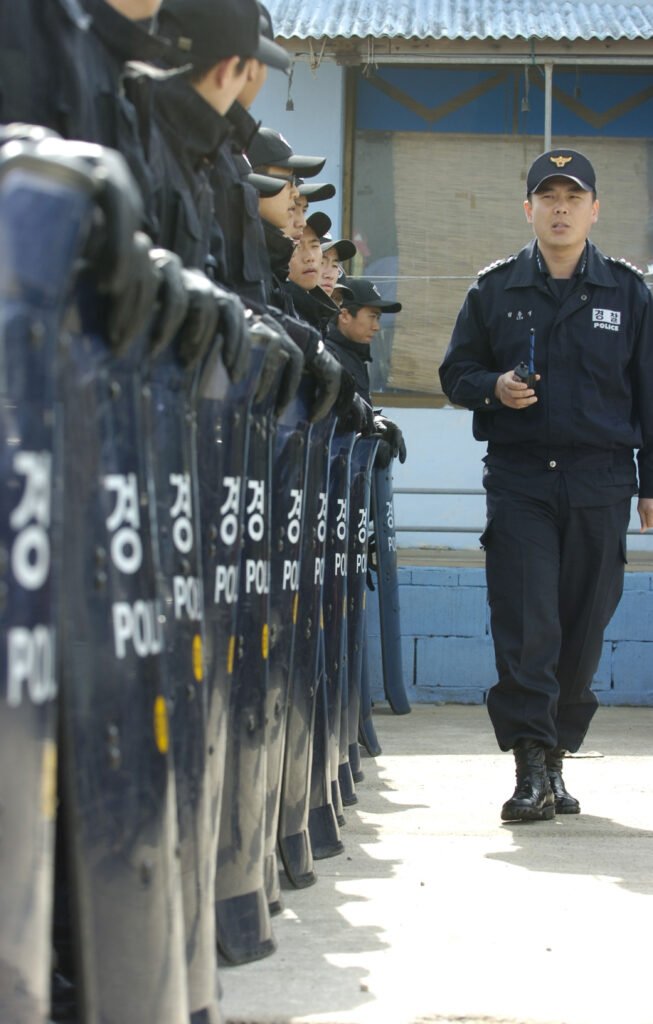
Overview
Use of force describes the physical, mechanical, or in some cases lethal means that law enforcement officers may lawfully apply in the course of their duties, including to make an arrest, restrain an individual, or protect themselves or others from harm. Because force by its nature carries risk of injury, its use is subject to legal standards and departmental policies intended to constrain it to situations where it is genuinely necessary.
Use of force continuum
Many police agencies organize their training around a use of force continuum, a conceptual framework ranging from officer presence and verbal commands at the lowest level, through various forms of physical control and less lethal weapons such as batons or electronic control devices, up to deadly force at the highest level. Officers are generally trained to use the minimum level of force reasonably necessary to control a given situation.
Legal standards
Courts in many jurisdictions evaluate use of force incidents under an objective reasonableness standard, asking whether a reasonable officer facing the same circumstances, with the same information available at the time, would have concluded that the level of force used was necessary, rather than judging the officers actions with the benefit of hindsight.
Public scrutiny and reform
Use of force incidents, particularly those resulting in serious injury or death, have become a central focus of public debate over policing, driving reforms such as expanded use of body worn cameras, revised training protocols, and new reporting requirements intended to increase transparency and accountability around how and when officers use force.
Training and de-escalation
Many police departments have expanded training in de-escalation techniques, which emphasize communication, patience, and tactical positioning as methods for resolving tense encounters without resorting to physical force whenever possible. Proponents argue that strong de-escalation skills can reduce both officer and civilian injuries, while critics note that de-escalation is not always feasible in rapidly evolving or genuinely dangerous situations.
Less lethal weapons
The development of less lethal weapons, including electronic control devices, chemical irritants, and impact projectiles, has given officers additional options between verbal commands and deadly force. These tools are intended to allow officers to control resistant or dangerous individuals while reducing the likelihood of serious injury or death compared to firearms, though they carry their own risks and have been the subject of ongoing research and controversy regarding their safety.
Data collection and transparency
In response to public concern over use of force incidents, many jurisdictions have implemented more detailed data collection requirements, mandating that departments report information about use of force incidents, including the demographics of those involved, to improve transparency and allow for more systematic analysis of patterns in how and against whom force is used.
Psychological dimensions
Decisions about use of force often occur within seconds under conditions of significant stress and uncertainty, and researchers studying officer decision making have examined how factors such as fatigue, prior experience, and split second threat perception influence these high stakes judgments, informing both training approaches and legal debates about how much deference officers should be given when their split second decisions are later evaluated.
Civil litigation
Use of force incidents frequently become the subject of civil litigation, in which injured individuals or the families of those killed seek monetary damages from officers or departments, and the outcomes of these cases, along with any resulting settlements, often influence subsequent department policy and training even when the underlying use of force was found to be legally justified under the applicable criminal standard.
Comparative perspectives
Use of force policies and the frequency of serious force incidents vary considerably across different countries, with some researchers pointing to differences in firearm prevalence, training duration, and legal standards to help explain why rates of fatal police shootings differ so substantially between nations with otherwise broadly similar policing models.
Policy reform efforts
Following several highly publicized incidents, numerous police departments have revised their use of force policies to impose stricter requirements, such as explicit duty to intervene obligations for officers who witness colleagues using excessive force, reflecting a broader trend toward more detailed and restrictive departmental policy language than existed in many agencies in prior decades.
Role of supervision
Effective supervision during volatile incidents can significantly influence outcomes, since experienced supervisors on scene are often able to slow the pace of an encounter, coordinate additional resources such as mental health responders, and make judgment calls that reduce the likelihood that a situation escalates to the point where significant force becomes necessary.
Closing observation
Use of force will likely remain one of the most closely examined aspects of policing, since it sits at the intersection of officer safety, public trust, and the fundamental legitimacy of state authority to use physical coercion against its own citizens.
Continued refinement of training, policy, and oversight is likely to remain a constant feature of policing for the foreseeable future.
Final note
Researchers continue to study which combinations of training, equipment, and policy most reliably reduce unnecessary injury on both sides of these encounters, recognizing that even well designed reforms require consistent implementation and sustained institutional commitment to produce lasting change in outcomes.
This research agenda is expected to remain active for the foreseeable future given its direct relevance to both safety and trust.
Most observers expect incremental rather than sweeping change, driven by accumulated evidence rather than any single reform effort alone.
It continues to be one of the most carefully studied aspects of modern law enforcement practice.
It is likely to remain so for the foreseeable future.
Key facts
- Array
Quick checkWhat legal standard typically governs whether a use of force by police was lawful?Show answer
Most jurisdictions apply some version of a reasonableness standard, asking whether a reasonable officer in the same circumstances would have believed the level of force used was necessary given the threat faced at the time.
Sources
- Array
Editorially reviewed by Specialty Digest Editorial TeamLast reviewed November 4, 2026Researched and drafted with AI assistanceReport an issue