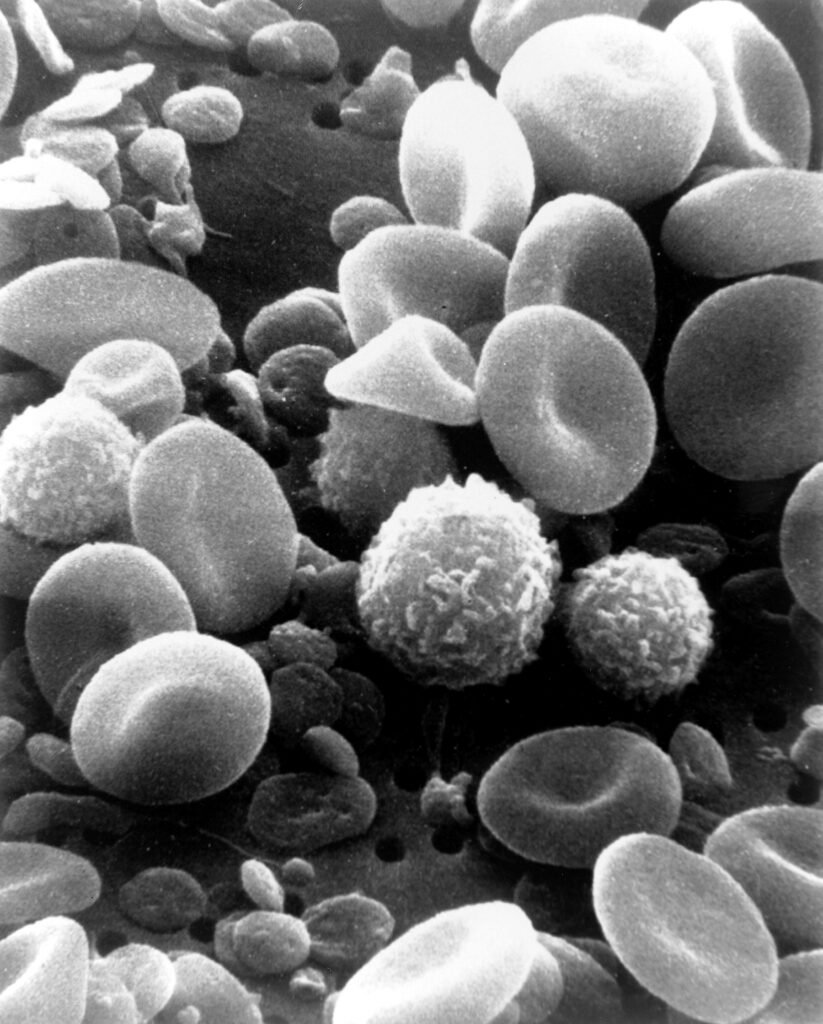
The immune system defends the body with two systems working together: a fast, general-purpose responder that reacts to anything unfamiliar, and a slower, highly specific one that remembers every threat it has ever faced.
The First Line: Innate Immunity
Innate immunity is the protection you’re born with, and it responds immediately. The Cleveland Clinic describes it as attacking “any organism that shouldn’t be in your body” without pausing to identify exactly what that organism is. The National Institutes of Health notes this includes physical barriers like skin, along with cells such as natural killer cells and phagocytes that engulf and destroy invaders on contact. It’s fast, but non-specific — innate immune cells don’t remember past invaders and treat every threat as brand new.
The Second Line: Adaptive Immunity
When innate defenses aren’t enough, adaptive (or acquired) immunity takes over. This system relies on lymphocytes, a category of white blood cell that includes T-cells and B-cells, which learn to recognize specific threats. Per the NIH, adaptive immunity “makes antibodies and uses them to specifically fight certain germs that the body has previously come into contact with.” It takes longer to activate the first time around, but it’s precise, tailored to the exact pathogen involved rather than a general defense.
Where the Immune System Actually Does Its Work
Immune cells are manufactured and trained throughout the body rather than in one organ. The Cleveland Clinic describes bone marrow as “a factory for your blood cells,” producing the white blood cells that make up much of the immune arsenal. Some of those cells, T-cells, travel to the thymus to mature before heading out to patrol the body. Lymph nodes filter fluid and screen for pathogens, while the spleen stores white blood cells and filters the blood itself — a distributed network rather than a single organ doing all the work.
Why You Usually Only Get Chickenpox Once
The defining feature of adaptive immunity is memory. After a first exposure to a pathogen, the immune system stores information about it, and the NIH notes that on a second encounter, “it recognizes the germ straight away and can start fighting it faster.” That’s the mechanism behind lifelong immunity to diseases like chickenpox after a single childhood infection — the body has effectively filed away the blueprint for fighting that specific virus.
How Vaccines Use the Same System
Vaccines work by exploiting this same memory system without requiring an actual infection first. The Cleveland Clinic explains that vaccines train the immune system’s cells “to identify and destroy invaders before they make you sick,” essentially giving the adaptive immune system a preview of a pathogen so it can build defenses in advance. That’s why protection from a vaccine, like protection from a past infection, tends to kick in faster on a real exposure than it would without any prior exposure at all.