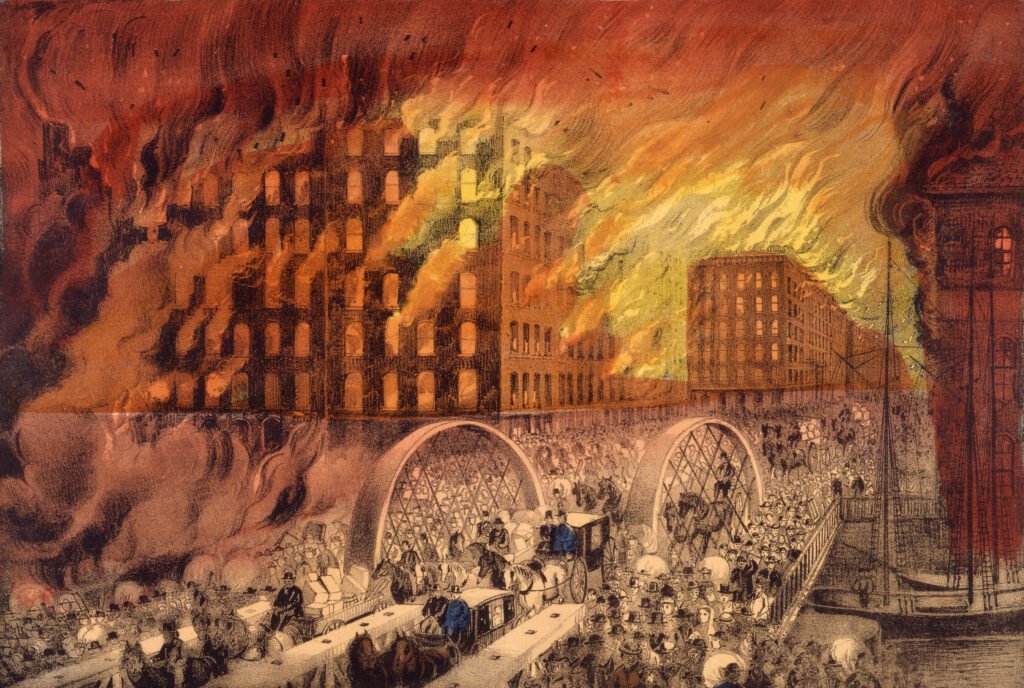
The Great Chicago Fire Levels a City Overnight
A fire of unknown origin tore through a drought-dried, wood-built city for two days, killing hundreds and leaving a hundred thousand people homeless, while legend quickly blamed a cow that almost certainly didn’t do it.
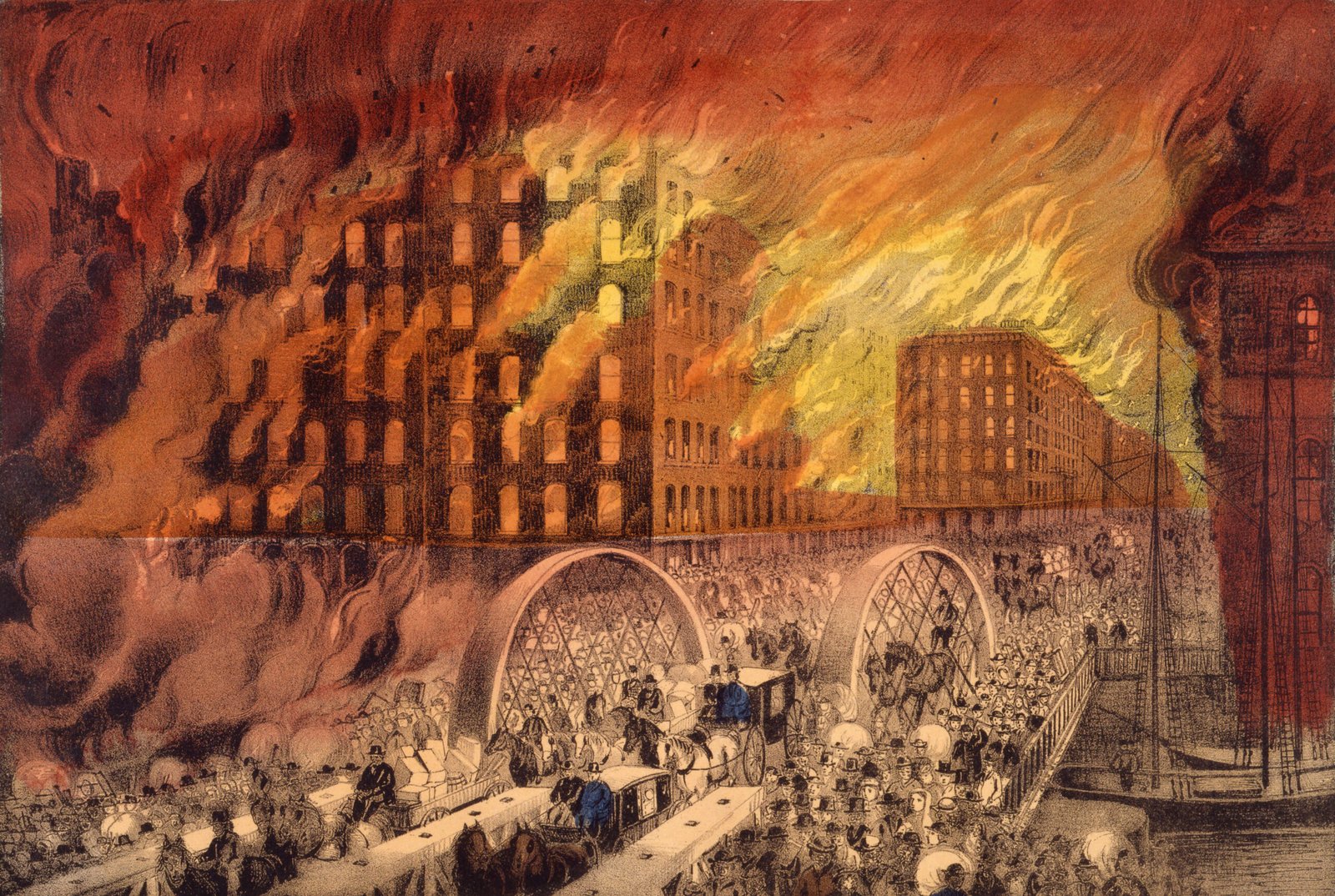
Just after 9 p.m. on October 8, 1871, fire broke out in a barn behind the De Koven Street home of Patrick and Catherine O’Leary. Driven by strong winds after a parched summer, it swept through a city built largely of wood, finally halted by rain and open ground on the morning of October 10. It killed roughly 300 people and destroyed about 17,500 buildings.
The fire forced American cities to rethink how they built. Chicago adopted stricter codes requiring brick and stone downtown, insurers tightened standards nationwide, and the rebuilding drew architects such as Daniel Burnham, whose towers helped make the city a birthplace of the modern skyscraper.
Within days, a tidy story blamed Catherine O’Leary’s cow for kicking over a lantern, a tale investigators never proved and the city officially renounced 126 years later. Disasters get explained before they are understood, and the convenient story often outlives the complicated truth.
People Behind the Story
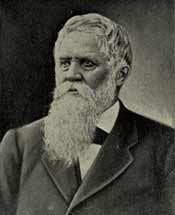
Less than two years into office, Mason publicly handed responsibility for keeping order to the U.S. Army on October 11, 1871, while insisting civil law and his own government stayed in charge.
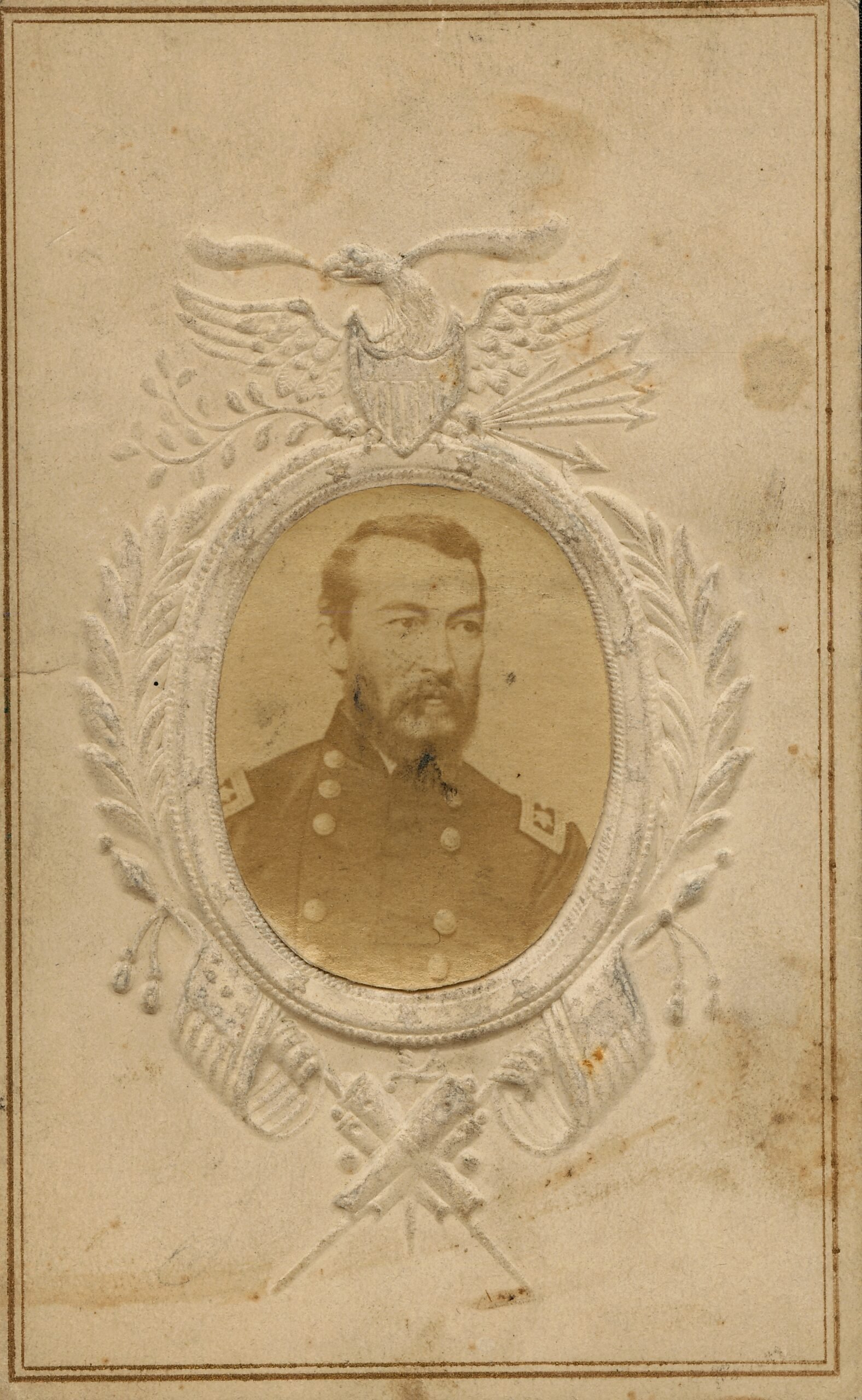
Agreed, at citizens’ urging, to station troops in the ruined city for about two weeks. He reported not a single case of arson or lynching, though a sentry under his command fatally shot a former army colonel during curfew duty.
Key Moments
Around 9 p.m., fire breaks out on Chicago’s Near West Side and begins its run north and east across the city.
Rain and the open ground of unbuilt lots finally stop the fire, roughly 30 hours after it began.
Mayor Mason’s proclamation hands peacekeeping to General Sheridan, who keeps federal troops in the city for about two weeks.
The Chicago City Council formally exonerates Catherine O’Leary and her cow, 126 years after the fire, without naming another cause.
Did you know? The same drought and windstorm also drove a wildfire through Peshtigo, Wisconsin, roughly 250 miles north, the same night. It remains the deadliest wildfire in U.S. history, with a death toll historians put as high as 2,500, far above Chicago’s, yet it is barely remembered today.
- “Great Chicago Fire,” Encyclopaedia Britannica
- “Great Chicago Fire,” Wikipedia
- “Whodunit? The Mystery of Mrs. O’Leary’s Cow,” Chicago Public Library
- “Military Rule in Chicago,” The Great Chicago Fire and the Web of Memory, Chicago History Museum
- “The Peshtigo Fire: America’s Deadliest Wildfire,” History.com