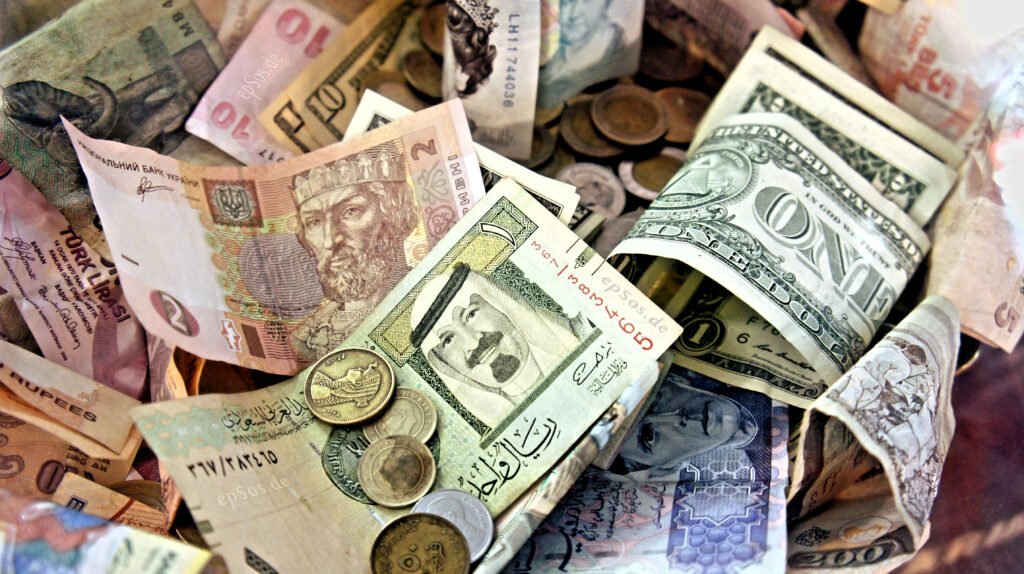
Currency exchange rates fluctuate because a currency’s value, like the price of anything else, is set by supply and demand — and that supply and demand shifts constantly in response to interest rates, inflation, trade flows, political events, and plain market speculation. Open a currency-conversion app on two different days and the number staring back can be noticeably different, sometimes by a fraction of a percent, sometimes by several, because behind every tick of the dollar-euro or dollar-yen rate is a tangle of decisions made by central banks, traders, importers, and governments around the world.
Interest Rates Are the Biggest Driver
Few factors move currency markets as consistently as interest rates. When a central bank like the Federal Reserve raises its benchmark rate, government bonds and other interest-bearing assets denominated in that currency become more attractive to global investors chasing higher returns. That pulls in foreign capital, increases demand for the currency needed to buy those assets, and tends to push its value up relative to currencies offering lower rates. Economists describe the underlying relationship with a concept called uncovered interest parity — the theory that interest rate differences between two countries should roughly match the market’s expectation of how their exchange rate will move. In the short run, actual currency moves are notoriously close to unpredictable, but the connection between rates and currency strength tends to reassert itself over longer stretches.
Inflation Erodes Purchasing Power
Inflation and exchange rates are closely linked. When prices inside a country rise faster than they do elsewhere, each unit of that country’s currency buys less, both at home and, eventually, in international markets. Foreign investors and trading partners take notice, and demand for a currency experiencing high inflation tends to soften, pushing its exchange rate down. That’s part of why central banks treat inflation control as intertwined with currency stability: persistent inflation without an offsetting rise in interest rates typically translates into a weaker currency over time.
Trade Balances Shift the Flow of Money
Every import and export transaction requires currency to change hands, and the net effect of all that trading activity shapes exchange rates too. A country that exports more than it imports sees more foreign buyers seeking out its currency to pay for those goods, which tends to strengthen it. When export prices rise faster than import prices — improving what economists call a country’s terms of trade, the ratio between what it earns on what it sells abroad and what it pays for what it buys — that effect intensifies. A country running a large and growing trade deficit, buying more from abroad than it sells, tends to see the opposite: steadier downward pressure on its currency as more of it flows out to pay foreign suppliers.
Political Stability Shapes Investor Confidence
Currency markets are, at their core, a bet on a country’s future. Political turmoil, contested elections, sudden policy shifts, or geopolitical conflict inject uncertainty that makes investors nervous about holding a currency, its bonds, or assets denominated in it. That uncertainty can trigger capital flight, meaning investors moving money into currencies perceived as safer, like the U.S. dollar, Swiss franc, or Japanese yen during periods of global stress. The effect runs in both directions at once: it weakens the currency being abandoned and strengthens the ones treated as havens.
Speculation Can Move Rates on Its Own
Not every currency move traces back to a fundamental economic shift. The foreign exchange market is also home to enormous volumes of speculative trading, where investors buy or sell currencies based on where they expect rates to head next, not necessarily on today’s economic data. If enough traders come to believe a currency is overvalued, their collective selling can become self-fulfilling, pushing the rate down independent of any actual change in interest rates, inflation, or trade flows.
That’s one reason exchange rates can swing sharply in the short term even when the underlying economic fundamentals haven’t moved much at all — and why, over longer horizons, rates tend to drift back toward the levels those fundamentals would suggest. No single factor above fully explains any given day’s move; it’s usually several of them pulling in different directions at once, with whichever force is strongest that day setting the tone.