Gross domestic product, or GDP, is the total dollar value of all final goods and services produced within a country’s borders in a given period, usually a quarter or a year — and it matters because that single number shapes decisions at the Federal Reserve, in Congress, and in corporate boardrooms every time it’s released. In the second quarter of 2026, U.S. GDP topped $32.4 trillion on an annualized basis, according to the Bureau of Economic Analysis. But what exactly is being counted, and why does one quarterly figure carry so much weight?
How Economists Actually Calculate It
The Bureau of Economic Analysis (BEA), the federal agency responsible for the official figures, most commonly builds GDP using the expenditure approach, summarized by the formula C + I + G + (X − M). That stands for consumption (spending by households), investment (spending by businesses on equipment, structures, and inventories, plus residential construction), government spending (purchases of goods and services by federal, state, and local governments), and net exports (the value of exports minus imports). Because import data can’t always be cleanly separated from domestic sales figures, subtracting imports is what keeps the final number reflecting only what was actually produced inside the country.
What Counts, and What Doesn’t
Only “final” goods and services are counted, to avoid double-counting. If a lumber mill sells wood to a furniture maker, that wood isn’t counted separately — only the finished chair’s sale price is, since the value of the lumber is already embedded in it. GDP also excludes purely financial transactions like stock trades, resales of existing homes, and transfer payments such as Social Security checks, since none of those represent new production. Unpaid work, like caregiving or household labor, and activity in the informal or “underground” economy are left out entirely, which is one reason economists treat GDP as an incomplete, though still essential, snapshot of economic activity.
Real GDP vs. Nominal GDP
The BEA publishes GDP in two forms. Nominal, or “current-dollar,” GDP reflects output valued at today’s prices. Real, or “chained,” GDP strips out the effects of inflation, which is what makes it possible to compare economic output across different time periods on an apples-to-apples basis. When news reports describe the economy as having “grown 2.5% last quarter,” they’re almost always referring to real GDP growth, since nominal figures can rise simply because prices went up even if the country produced the same amount of stuff. The BEA releases three successive estimates for each quarter — an advance estimate about a month after the quarter ends, followed by second and third estimates as more complete data becomes available — with the next release due September 30, 2026.
Why It Ripples Into Everyday Life
GDP growth, or contraction, touches household budgets directly. The Federal Reserve watches GDP trends closely when setting interest rates, which affect everything from mortgage costs to credit card APRs. Businesses use GDP data to decide whether to expand, hire, or pull back, and investors watch GDP reports for clues about corporate earnings and market direction. Two consecutive quarters of falling real GDP is one commonly cited informal marker economists watch when discussing recession risk, though the official U.S. determination is made separately by a committee at the National Bureau of Economic Research that weighs employment, income, and other factors too.
What GDP Doesn’t Capture
Despite its outsized influence, GDP was never designed to measure well-being, inequality, or environmental health, and economists are quick to point that out. A country can post strong GDP growth even as income gaps widen or natural resources are depleted. That’s why many researchers pair GDP data with other indicators, such as median household income, employment rates, or measures of health and education, to get a fuller picture. Even with that limitation, GDP remains the most widely cited yardstick for the size and direction of economic activity in the world, which is exactly why its quarterly release keeps making headlines.
- U.S. Bureau of Economic Analysis, “What to Know: GDP.” Article.
- U.S. Bureau of Economic Analysis, “The Expenditures Approach to Measuring GDP.” Article.
- Federal Reserve Bank of St. Louis, “Gross Domestic Product (GDP), FRED.” Data series.
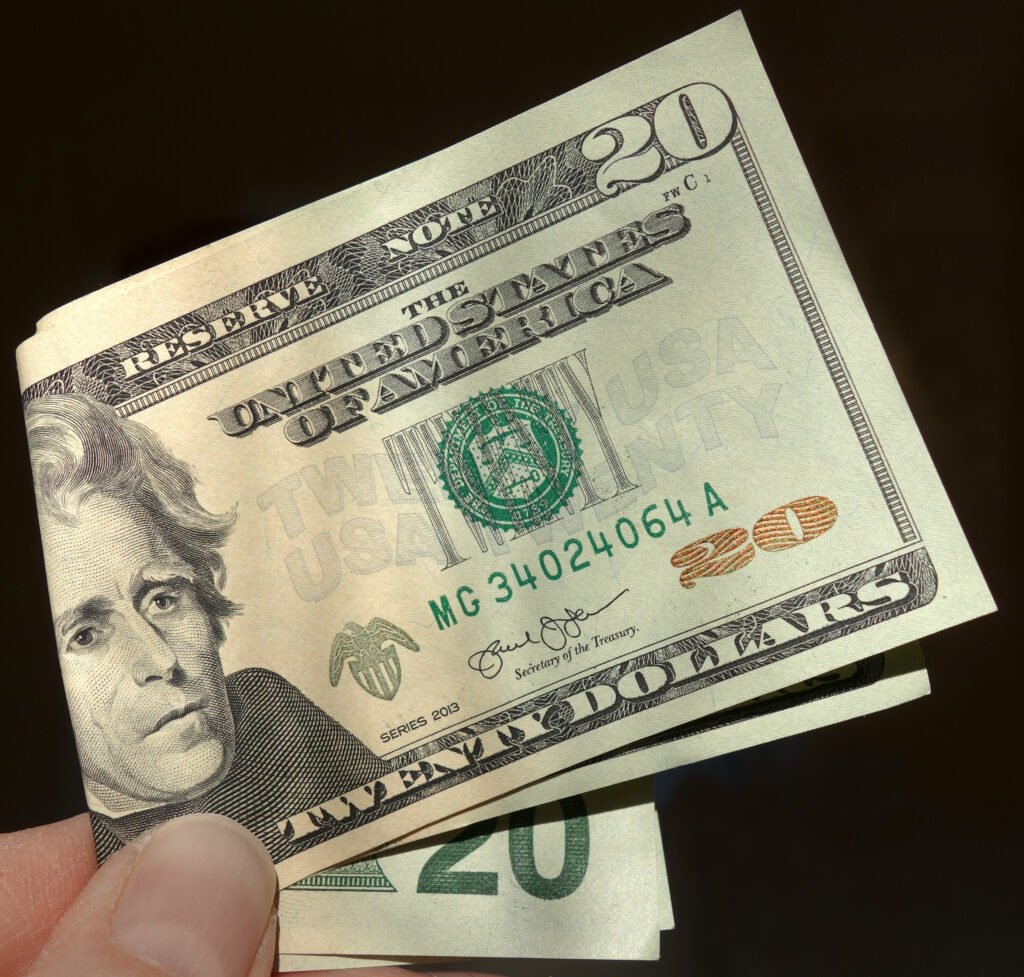
- Photo: United States Department of the Treasury, Public domain, via Wikimedia Commons.