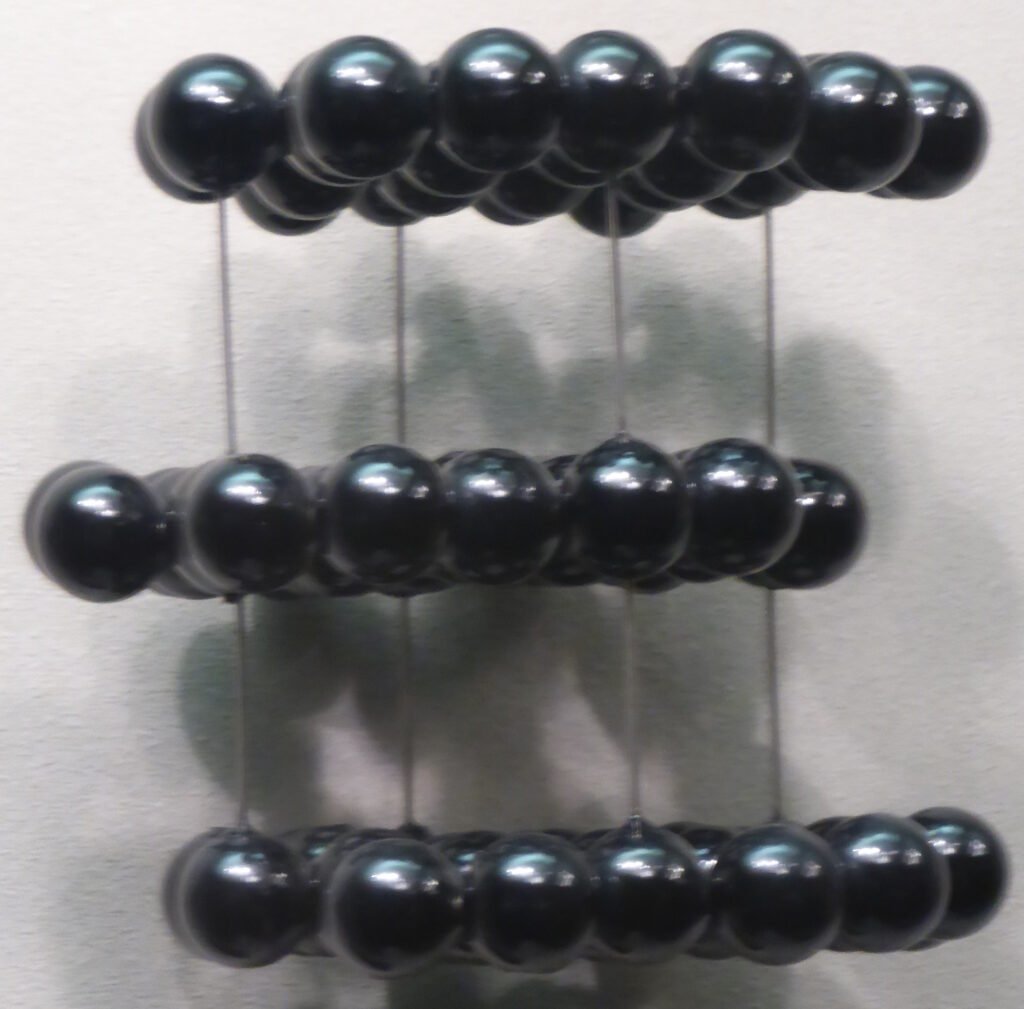
Graphite is the dark, slippery form of carbon that fills pencils, lubricants and, increasingly, the negative electrode of lithium-ion batteries. The U.S. Geological Survey (USGS) Mineral Commodity Summaries 2026 reports that the United States imported all of the natural graphite it used in 2025, and that China produced about four-fifths of the world’s supply. This article summarizes the USGS figures.
What is natural graphite used for?
USGS says natural graphite is widely used in batteries, brake linings, lubricants, powdered metals, refractory applications and steelmaking, and also in some defense-related materials. U.S. apparent consumption was an estimated 71,000 metric tons in 2025, valued at $128 million. Consumption reached its highest level since 1978 in 2022, according to the agency, and stayed elevated through 2025. Our article on how electric car batteries work explains the role of the battery electrode.
How dependent is the United States on imports?
USGS lists net import reliance at 100% of apparent consumption in every year from 2021 through 2025. The country has no domestic mine production of natural graphite and holds no government stockpile. Imports were an estimated 79,000 tons in 2025. By type, 73.4% were flake and high-purity graphite, 26.2% were amorphous and 0.4% were lump and chip. For 2021 to 2024, import sources were China (46%), Canada (13%), Mozambique (13%) and Mexico (12%).
Who produces graphite?
USGS estimates world mine production at 1.8 million tons in 2025, up from 1.55 million tons in 2024. The leading producers for 2025 are:
- China: 1,400,000 tons
- Madagascar: 80,000 tons
- Tanzania: 75,000 tons
- Brazil: 65,000 tons
- Mozambique: 60,000 tons
The text says China produced an estimated 82% of the world total. Dividing the table’s 1.4 million tons by the rounded 1.8 million gives about 78%, so the two differ slightly. We follow the text and note the gap. Either way, roughly four-fifths of production comes from one country. Tanzania more than doubled its output to 75,000 tons, according to USGS. Our entries on Tanzania, Madagascar and Mozambique cover three of the other producers.
What are the reserves?
USGS lists world reserves at 310 million tons. China holds 100 million, Brazil 74 million, Madagascar 27 million, Mozambique 25 million and Tanzania 18 million. USGS also says resources outside the United States exceed 800 million tons.
Why are battery anode materials in the news?
US imports of graphite battery anode material, both natural and synthetic, were 43,400 tons from January to August 2025, compared with 28,100 tons in the same period of 2024. By our own arithmetic, that is a rise of about 54%. The leading sources of anode material in 2025 were China (55%), Indonesia (31%) and the Republic of Korea (14%). USGS also reports that a preliminary Department of Commerce finding on Chinese active anode material set antidumping duties of 93.50% and countervailing duties from 11.58% to 721.03%. We report these as USGS describes them. They are trade measures, and the USGS summary does not evaluate them.
What is changing on the supply side?
USGS lists new or restarted production in Tanzania, Mozambique, Brazil and Russia. In Mozambique, the Balama operation restarted in June 2025. Five U.S. projects are in development, and one Alaska project plans an average of 175,000 tons of concentrate per year over 20 years. China’s natural graphite exports from January to September 2025 were 115,000 tons, up 6% from a year earlier, and its exports of spherical purified graphite rose 29% to 37,400 tons. The summary does not forecast how these projects will change the balance of supply. Our article on the Global EV Outlook covers the demand side for battery materials.
What do import prices show?
USGS reports average import unit values by type. For flake graphite the 2025 estimate is $1,000 per ton, down from $1,050 in 2024 and $1,330 in 2021. Amorphous graphite is estimated at $470 per ton in 2025 against $535 in 2024. Lump and chip graphite from Sri Lanka is the highest priced at an estimated $2,600 per ton. Falling unit values for flake and amorphous graphite show that rising consumption did not produce rising import prices over this period, although the summary does not explain why. The agency also notes that crystalline flake, powder and other natural graphite enter the United States duty-free under normal trade relations as of December 31, 2025.
How to read the numbers
The table gives metric tons, so 1,400,000 means 1.4 million tons. Figures marked e are estimates that USGS may revise. Apparent consumption equals production plus imports minus exports, plus changes in stocks. With no domestic mine output, it is essentially imports minus exports. By our own arithmetic, 79,000 tons imported minus 8,400 tons exported gives about 70,600 tons, close to the 71,000 tons USGS reports. Dividing the $128 million consumption value by 71,000 tons gives an average of about $1,800 per ton, which is our calculation and reflects a mix of grades.
Glossary
- Flake graphite: graphite in thin flakes, the main form used for batteries
- Amorphous graphite: a finer, lower-purity natural form
- Anode: the negative electrode of a lithium-ion battery
- Spherical purified graphite: flake graphite shaped and purified for battery anodes
- Synthetic graphite: graphite made industrially, often from petroleum coke
These definitions are general explanations and are not quoted from USGS.
Can anything replace graphite?
USGS lists synthetic graphite powder and secondary synthetic graphite as substitutes in batteries, and calcined petroleum coke in steelmaking. Molybdenum disulfide can replace graphite as a dry lubricant but is more sensitive to oxidizing conditions. The summary gives no separate production or price figures for synthetic graphite, so we do not either.
Key facts at a glance
- U.S. net import reliance: 100% since 2021
- World mine production: 1.8 million tons in 2025
- China’s share: about four-fifths
- World reserves: 310 million tons
- U.S. apparent consumption: 71,000 tons, valued at $128 million
Frequently asked questions
Does the United States mine graphite?
No. USGS reports no domestic mine production, and several projects are in development.
Who produces the most?
China, at an estimated 1.4 million tons in 2025.
What is graphite used for?
Batteries, brake linings, lubricants, powdered metals, refractories and steelmaking, among other uses.