Overview
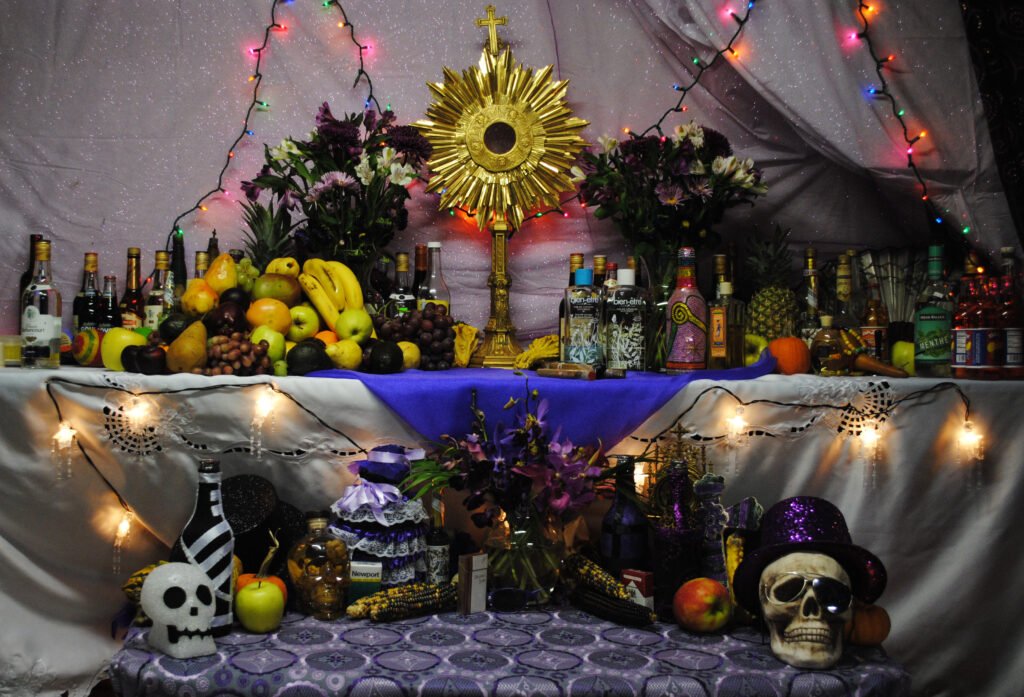
Syncretism describes the process by which elements from two or more distinct religious traditions combine to form new beliefs, rituals, or symbolic systems. Rather than one tradition simply replacing another, syncretism produces a genuinely blended result in which features from multiple sources become integrated, sometimes so thoroughly that practitioners no longer experience them as separate.
Historical Examples
Classic examples include Haitian Vodou, which combines West African religious traditions with elements of Roman Catholicism introduced during the colonial period, and various folk Buddhist traditions across Asia that incorporate local spirit worship alongside canonical Buddhist teaching. Such blending frequently occurred under conditions of colonization, forced migration, or sustained trade contact between distant cultures.
Mechanisms of Blending
Syncretic traditions often arise when a dominant or incoming religion encounters existing local practices that communities are unwilling to fully abandon, leading to creative reinterpretation in which local figures become identified with figures from the newer tradition, or local ritual calendars absorb newly introduced festivals. This process can unfold gradually over generations rather than through any single deliberate decision.
Debates Over the Concept
Scholars have debated whether the very category of syncretism implicitly assumes that some traditions exist in a pure, unmixed form, when in fact virtually all religious traditions have been shaped by historical contact and exchange to some degree. Critics argue the term can carry an implicit value judgment, treating blended traditions as somehow less authentic than supposedly pure ones.
Positive and Critical Framings
Some scholars and practitioners embrace syncretism as evidence of creative adaptation and resilience, particularly in traditions that developed among marginalized or colonized communities working to preserve ancestral practice under pressure. Others, often from within more doctrinally bounded traditions, view syncretic blending as a dilution or corruption of authentic teaching that should be resisted.
Role Today
Syncretic religious forms remain widely practiced today, particularly across the Americas, Africa, and Asia, and continue to attract significant scholarly attention as living examples of how religious traditions adapt, combine, and transform through sustained cultural contact across history.
Syncretism in Contemporary Practice
Beyond the classic historical examples, syncretic patterns continue to emerge in contemporary religious life, particularly within rapidly globalizing urban settings where migrants bring traditions into close contact with new local religious environments, producing fresh blends that scholars continue to study as they develop in real time.
Digital communication has also created new avenues for syncretic exchange, as practitioners encounter teachings, practices, and symbols from traditions they might never have contacted directly, sometimes incorporating elements selectively into highly individualized personal spiritual practices that draw on multiple sources simultaneously.
Methodological Considerations
Scholars studying syncretism today generally try to describe blending processes without assuming any original pure tradition existed prior to contact, recognizing that virtually every religious tradition has been shaped by exchange and adaptation across its history, making syncretism less an exception and more a pervasive feature of religious development generally.
Syncretism and Identity
Communities practicing syncretic traditions sometimes face pressure from more doctrinally strict branches of either contributing tradition, who may view the blended practice as an illegitimate departure requiring correction or abandonment in favor of a more orthodox form, creating ongoing tension between syncretic communities and reform-minded coreligionists.
At the same time, many practitioners of syncretic traditions experience their blended practice as fully coherent and authentic rather than as some incomplete compromise between two separate systems, highlighting how insider and outsider perspectives on syncretism can differ substantially from one another.
Scholarly Classification Challenges
Classifying syncretic traditions for academic or demographic purposes poses persistent challenges, since standard religious category systems often assume discrete, mutually exclusive traditions that fit poorly with the lived reality of communities whose practice draws meaningfully on multiple sources at once.
These classification challenges continue to shape scholarly debate over how religious identity itself should be understood and measured.
Syncretism and Power
Scholars studying colonial-era syncretism increasingly attend to questions of power, noting that blending often occurred under conditions of significant inequality between colonizing and colonized traditions, which shapes how syncretic practices should be interpreted, not simply as neutral cultural mixing but as creative responses to specific historical conditions of domination and resistance.
This attention to power and history has enriched scholarly understanding of syncretism well beyond earlier, more purely descriptive accounts of cultural blending.
Closing Note
Syncretism remains a vital lens for understanding how religious traditions adapt and transform through sustained contact across history and into the present day.
Its study continues to grow as globalization brings ever more traditions into sustained contact with one another.
Syncretism in Art and Material Culture
Syncretic blending often leaves visible traces in material culture and artistic production, with sacred objects, imagery, and architecture frequently combining stylistic and symbolic elements drawn from multiple traditions, offering scholars tangible evidence of how blending unfolded historically.
Museums and scholars increasingly treat such objects as valuable primary sources for understanding syncretic religious history.
Closing Thought
Material evidence continues to deepen scholarly understanding of how syncretic traditions actually developed over time.
Each newly studied artifact or practice adds further texture to the broader historical picture of cultural and religious exchange.
Final Note
Syncretic traditions, far from marginal curiosities, illustrate something central about how religion actually lives and changes.
Scholars expect this picture to keep growing richer with further research.
New discoveries continue to surface regularly in this active field.
Researchers remain engaged with this growing body of evidence.
Interest continues to grow among scholars and the wider public alike.
Each new finding adds further nuance to this picture.
That picture keeps evolving steadily with each new study.
Key facts
- Array
Quick checkWhat historical conditions commonly produce religious syncretism?Show answer
Sustained cultural contact through trade, migration, conquest, or colonization commonly brings traditions into close proximity, creating conditions for elements of each to blend into new syncretic forms.
Sources
- Array
Editorially reviewed by Specialty Digest Editorial TeamLast reviewed November 4, 2026Researched and drafted with AI assistanceReport an issue