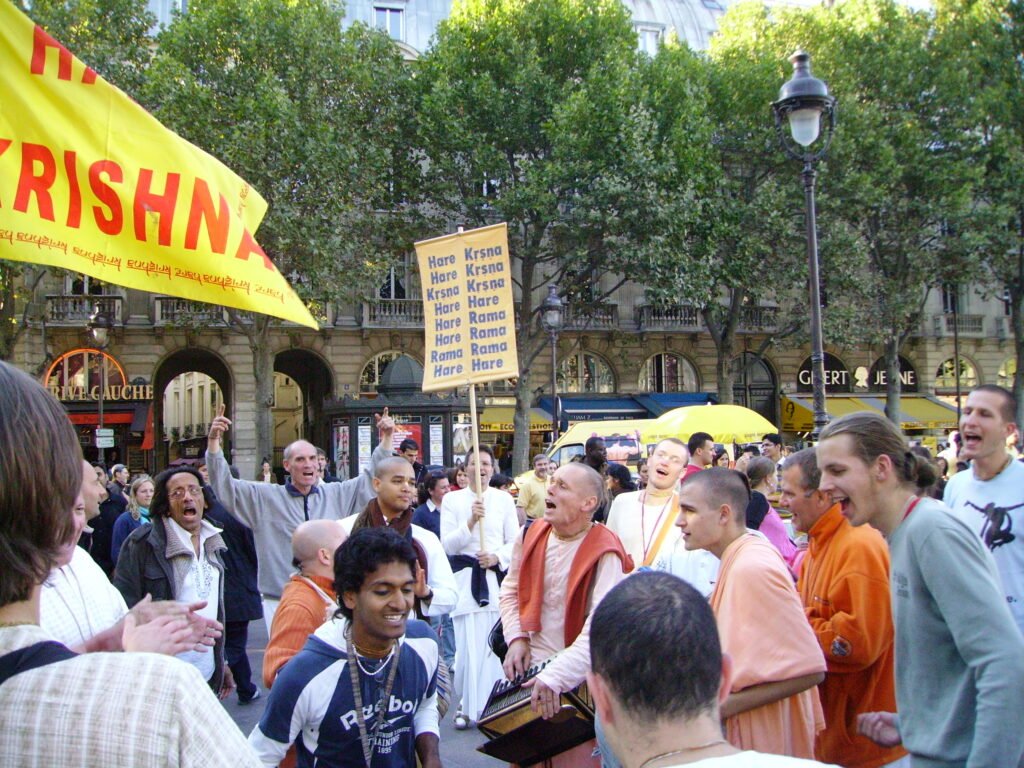
Overview
A new religious movement is a religious or spiritual group whose origins can typically be traced to the modern period and which exists outside long-established mainstream traditions. Scholars adopted this term partly to replace the more popular but value-laden word cult, which tends to carry strongly negative connotations that can interfere with careful, neutral academic study.
Characteristics
New religious movements vary enormously in size, structure, and belief content, ranging from small local groups centered on a single charismatic founder to large international organizations with millions of adherents and substantial institutional infrastructure. Many, though not all, trace their origins to a founder claiming new revelation, direct spiritual experience, or a reinterpretation of existing religious tradition.
Academic Study
The academic study of new religious movements developed as a distinct subfield beginning in the 1970s, partly in response to public concern over a wave of new groups active during that period. Scholars in this field generally aim to describe and analyze such movements using the same methods applied to older, more established religions, resisting the assumption that newness itself implies danger or illegitimacy.
Controversy and Public Perception
Public perception of new religious movements has often been shaped by high-profile cases involving allegations of manipulation, financial exploitation, or violence associated with particular groups. Scholars generally caution against generalizing from a small number of extreme cases to the much larger and more varied population of new religious movements as a whole.
Relationship to Established Religion
Many traditions now considered mainstream, including several widely practiced religions today, began as new religious movements relative to the dominant traditions of their own time and place. This historical pattern suggests that the boundary between new movement and established religion is itself a matter of time and social acceptance rather than any fixed essential difference.
Role Today
New religious movements continue to form and spread across the contemporary world, aided in some cases by digital communication and global connectivity, and remain an active area of sociological and religious studies research into questions of belief, community, and social change.
Legal and Social Status
New religious movements face varied legal treatment across different countries, with some governments extending the same religious freedom protections granted to established traditions, while others impose additional registration requirements, restrictions, or outright bans on groups deemed potentially dangerous or deceptive toward members and the wider public.
This variation often reflects broader cultural and political attitudes toward religious minorities generally, and scholars note that the legal and social treatment of a given new movement can shift considerably over time as public perception changes or as a movement itself evolves in its practices and public presentation.
Membership and Conversion Patterns
Research into who joins new religious movements has generally found that recruitment follows patterns similar to those observed in other voluntary organizations, with social networks, personal relationships, and life transitions playing larger roles than the dramatic manipulation narratives sometimes suggested in popular media coverage of such groups.
Digital Age Dynamics
The internet and social media have substantially changed how new religious movements form, spread, and sustain themselves, enabling founders to reach potential adherents across national borders instantly and allowing geographically dispersed members to maintain community connection without relying on physical gathering spaces in the way earlier movements typically required.
This digital dimension has also complicated scholarly efforts to track and study new movements, since online-centered groups can form and dissolve with a speed and informality that differs considerably from the more institutionally bounded movements that dominated earlier academic study of this phenomenon.
Comparative Perspective
Comparing contemporary new religious movements with the early history of now-established traditions often reveals recurring patterns, including initial public suspicion, gradual institutionalization, and eventual broader social acceptance for those movements that endure across multiple generations of leadership and membership.
These comparative patterns continue to inform how scholars assess the likely future trajectory of movements active today.
Scholarly Networks
Dedicated academic associations and journals now support sustained scholarly exchange on new religious movements, helping establish shared standards of evidence and interpretation that distinguish careful academic study from more sensationalized popular treatment of such groups in media coverage.
This maturing scholarly infrastructure continues to strengthen the overall rigor and credibility of the field as it studies an ever-changing religious landscape.
Closing Note
New religious movements remain a vital and ever-changing subject of study, offering insight into how religious innovation continues to unfold in the contemporary world.
Its study continues to attract scholars drawn to the dynamic, often rapidly shifting nature of religious innovation today.
Leadership Succession
A critical and often difficult moment for new religious movements involves leadership succession following the death or departure of a founding figure, with many movements struggling to maintain cohesion and momentum once the original charismatic authority that drew early followers is no longer present.
How a movement navigates this transition often determines whether it endures for generations or gradually fades after its founder passing.
Scholars continue to track these transitions closely as a window into the long-term durability of religious innovation.
The field as a whole continues to mature, offering an increasingly sophisticated account of how religious innovation actually unfolds.
Final Note
Those who study these movements closely gain a valuable window into the ongoing creativity of human religious life.
That creativity shows no sign of slowing anytime soon.
More groups will likely emerge as social conditions continue to shift.
Researchers will continue tracking these shifts closely.
Interest continues to grow among scholars and the general public alike.
It endures.
Scholars remain watchful of these trends.
Key facts
- Array
Quick checkWhy do scholars generally prefer the term new religious movement over cult?Show answer
The term new religious movement offers a more neutral, analytical label, since cult carries strong negative connotations that can prejudge a group before it has been studied on its own terms.
Sources
- Array
Editorially reviewed by Specialty Digest Editorial TeamLast reviewed November 4, 2026Researched and drafted with AI assistanceReport an issue