Overview
The Islamic Golden Age refers to a remarkable period of scientific, cultural, and economic flourishing across the Muslim world, generally dated from roughly the eighth through the thirteenth centuries, during which scholars working within Islamic civilization made substantial contributions across mathematics, medicine, astronomy, philosophy, and the arts.
Centers of Learning
Baghdad, capital of the Abbasid Caliphate, emerged as a major center of scholarship, home to the renowned House of Wisdom, where scholars translated and built upon Greek, Persian, and Indian texts while producing substantial original scholarship of their own across numerous fields of inquiry.
Scientific Achievements
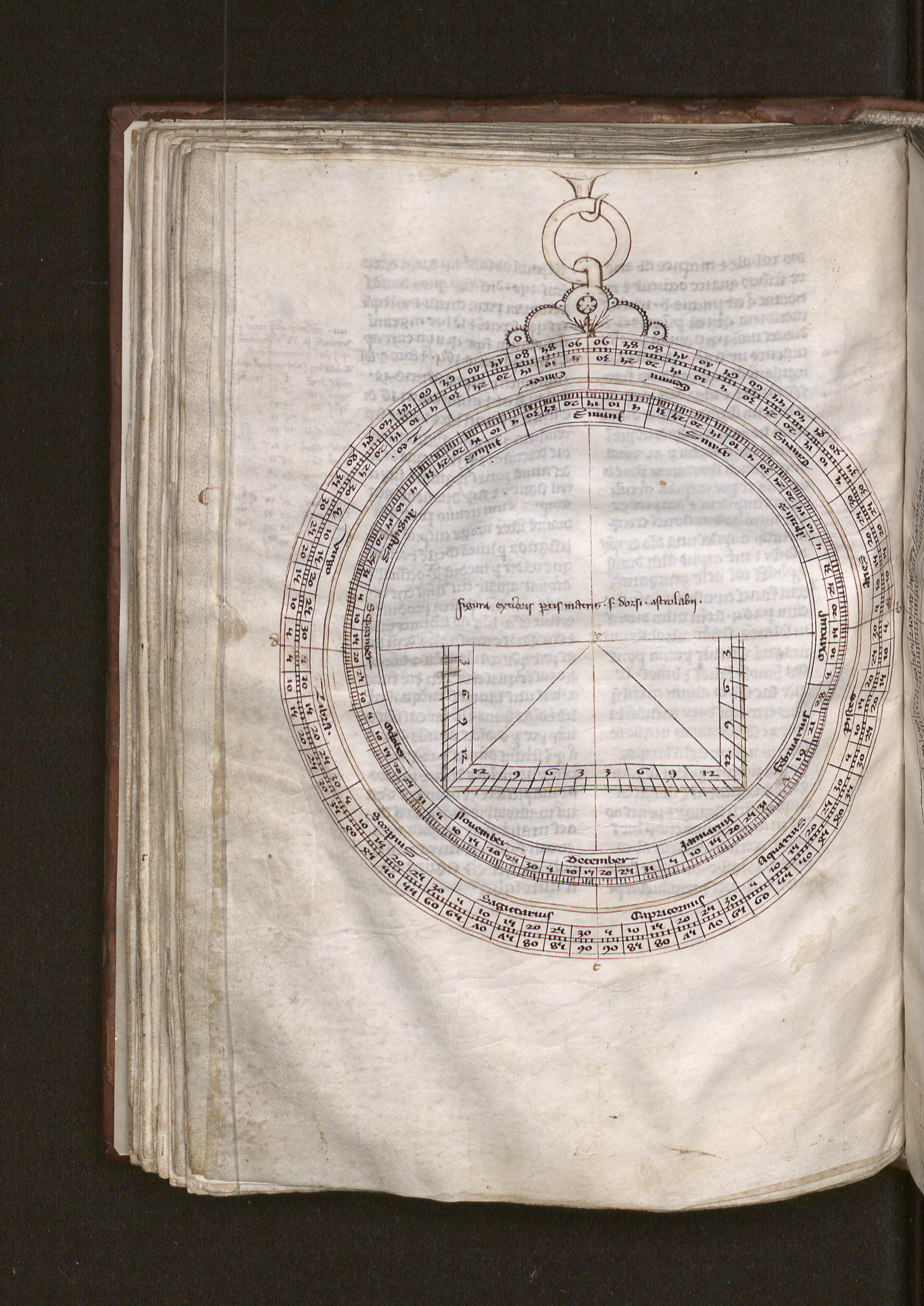
Scholars of this period made lasting contributions including advances in algebra, the development of modern numeral systems, significant astronomical observation and instrument-making, and substantial medical knowledge recorded in widely influential texts that later shaped European medical education for centuries following their translation into Latin.
Cultural and Intellectual Life
Beyond the sciences, this period produced significant achievements in poetry, philosophy, historiography, and the arts, supported by a broader culture that valued scholarly patronage, extensive library collections, and sustained intellectual exchange across the Muslim world extending from Spain through North Africa to Central Asia.
Decline
Various factors contributed to the eventual decline of this golden age, including prolonged political fragmentation across the Muslim world, economic disruption, and the devastating Mongol invasions of the thirteenth century, which included the destruction of Baghdad and considerable loss of accumulated scholarly resources and institutions.
Role Today
The Islamic Golden Age legacy continues to be studied as a crucial chapter in the broader history of science and ideas, having played a vital role in preserving, extending, and eventually transmitting classical knowledge that significantly influenced the later European Renaissance and scientific development.
Translation Movement
A major translation movement brought vast bodies of Greek, Persian, and Indian scholarship into Arabic, often accompanied by substantial original commentary and extension of the source material, laying groundwork that later scholars across medicine, astronomy, and philosophy built upon for subsequent generations of Islamic and, eventually, European scholarship.
Figures such as the physician and philosopher Ibn Sina, known in the West as Avicenna, and the mathematician al-Khwarizmi, whose name gives rise to the modern term algorithm, exemplify the broad and lasting scholarly contributions produced during this period across multiple fields of inquiry.
Geographic Reach
Scholarly activity extended well beyond Baghdad, with significant centers also flourishing in Cordoba, Cairo, and other major cities across the Islamic world, reflecting a broad and interconnected scholarly culture extending from the Iberian Peninsula through North Africa and the Middle East into Central Asia.
Preservation of Classical Knowledge
Scholars working during this period played a crucial preservation role, maintaining access to numerous ancient Greek texts that might otherwise have been lost entirely, later transmitting this material back into Western Europe through Latin translation during the medieval period, significantly influencing the later European intellectual revival.
This preservation and transmission role meant that Islamic scholarship served as a crucial bridge connecting ancient Mediterranean learning with the later European Renaissance, a historical debt increasingly recognized within modern accounts of the broader history of science and philosophy.
Decline and Fragmentation
Alongside the Mongol invasions, gradual political fragmentation across the Muslim world and shifting trade patterns contributed to the eventual decline of the centralized scholarly networks that had sustained the golden age, though significant scholarly activity continued in various regional centers well beyond the traditional end date.
Legacy in Modern Scholarship
Contemporary historians of science increasingly emphasize the substantial original contributions made during this period, moving beyond earlier narratives that treated Islamic scholarship merely as a passive conduit preserving Greek knowledge for later European use, toward fuller recognition of genuinely original advances across mathematics, medicine, and other fields.
This revised historical understanding has influenced museum exhibitions, educational curricula, and popular historical writing, contributing to broader public recognition of the Islamic Golden Age as a period of substantial independent intellectual achievement rather than simply an intermediary stage between ancient and modern European science.
Closing Note
The Islamic Golden Age remains a vital chapter in the global history of science and ideas, a reminder that the development of human knowledge has never belonged to any single civilization but has instead passed through many hands across many centuries and regions.
Scholars continue uncovering fresh evidence of its scope, enriching an already remarkable historical record of achievement.
Final Thought
This remarkable period stands as a powerful reminder that scientific and intellectual progress has always depended on exchange and collaboration across cultures, languages, and civilizations rather than isolated achievement within any single tradition.
Its contributions remain woven into the fabric of modern science and mathematics worldwide.
Each new archival discovery adds further depth to this already rich historical record of achievement.
Few periods demonstrate quite so clearly how knowledge travels and grows across cultures and centuries.
Its echo persists across many fields of study even now.
Historians, scientists, and educators alike continue to study its patterns closely.
That scrutiny shows no sign of ending soon, given how much remains to be learned.
New studies of its manuscripts keep appearing regularly, deepening the historical record considerably further still.
Interest shows no sign of fading anytime soon among historians of science and ideas.
It remains a cornerstone topic for historians of global scientific development.
It endures as a defining chapter of world scientific history.
It will likely remain so for a long time yet to come.
Scholars working under Abbasid patronage drew on earlier Greek, Persian, and Indian learning, translating and extending it rather than simply preserving it. Mathematicians developed algebra as a distinct discipline, astronomers built observatories to refine planetary tables, and physicians compiled medical encyclopedias that remained standard references in Europe for centuries after they were written. Hospitals in Baghdad and Cairo combined patient care with medical training, a model that influenced later European institutions. Libraries and paper production, a technology that spread westward from China through Muslim lands, made books cheaper and more widely available than in contemporary Europe. This period also saw significant philosophical work, as scholars engaged with Aristotelian logic and metaphysics and debated how reason related to revealed religious truth. The era gradually gave way to political fragmentation and external pressures, including Mongol invasions in the thirteenth century, though scholarship continued in regional centers long after Baghdad itself declined as the single dominant hub.
Key facts
- Array
Quick checkWhat institution in Baghdad became especially associated with scholarship during the Islamic Golden Age?Show answer
The House of Wisdom in Baghdad became a major center for translation, research, and scholarly exchange during this period.
Sources
- Array
Editorially reviewed by Specialty Digest Editorial TeamLast reviewed November 4, 2026Researched and drafted with AI assistanceReport an issue