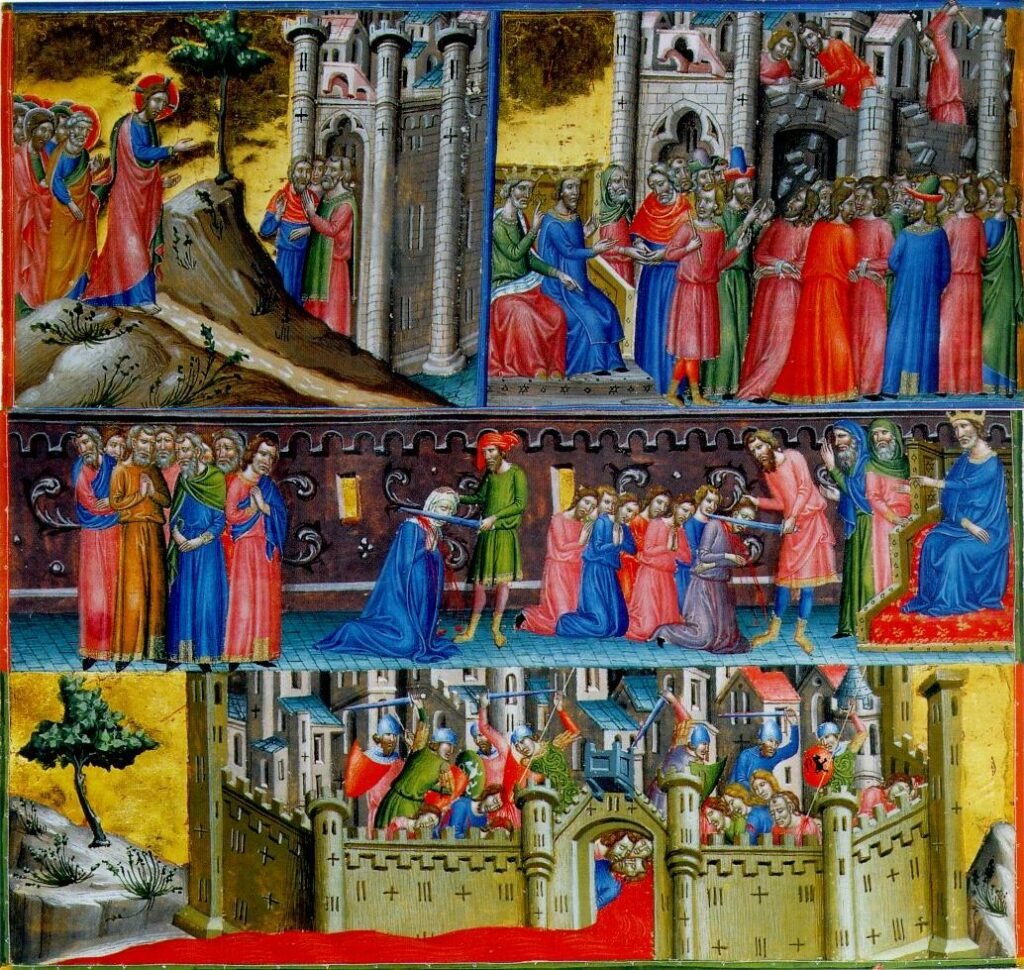
Overview
The Crusades were a series of religiously motivated military campaigns, primarily occurring between the eleventh and thirteenth centuries, through which Western European Christian forces sought to recover and defend territory in the Holy Land that had come under Muslim political control in preceding centuries.
The First Crusade
Pope Urban II call to arms in 1095 launched the First Crusade, which culminated in the capture of Jerusalem in 1099 and the establishment of several crusader states in the region, marking a significant and lasting military and political presence of Western European powers in the eastern Mediterranean.
Subsequent Campaigns
Several further crusades followed over the next two centuries, with varying degrees of success, as Muslim powers gradually recovered lost territory, eventually recapturing Jerusalem in 1187 and ultimately eliminating the last crusader strongholds by the end of the thirteenth century, bringing the main crusading period to a close.
Broader Impact
Beyond their immediate military objectives, the Crusades significantly affected relations among Christian, Muslim, and Jewish communities across the Mediterranean world, prompted considerable cultural and commercial exchange between East and West, and contributed to complex and sometimes violent interactions between crusading forces and Jewish communities encountered along campaign routes in Europe.
Later Crusades and Legacy
The crusading concept extended beyond campaigns in the Holy Land to other conflicts the papacy similarly authorized, including campaigns within Europe against groups deemed heretical, broadening the term application well beyond its original geographic and religious focus on the eastern Mediterranean.
Role Today
The Crusades remain a subject of extensive historical study and continue to carry significant symbolic weight in contemporary discussions of Christian-Muslim relations, with historians working to present a carefully documented account that moves beyond either romanticized or purely polemical popular narratives of the period.
Military and Political Organization
Crusading campaigns required substantial logistical coordination, drawing knights and soldiers from across Western Europe under a mix of religious motivation, political ambition, and economic opportunity, with crusading orders such as the Knights Templar emerging to provide military and logistical support for pilgrims and campaigns alike.
The crusader states established in the Levant developed their own distinctive political and cultural institutions, blending elements of Western European feudal practice with adaptations necessary for governing a religiously and culturally diverse local population quite different from conditions back in the crusaders home territories.
Muslim Response
Muslim leaders, including the influential figure Saladin, eventually mounted effective military and political responses that gradually reversed crusader territorial gains, recapturing Jerusalem in 1187 and demonstrating considerable skill in both military strategy and diplomatic engagement with crusader and local populations alike.
Economic and Cultural Exchange
Despite their military framing, the Crusades also facilitated significant economic and cultural exchange between East and West, including increased trade connections, exposure to new goods and ideas, and exchange of knowledge that, alongside more direct contact through Islamic Spain, contributed to broader European intellectual and commercial development in subsequent centuries.
Italian maritime city-states, including Venice and Genoa, profited substantially from crusader-related trade and transport, developing lasting commercial networks across the eastern Mediterranean that persisted well beyond the military crusading period itself and shaped subsequent European commercial expansion.
Historical Memory and Controversy
The Crusades occupy a complex and contested place in historical memory, variously remembered as heroic religious endeavor, naked aggression, or complicated mixture of genuine piety and worldly ambition, with interpretation often shaped significantly by the particular religious, national, or ideological perspective of those remembering the events.
Children Crusade and Popular Movements
Beyond the major formally organized campaigns, several popular crusading movements emerged with limited official sanction, including the so-called Children Crusade of 1212, reflecting how deeply crusading ideals had penetrated broader European popular culture well beyond the knightly class that led the major formal campaigns.
These popular movements, often poorly organized and militarily ineffective, nonetheless illustrate the widespread religious enthusiasm the crusading ideal generated across medieval European society, extending interest in the movement considerably beyond the aristocratic and clerical leadership most prominently associated with the major crusades.
Closing Note
Few historical episodes carry as much continued symbolic weight as the Crusades, whose complex and often contested legacy continues to inform historical scholarship and broader public discussion of religiously framed conflict well into the present day.
Historians continue to revisit the sources, seeking a fuller and more balanced account of this pivotal period of contact and conflict.
Final Thought
Nearly a millennium after the first campaigns set out for the Holy Land, the Crusades continue to raise difficult and important questions about the relationship between faith, violence, and the pursuit of worldly power.
Its mixed legacy still shapes how historians and the public alike think about religiously framed conflict.
Each new archaeological find adds further nuance to this long and contested historical record.
Few historical episodes have proven quite so resistant to simple or settled interpretation across the centuries since.
Its echo persists across many conversations about faith and conflict even now.
Historians, novelists, and filmmakers alike continue to revisit its dramatic events.
That scrutiny shows no sign of ending soon, given how contested the record remains.
New studies of its chronicles keep appearing regularly, deepening the historical record considerably further still.
Interest shows no sign of fading anytime soon among historians of medieval conflict.
It remains a cornerstone topic for historians of medieval Europe and the Mediterranean world.
It endures as a defining chapter of medieval history.
Participants in the crusading movement included not only knights and nobles seeking land or forgiveness of sins but also peasants who joined popular movements with little military training, sometimes with disastrous results. The Fourth Crusade, which ended with the sack of Christian Constantinople rather than any campaign against Muslim forces, illustrates how far the movement could drift from its stated religious purpose toward political and economic motives. Military orders such as the Templars and Hospitallers emerged from the crusading context, combining monastic vows with armed defense of pilgrims and territory, and they built an extensive network of castles and estates across the eastern Mediterranean. Trade contacts that grew out of the crusading period, including the exchange of goods, maps, and technical knowledge between Europe and the Levant, had effects that outlasted the military campaigns themselves. The memory of the Crusades remains a point of reference in modern political and religious rhetoric, often invoked with meanings quite different from the medieval context in which the campaigns actually occurred.
Key facts
- Array
Quick checkWhat event is generally treated as triggering the First Crusade?Show answer
A call to arms issued by Pope Urban II in 1095, urging Western Christians to recover Jerusalem and support Byzantine Christians facing military pressure, is generally treated as the trigger.
Sources
- Array
Editorially reviewed by Specialty Digest Editorial TeamLast reviewed November 4, 2026Researched and drafted with AI assistanceReport an issue