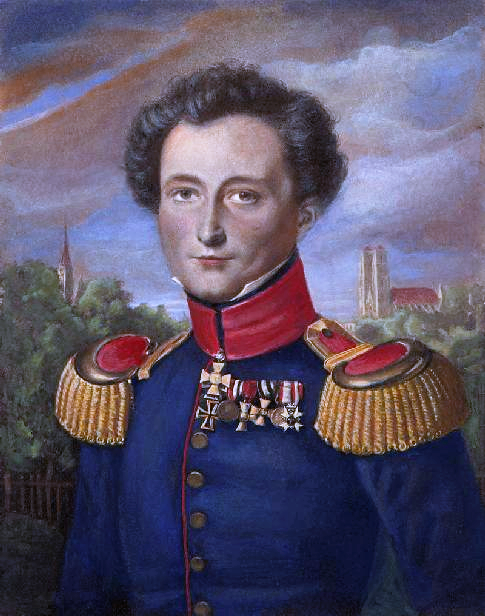
Overview
Military strategy is the discipline concerned with planning and directing the large scale use of armed force to achieve the political aims of a state or other organized group. It sits above the level of individual battles, connecting the conduct of campaigns to the broader purposes a government or movement is trying to achieve, whether that purpose is deterring an adversary, seizing territory, or compelling a change in policy.
Historical development
Writers have theorized about military strategy for thousands of years. Sun Tzu, writing in ancient China, emphasized deception, intelligence, and the avoidance of prolonged conflict. Centuries later, the Prussian officer Carl von Clausewitz argued that war is fundamentally a continuation of political activity by other means, a formulation that remains central to how strategists understand the relationship between armed force and policy.
Levels of strategy
Modern military thought typically separates strategy into several levels. Grand strategy coordinates military power with economic, diplomatic, and informational tools in pursuit of a states long term interests. Military strategy proper focuses on how armed forces are organized, positioned, and employed across a theater of operations. Operational art bridges strategy and tactics, shaping how campaigns unfold, while tactics govern the specific actions taken in individual engagements.
Contemporary relevance
Strategic thinking continues to evolve alongside technology and the changing nature of conflict. Cyber capabilities, space based assets, and precision weapons have expanded the tools available to strategists, while the persistence of insurgency, terrorism, and hybrid warfare has complicated the clean separation between peace and war that earlier strategic theory often assumed.
Strategic traditions
Different strategic traditions have emphasized different approaches to the same underlying problems. Continental European thought, shaped heavily by Clausewitz and Napoleonic era warfare, tended to emphasize decisive battle and the destruction of an enemy army. Maritime powers such as Britain historically favored strategies built around naval blockade, economic pressure, and coalition warfare, avoiding costly land campaigns where possible. Soviet strategic thought during the twentieth century developed its own distinctive body of theory, emphasizing deep operations and the coordinated employment of large mechanized formations across extended fronts.
Strategy and uncertainty
A persistent theme in strategic theory is the problem of uncertainty. Clausewitz used the term friction to describe the countless small obstacles, from bad weather to miscommunication, that make executing even a well designed plan far harder in practice than on paper. Successful strategists are often distinguished less by the brilliance of their initial plans than by their ability to adapt those plans as circumstances change and information remains incomplete.
Civil military relations
Military strategy does not exist in isolation from politics. In most states, elected or appointed civilian leaders retain ultimate authority over the decision to go to war and the broad objectives pursued, while professional military officers are responsible for translating those objectives into operational plans. Tension between civilian and military leadership over strategic direction has recurred throughout history and remains a central concern in the study of civil military relations.
Strategic culture
Scholars have observed that different nations tend to develop distinctive strategic cultures, shaped by geography, history, and political institutions, which influence how they approach questions of war and peace over long periods of time. A continental power facing threats on multiple land borders tends to develop very different strategic habits than an island nation whose security has historically depended primarily on naval strength, and these differences can persist across many generations even as specific threats and technologies change.
Strategy in the information age
The spread of digital communications, satellite imagery, and open source intelligence has changed how strategists gather information and how quickly strategic decisions must be made. Information that once took weeks to reach decision makers can now arrive within minutes, compressing decision cycles while also creating new vulnerabilities, since adversaries can use the same information environment to spread disinformation or expose sensitive military planning to a global audience in near real time.
Strategy education
Many militaries maintain dedicated staff colleges and war colleges where officers study strategic theory, military history, and case studies of past campaigns before advancing to senior command positions. This formal education is intended to broaden the strategic judgment of future commanders beyond their own direct operational experience, exposing them to a wider range of historical examples and theoretical frameworks than any single career could provide on its own.
Strategy and technology
Technological change has repeatedly forced revisions in strategic thinking throughout history, from the introduction of gunpowder weapons that undermined the dominance of fortified castles, to the development of railways that transformed the speed at which armies could mobilize and concentrate, to nuclear weapons that introduced an entirely new category of strategic risk. Strategists today must similarly account for cyber capabilities, space based systems, and artificial intelligence, each of which creates new vulnerabilities and opportunities that earlier strategic frameworks did not anticipate. The challenge for any strategist is distinguishing genuinely transformative technological shifts from incremental changes that, while significant, do not fundamentally alter the basic logic of how force translates into political outcomes.
It will likely remain so for a long time yet to come.
Interdisciplinary connections
Military strategy increasingly draws on insights from fields outside the traditional military academy, including behavioral economics for understanding decision making under risk, systems theory for analyzing complex organizational behavior, and data science for processing the vast quantities of information modern sensors generate, reflecting a broader recognition that effective strategic thought benefits from engagement with disciplines well beyond classical military history and theory alone.
It will likely remain so for a long time yet to come.
Key facts
- Array
In the news
Quick checkHow does military strategy differ from tactics?Show answer
Strategy sets overall goals and the broad approach to achieving them, while tactics govern the specific maneuvers used in individual battles or engagements.
Sources
- Array
Editorially reviewed by Specialty Digest Editorial TeamLast reviewed November 4, 2026Researched and drafted with AI assistanceReport an issue