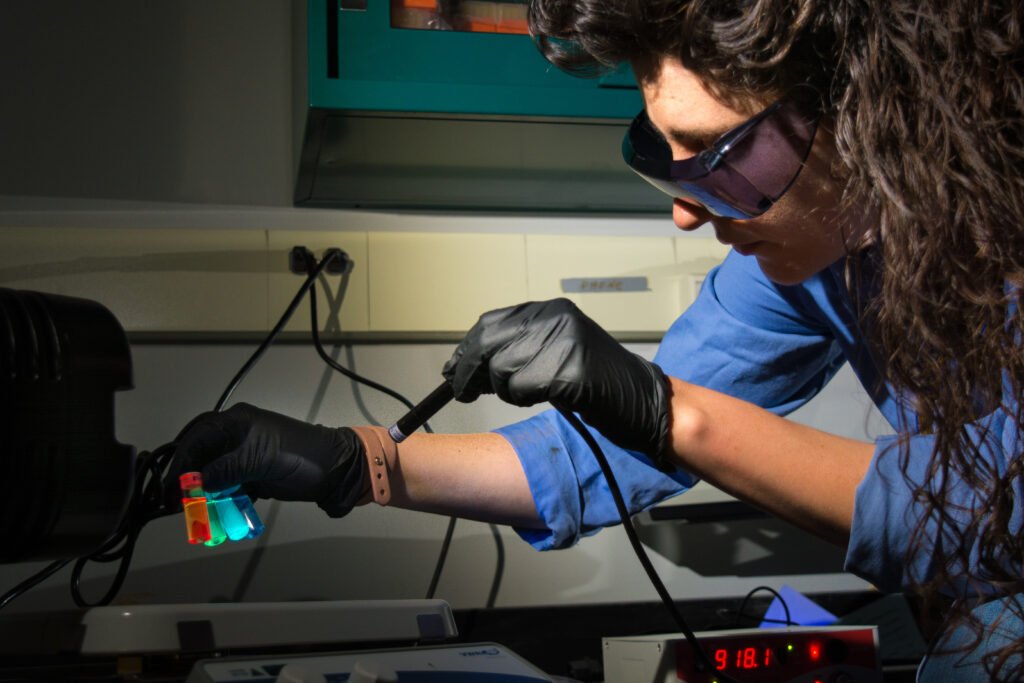
The scientific method is the discipline of testing an idea by trying, deliberately and honestly, to prove it wrong, rather than looking for evidence that confirms it. It is not a rigid five-step worksheet; it is a mindset that is only about 400 years old and that changed how quickly humans could tell true claims from convenient ones.
Where the idea came from
Before the 17th century, much of Western natural philosophy leaned on Aristotle’s approach: reasoning down from broad, largely unproven general principles to specific conclusions. In 1620, the English philosopher Francis Bacon published Novum Organum, Latin for “New Method,” arguing for the opposite direction: start with careful, systematic observation, and build general conclusions up from the evidence rather than down from assumption. Bacon also warned about what he called “idols of the mind,” the built-in mental biases that trick people into seeing patterns that aren’t really there, a warning meant to keep observers honest with themselves before they even reach for a conclusion. That insistence on evidence over inherited authority became the seed of modern science.
The basic steps, loosely followed
Modern versions of the method generally follow a similar arc: make an observation, ask a specific and testable question, form a hypothesis, an educated prediction that could turn out to be wrong, then design an experiment to test it. Researchers gather data, analyze it, often statistically, to check whether a result is likely real or just chance, and draw a conclusion. These steps are not one-directional in practice. Real research loops back constantly: an unexpected result routinely sends scientists back to revise the hypothesis or redesign the experiment, which is why progress in a field rarely looks like a straight line from question to answer, and why a single failed experiment is treated as information rather than defeat.
Falsifiability is the test that matters most
Philosopher of science Karl Popper argued that what separates real science from pseudoscience isn’t that a claim can be confirmed, it’s that a claim can, in principle, be proven false. This property is called falsifiability: a hypothesis counts as scientific only if some possible experimental result could show it to be wrong. A claim that can’t fail any conceivable test isn’t scientific, no matter how reasonable it sounds, because there’s no way to ever be wrong about it. That’s why scientists deliberately design experiments capable of disproving their own hypothesis rather than only looking for supporting evidence, and why a theory that survives repeated, genuine attempts to break it earns real credibility: it could have failed, and didn’t.
Why one study is never the final word
A single experiment, even a well-designed one, is rarely treated as settled science. Findings typically go through peer review, in which other experts scrutinize the methodology before a result is published, and even then, the wider scientific community expects results to be independently replicated, reproduced by a different team, before they’re broadly trusted. That layered skepticism isn’t a flaw in the system; it’s the mechanism that keeps the system honest, because any individual researcher can be mistaken, overconfident, or simply unlucky with a sample, and a result that only one lab has ever produced is treated as provisional rather than proven. When replication attempts fail or new evidence contradicts old conclusions, the field is expected to update its conclusions rather than defend the original result out of loyalty.
Why it matters outside the lab
The scientific method’s real value isn’t confined to chemistry sets and particle accelerators. Its core habits, asking a specific question, forming a testable prediction, gathering evidence before concluding, and staying genuinely open to being wrong, are useful anywhere someone is trying to figure out what’s actually true rather than what they’d like to be true. That discipline, more than any single discovery it has produced, is why the method has outlasted nearly every other framework humans have used to understand the natural world.