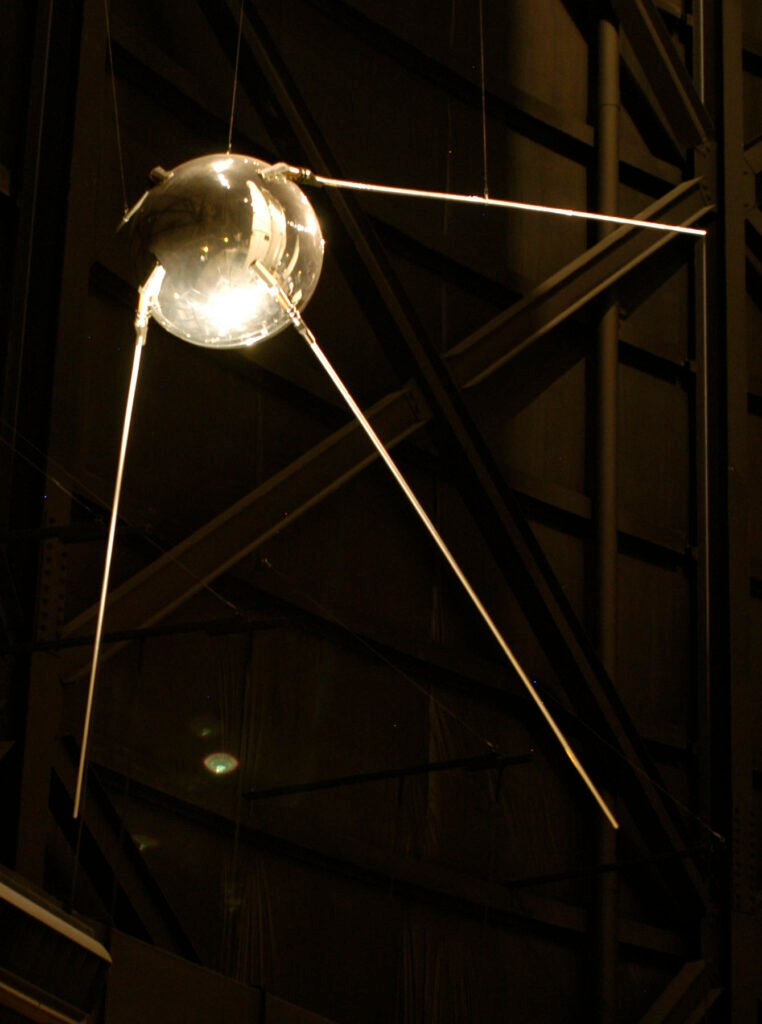
Sputnik 1 Opens the Space Age
A beeping metal sphere launched from a desert in Soviet Kazakhstan convinced the United States, almost overnight, that it was losing a race it had not known was underway.
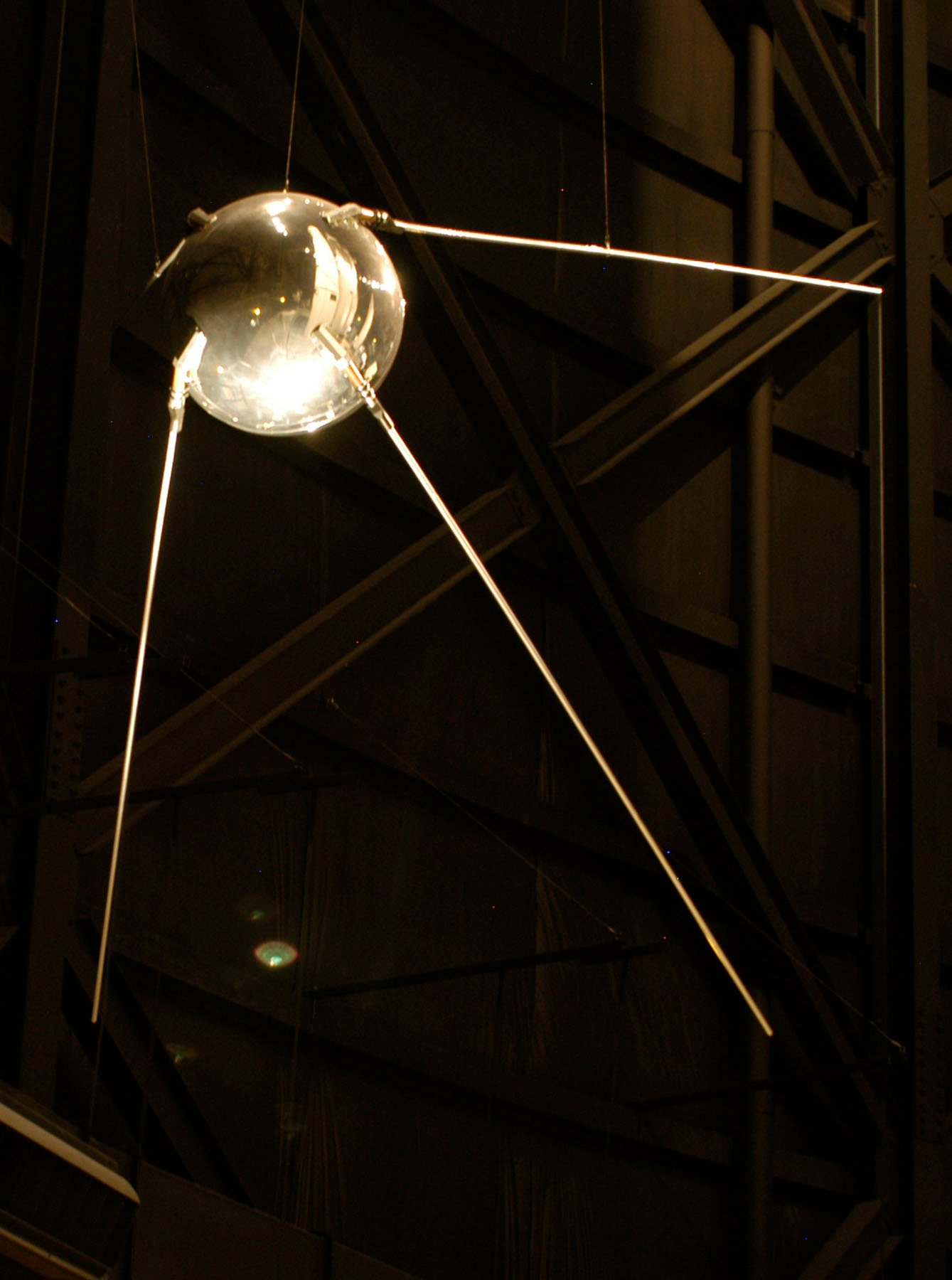
On October 4, 1957, the Soviet Union launched Sputnik 1 from the Baikonur Cosmodrome in Soviet Kazakhstan atop a modified R-7 rocket. The 58-centimeter aluminum sphere carried no scientific instruments, only a radio transmitter, but it became the first human-made object to orbit Earth, circling the planet roughly every 96 minutes.
The launch shattered America’s confidence in its technological lead and triggered what became known as the Sputnik crisis. Within ten months, Congress had created NASA and poured new funding into science and engineering education, reshaping Cold War research priorities for a generation.
Sputnik proved that a single demonstrated capability, not a battle or a treaty, could reorder a global rivalry overnight. The same pattern, a visible technical first triggering a scramble to catch up, would repeat with the Moon landing, the microchip, and today’s contests over space and artificial intelligence.
People Behind the Story
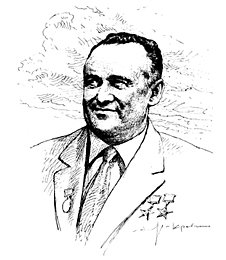
Korolev led the design of both Sputnik 1 and the R-7 rocket that launched it, yet the Soviet government kept his identity a closely guarded state secret. The public did not learn his name until his death in 1966.
Key Moments
Sputnik 2 carries Laika, a stray dog from Moscow, into orbit, the first living creature to circle Earth.
Explorer 1 becomes the first American satellite to reach orbit and detects the Van Allen radiation belts encircling Earth.
President Dwight Eisenhower signs the National Aeronautics and Space Act, creating NASA.
Soviet cosmonaut Yuri Gagarin, aboard the Korolev-designed Vostok 1, becomes the first human to travel into space.
Did you know? Sputnik 1 carried no scientific instruments, only a simple radio transmitter, yet its beeping signal was strong enough that amateur radio operators around the world tuned in and heard the start of the Space Age for themselves.