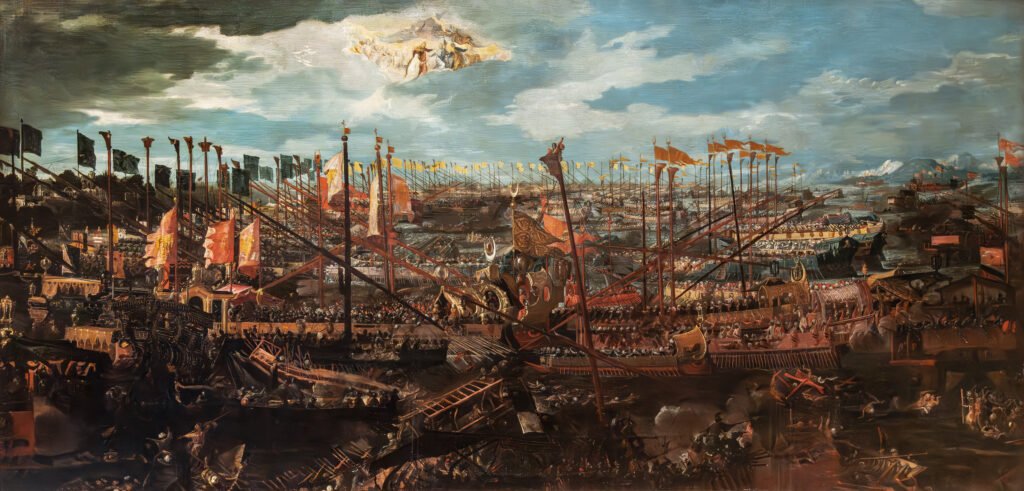
The Holy League Crushes the Ottoman Fleet at Lepanto
Nearly five hundred warships rowed into a Greek gulf expecting the war’s deciding battle, and by evening the Ottoman navy that had ruled the Mediterranean for a generation lay broken.
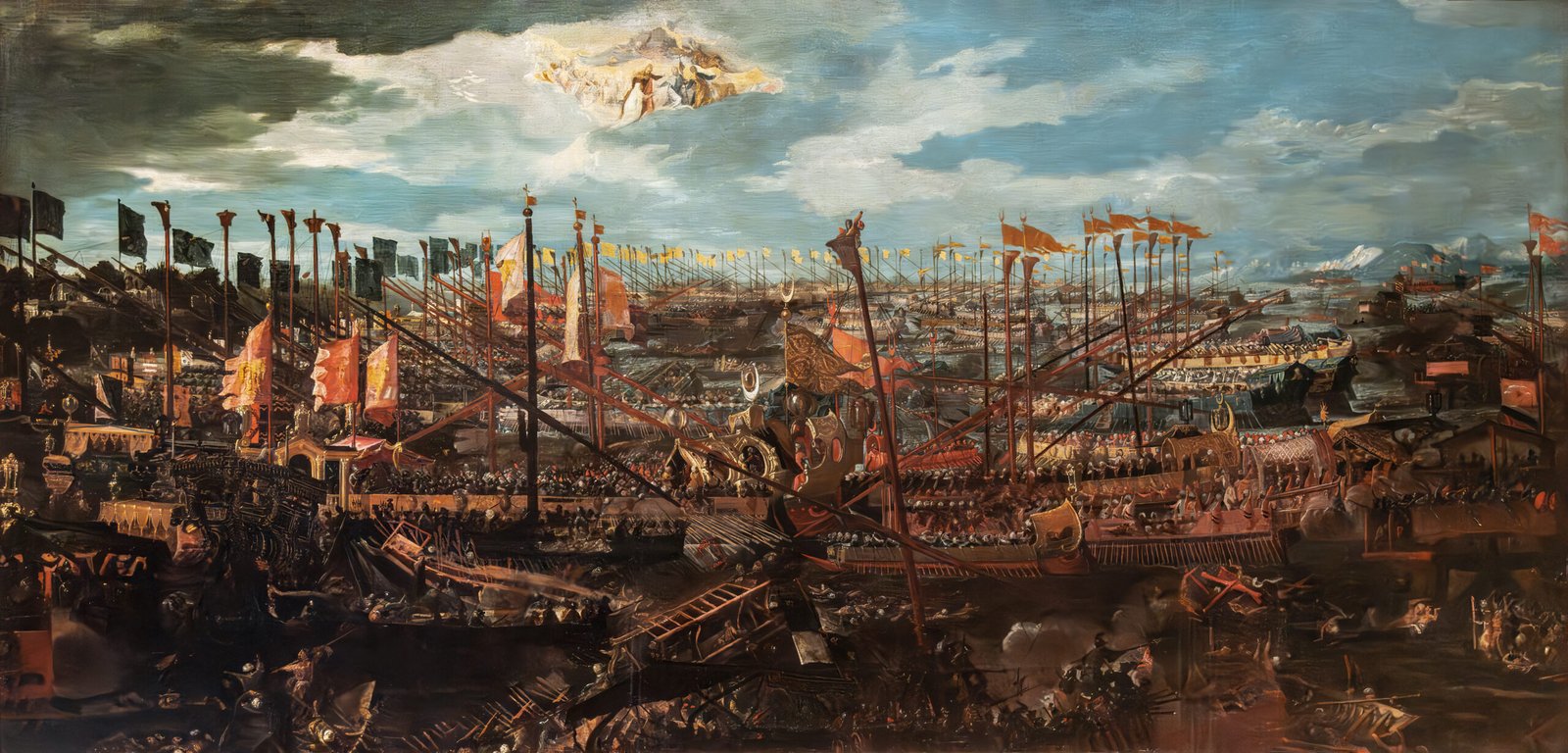
On the morning of October 7, 1571, a Holy League fleet of about 212 galleys under twenty-four-year-old Don John of Austria met an Ottoman fleet of roughly 230 vessels commanded by Ali Pasha in the Gulf of Patras, off western Greece. After hours of close, ship-to-ship fighting, the League destroyed or captured most of the Ottoman fleet and killed Ali Pasha.
The defeat ended, for the first time, the assumption that Ottoman sea power was unstoppable. It halted further Ottoman naval expansion into the western Mediterranean and gave Catholic Europe, which had lost Cyprus to the Ottomans just months earlier, its first proof that the empire could be beaten at sea.
Lepanto was also an ending. It was the last major battle fought almost entirely by oar-powered galleys, a style of naval warfare largely unchanged since antiquity. Within decades, sailing warships armed with broadside cannon replaced galley fleets on both sides, closing out a mode of combat two thousand years old.
People Behind the Story
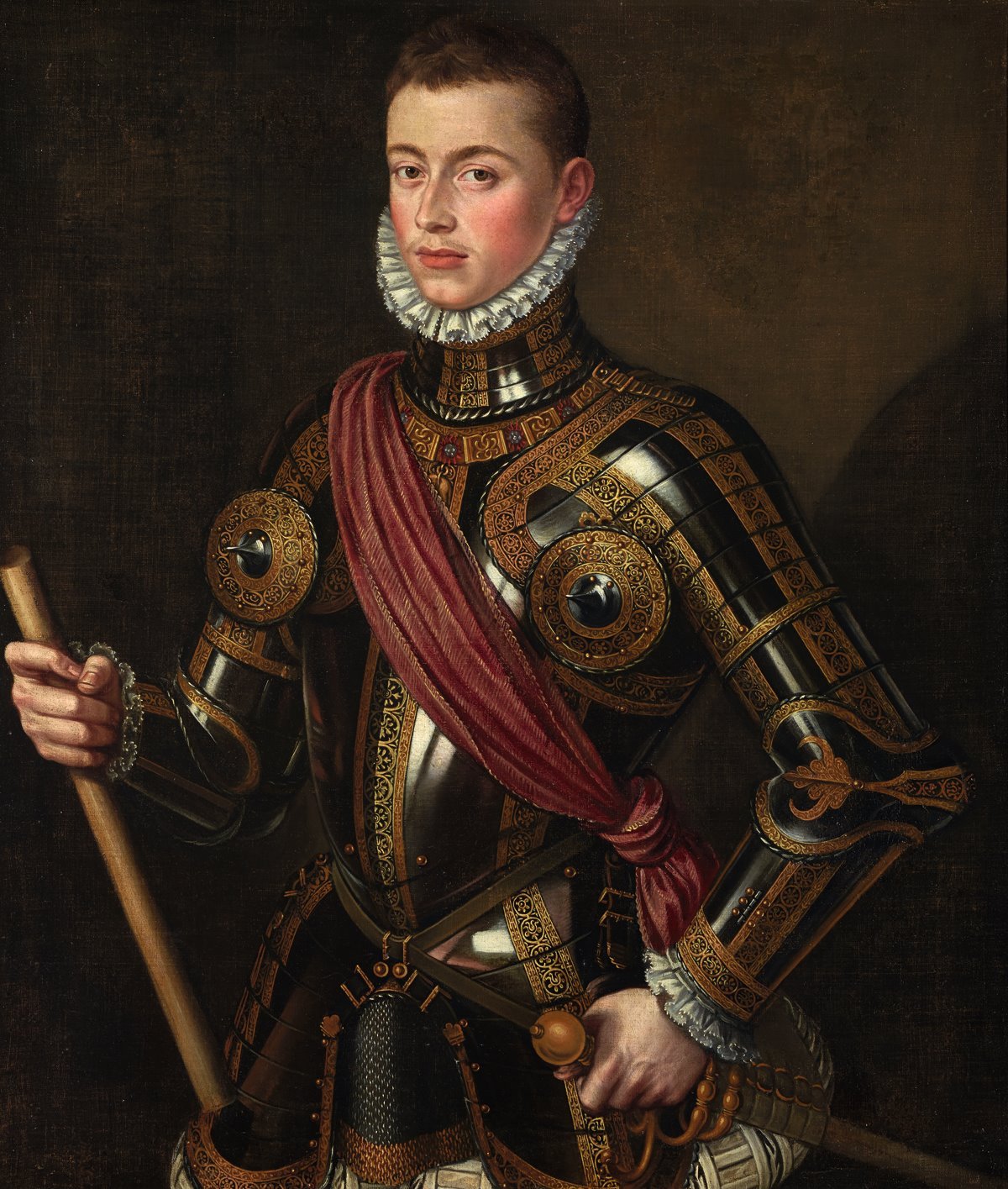
The illegitimate half-brother of Spain’s King Philip II, John was only twenty-four when Pope Pius V’s Holy League gave him command of its combined fleet. Lepanto made him, briefly, the most celebrated soldier in Christian Europe.
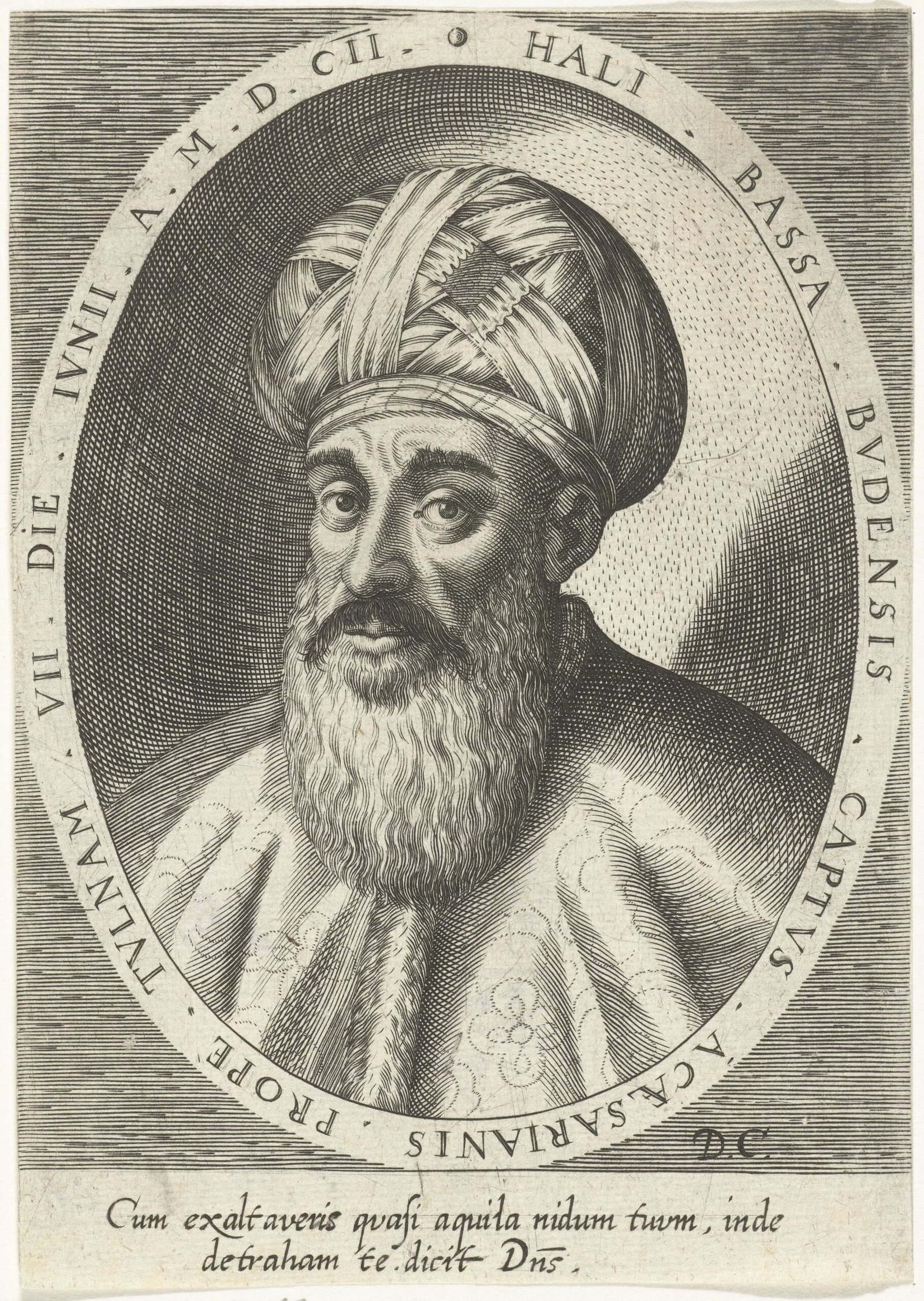
Ali Pasha led the Ottoman fleet into battle and was killed when his flagship was boarded. No portrait survives from his lifetime; this engraving, made in Germany decades later as part of a printmaker’s series of famous commanders, is an imagined likeness rather than one drawn from life.
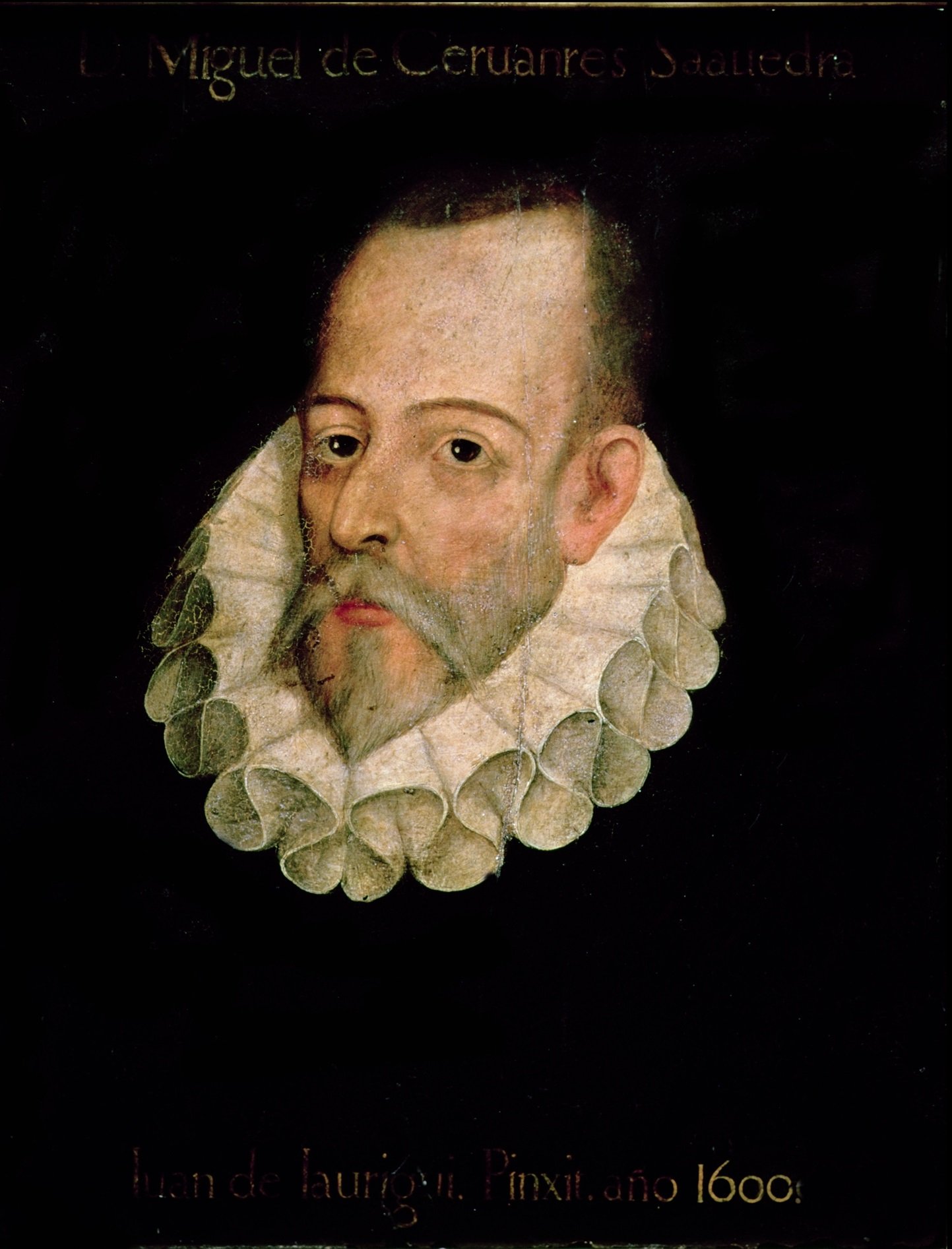
The future author of Don Quixote served aboard the galley Marquesa and was shot three times, permanently losing the use of his left hand. No authenticated portrait of Cervantes survives; this image, long linked to painter Juan de Jáuregui, carries an attribution historians say was added only after the fact.
Key Moments
Pope Pius V forms the Holy League, uniting Spain, Venice, the Papal States, and other Italian powers against further Ottoman expansion after the fall of Venetian Cyprus.
The Holy League fleet defeats the Ottoman navy in the Gulf of Patras, in one of the largest naval battles fought anywhere since antiquity.
The Ottoman Empire rebuilds a new fleet within months. Grand Vizier Sokollu Mehmed Pasha reportedly tells Venetian negotiators the loss was like a shaved beard, certain to grow back. Venice makes a separate peace in 1573 and formally cedes Cyprus.
Did you know? A young Spanish soldier named Miguel de Cervantes fought at Lepanto and lost the use of his left hand, more than three decades before he began writing Don Quixote.