In simple terms
Eutrophication is what happens when a body of water receives far more nutrients than it can absorb, mainly nitrogen and phosphorus, and answers with heavy growth of algae. Both nutrients belong in water naturally and support the algae and plants that feed fish, shellfish and smaller organisms. [1] The trouble is quantity, not presence.
Once the supply runs ahead of the ecosystem, algae and algae-like bacteria multiply faster than the system can handle and form blooms, and water quality, food resources and habitat degrade together. [1]
How it works
The extra nutrients come from human activity: agricultural runoff carrying fertilizer and manure, wastewater treatment effluent, and nitrogen that falls out of the air after fossil fuels are burned. [2] A bloom shades the water below it, and when the algae die they sink and decompose, which consumes oxygen. [2] A large bloom can reduce or eliminate the oxygen in the water, leading to fish illness or death, often in great numbers. [1]
Some blooms are made of cyanobacteria, which resemble algae and fill the same ecological role but can release toxins that make people and animals sick through contact, drinking water, or contaminated fish and shellfish. [1] Nutrients also reach groundwater, the drinking water source for millions of people, where nitrate can be harmful even at low levels and infants are the most vulnerable. [1] Numeric limits for nutrients are set government by government, in the United States by states and tribes, so no single global threshold applies. [1]
Why it matters
Eutrophication is the mechanism behind most dead zones. Hypoxia, meaning low or depleted oxygen in a water body, happens most often as a consequence of nutrient pollution, which is another name for eutrophication. [2] The costs land on fisheries, tourism and water utilities at once: closed beaches, lost catch, extra treatment. The lever is the nutrient flow rather than any stock already in place, which is why fertilizer timing and wastewater standards matter, though recovery of oxygen lags behind the cuts.
Where you’ll see it
- Summer advisories closing lakes and beaches during harmful algal blooms [1]
- Drinking water notices about nitrate in groundwater supplies [1]
- Annual surveys that measure the size of coastal dead zones [2]
- Farm policy on fertilizer timing, buffer strips and manure management
Example
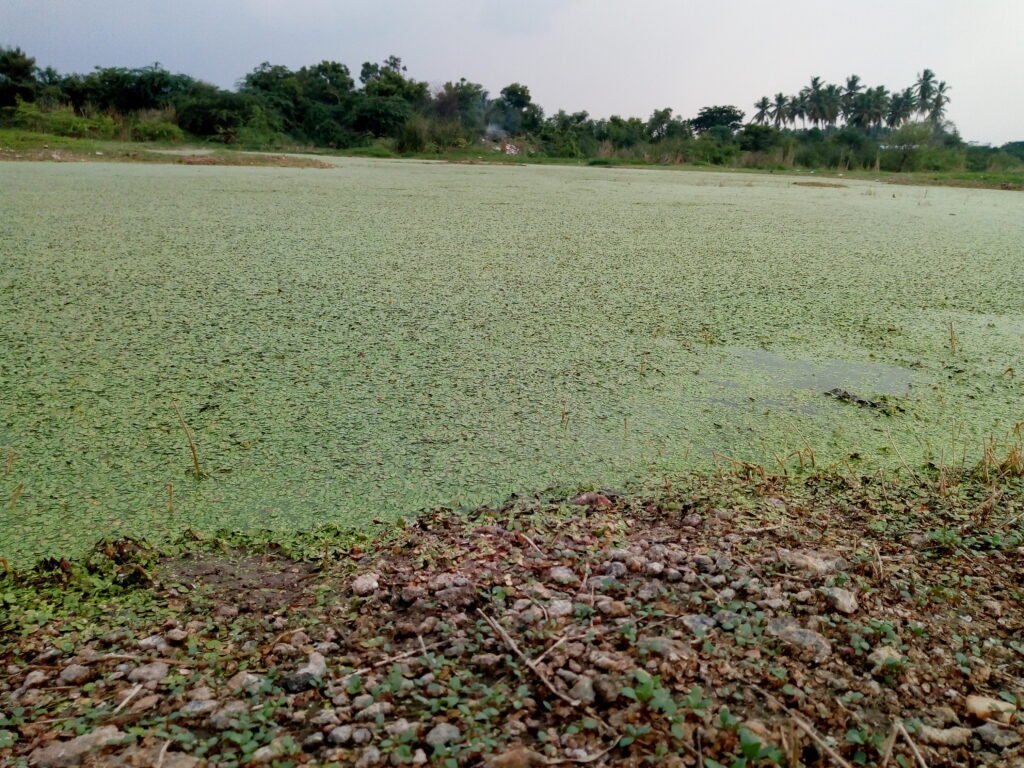
Fertilizer washes off fields after heavy rain into a shallow lake, a thick algal mat covers it by late summer, and fish in the deeper water suffocate as the mat decays.
Often confused with
Eutrophication is the nutrient enrichment itself. Hypoxia is the oxygen loss that often follows, and a dead zone is the area left behind. [2] Not every bloom is toxic, and not every toxic bloom comes from farming.
Key facts
- Nutrient pollution is caused by too much nitrogen and phosphorus entering air and water, usually from human activities.1
- Excess nitrogen and phosphorus make algae and algae-like bacteria grow faster than ecosystems can handle, forming blooms.1
- Algal blooms can severely reduce or eliminate oxygen in the water, leading to fish illness or death, often in large numbers.1
- Hypoxia, meaning low or depleted oxygen in a water body, occurs most often as a consequence of nutrient pollution.2
- Some blooms consist of cyanobacteria that can release toxins affecting people and animals.1
Related concepts
Quick checkWhich two nutrients drive eutrophication?Show answer
Nitrogen and phosphorus.
Sources
- United States Environmental Protection Agency. Basic Information on Nutrient Pollution. Last updated 2 April 2026 (accessed Accessed 7 October 2026)
- NOAA National Ocean Service. Hypoxia. Undated (accessed Accessed 7 October 2026)
Editorially reviewed by Specialty Digest Editorial TeamLast reviewed October 7, 2026Researched and drafted with AI assistanceReport an issue