In simple terms
A dead zone is a stretch of water where oxygen has dropped so low that fish and other animals cannot live in it. The scientific name is hypoxia, which means low or depleted oxygen in a water body. [1] Dead zones form in the ocean and in fresh water alike.
Nothing is poisoned in a dead zone. The water simply runs short of the dissolved oxygen that gilled animals need, so whatever can swim away leaves, and whatever cannot dies. [1]
How it works
Oxygen in water rises and falls naturally, as a balance between oxygen entering from the atmosphere and biological and chemical processes that release or consume it. [1] Stratification tips that balance. Lighter fresh water from a river settles on top of heavier seawater, vertical mixing slows, and oxygen from the surface stops reaching the salty bottom layer where many animals live. [1]
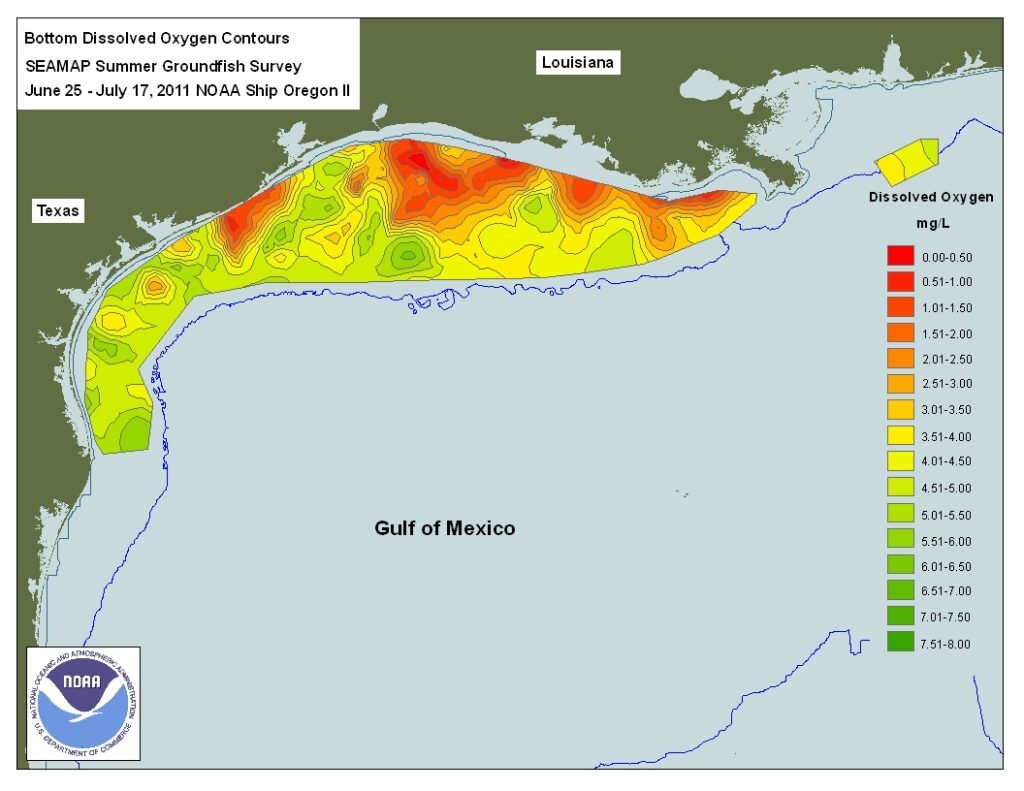
Human activity supplies the rest. Hypoxia occurs most often as a consequence of nutrient pollution, also known as eutrophication, which arrives through agricultural runoff, fossil fuel burning and wastewater treatment effluent. [1] Those nutrients feed an overgrowth of algae; the algae die, sink and decompose, and decomposition uses up the oxygen near the bottom. [1][2] Water is treated as hypoxic at 2 milligrams of oxygen per liter or less at the seafloor. [1]
Why it matters
A dead zone takes habitat out of use, and it can kill fish, shellfish, corals and aquatic plants outright. [1] The size is measured, not estimated: NOAA-sponsored research has tracked the largest dead zone in the United States, in the northern Gulf of Mexico, which NOAA now calls the Gulf of America, since 1985. [1] In 2025 it covered about 11,400 square kilometers (4,402 square miles) of sea floor. Surveyed from 24 to 30 July 2026, it measured about 3,450 square kilometers (1,332 square miles), the second smallest in the 40-year record. [1] The gap between those two summers is a reminder that one survey measures one season, not a trend.
Where you’ll see it
- Summer surveys reporting the size of the Gulf hypoxic zone against a task force target [1]
- Reports of die-offs of fish, shellfish, corals and aquatic plants [1]
- Coverage of estuaries and bays where low oxygen returns every year
- Nutrient reduction plans for the river basins that drain into affected coasts [1]
Example
After a wet spring carries fertilizer down a river, the bottom water off the river mouth falls below 2 milligrams of oxygen per liter by midsummer, and shrimp boats work elsewhere.
Often confused with
In water science a dead zone is interchangeable with a hypoxic zone. The same words also describe a patch with no mobile phone signal, which is unrelated. Hypoxia in medicine refers to low oxygen in body tissue, not in water.
Key facts
- Hypoxia means low or depleted oxygen in a water body, and the areas it creates are called dead zones.1
- Water is treated as hypoxic at 2 milligrams of oxygen per liter or less at the seafloor.1
- The largest dead zone in the United States forms each year in the northern Gulf of Mexico and has been monitored by NOAA-sponsored research since 1985.1
- Surveyed in late July 2026, that zone measured about 3,450 square kilometers (1,332 square miles), the second smallest in the 40-year record, against about 11,400 square kilometers (4,402 square miles) in 2025.1
- Hypoxia occurs most often as a consequence of nutrient pollution from agricultural runoff, fossil fuel burning and wastewater effluent.1
Related concepts
Quick checkWhat oxygen level is used to call water hypoxic?Show answer
About 2 milligrams of oxygen per liter or less.
Sources
- NOAA National Ocean Service. Hypoxia. Undated, figures current to the July 2026 survey (accessed Accessed 7 October 2026)
- United States Environmental Protection Agency. Basic Information on Nutrient Pollution. Last updated 2 April 2026 (accessed Accessed 7 October 2026)
Editorially reviewed by Specialty Digest Editorial TeamLast reviewed October 7, 2026Researched and drafted with AI assistanceReport an issue