In simple terms
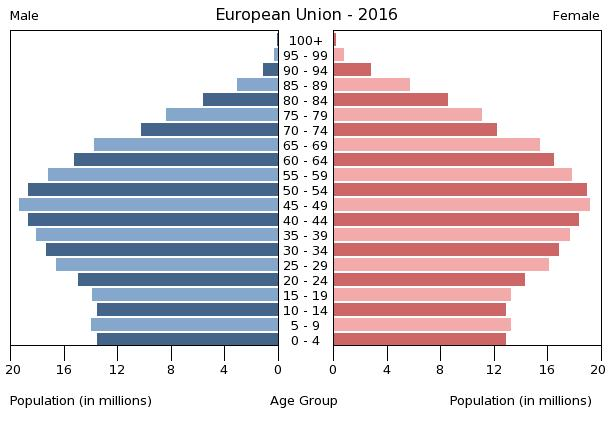
The old-age dependency ratio compares the number of older people with the number of people of working age. In the World Bank’s version it counts people older than 64 against those aged 15 to 64, reported as dependents per 100 working-age people.
A rising ratio means fewer working-age people for every older person, which is the arithmetic behind most pension and health-spending debates.
How it works
The ratio is built from population structure by age and sex, which the World Bank draws from the United Nations Population Division’s World Population Prospects. Nothing in it measures employment: it is an age-based proxy, and many people over 64 work while many people aged 15 to 64 do not. Read it as a signal about age structure rather than a count of who actually supports whom.
Age boundaries are a choice rather than a natural fact, so the same population can produce different ratios under different definitions. The old-age ratio counts only older dependents, while broader dependency ratios add children to the numerator as well.
Why it matters
The World Health Organization reports that the share of the world’s population aged over 60 will nearly double between 2015 and 2050, from 12 percent to 22 percent, and that by 2030 one in six people will be 60 or over, with the number aged 60 and above rising from 1 billion in 2020 to 1.4 billion. By 2050, 80 percent of older people will live in low- and middle-income countries, so this is not a rich-country story.
Where you’ll see it
- World Bank and United Nations population indicators
- National pension reviews and long-term budget projections
- Health and long-term care planning documents
- News coverage comparing ageing across countries
Example
An old-age dependency ratio of 30 means there are 30 people older than 64 for every 100 people aged 15 to 64.
Often confused with
The total age dependency ratio, which also counts children, and the real ratio of retirees to workers, which depends on who is actually employed rather than on age alone.
Key facts
- The old-age dependency ratio is the ratio of people older than 64 to the working-age population aged 15 to 64, shown as dependents per 100 working-age people.1
- The World Bank builds the indicator from United Nations Population Division population estimates.1
- The ratio is defined purely by age, so it does not measure who is employed or who is financially dependent.1
- The share of the world population aged over 60 is projected to rise from 12 percent in 2015 to 22 percent in 2050.2
- By 2030 one in six people worldwide will be aged 60 or over, and by 2050 some 80 percent of older people will live in low- and middle-income countries.2
Related concepts
Quick checkWhat does an old-age dependency ratio of 30 mean?Show answer
Thirty people older than 64 for every 100 people aged 15 to 64 in that population.
Sources
- World Bank DataBank. Metadata Glossary: Age dependency ratio, old (% of working-age population), series SP.POP.DPND.OL. Updated 8 October 2026 (accessed Accessed 21 October 2026)
- World Health Organization. Ageing and health fact sheet. Undated (accessed Accessed 21 October 2026)
Editorially reviewed by Specialty Digest Editorial TeamLast reviewed October 21, 2026Researched and drafted with AI assistanceReport an issue