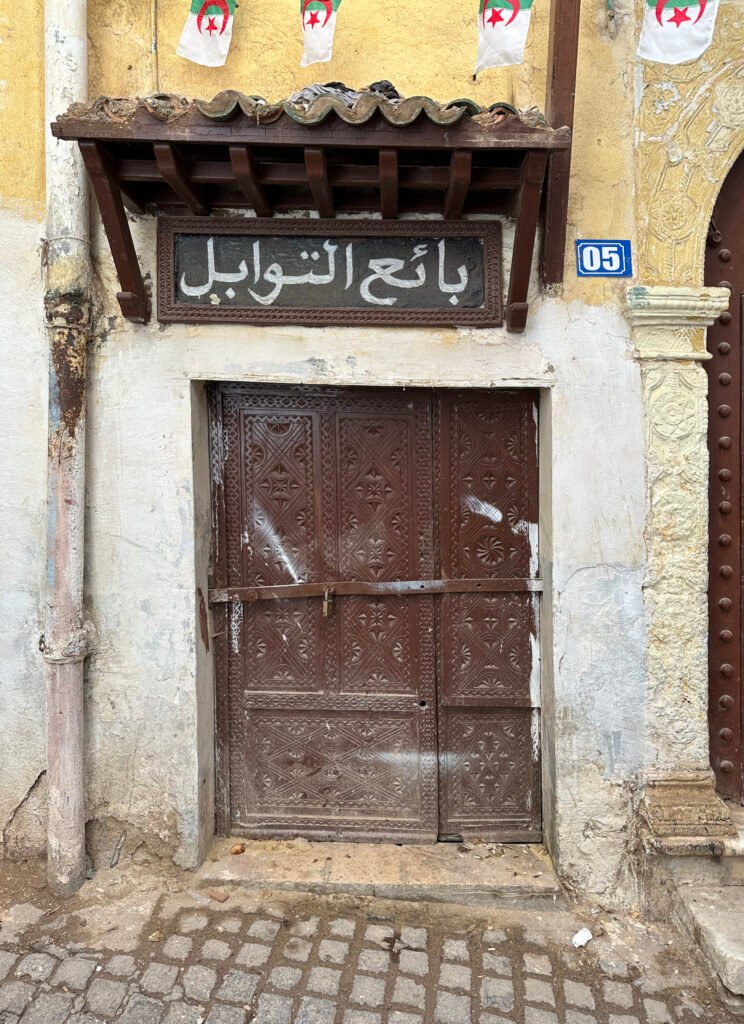
Algiers is the capital and largest city of Algeria, the biggest country in Africa by land area. The city rises in tiers from a natural harbor on the Bay of Algiers, on Algeria’s Mediterranean coast, and its old citadel quarter, the Casbah, climbs the hillside behind the port in a dense tangle of whitewashed houses and narrow lanes that gave Algiers its old French nickname, “Alger la Blanche” (Algiers the White).
Where Is Algiers Located?
Algiers sits on Algeria’s northern Mediterranean coast, roughly facing southern France and the island of Mallorca across the sea. The city occupies a crescent-shaped bay backed by hills, a setting that shaped its historic layout: a fortified old town on the high ground and progressively more modern districts spreading along the shoreline and inland.
A Brief History of Algiers
The site has been settled since antiquity, first by Berber peoples and later by Phoenician and Roman traders under the name Icosium. The modern city’s name and identity, however, took shape under later Muslim rule, and especially after 1516, when the corsair brothers known as the Barbarossas placed Algiers under Ottoman protection, founding what became known as the Regency of Algiers, a semi-autonomous Ottoman province whose corsair fleets made it one of the most feared port cities in the Mediterranean for nearly three centuries.
French Colonial Rule
France invaded Algiers in 1830, beginning more than a century of French colonization that eventually extended across all of Algeria. Algiers became the seat of French colonial government and received large-scale European-style construction below the old Casbah, producing the broad boulevards and Haussmann-style buildings still visible in the city center today.
Independence
Algeria’s independence came only after the Algerian War (1954-1962), a prolonged and costly conflict between French forces and the National Liberation Front (FLN). Algiers, and the Casbah in particular, was a center of underground resistance during the war, most famously during the 1957 “Battle of Algiers.” Algeria became independent in 1962, with Algiers as its capital.
Algiers Today: Economy and Government
Algiers remains Algeria’s political, administrative, and economic center. Algeria itself, per the World Bank, is “the largest African country and third-largest Arab economy,” and it returned to upper-middle-income status under the World Bank’s classification in July 2024 after two decades of economic and human development gains.[1] As the national capital, Algiers hosts the presidency, parliament, and the headquarters of Algeria’s state energy institutions, which anchor an economy heavily dependent on oil and natural gas exports.
What Is Algiers Known For?
Algiers is best known for the Casbah, its historic walled citadel, which UNESCO inscribed as a World Heritage Site in 1992 for its exceptional concentration of sixteenth- to eighteenth-century Ottoman-era houses, palaces, mosques, and fortifications layered above a street plan with much older origins.[2] The Casbah’s maze of stairways and covered passages, built to be defensible and to shade residents from the Mediterranean sun, remains one of the most architecturally distinctive old quarters in North Africa. Beyond the Casbah, Algiers is recognized for its dramatic bay-facing skyline, its French colonial-era downtown, and its modern Martyrs’ Memorial honoring those who died in the war of independence.
Why Algiers Matters
Algiers matters both as a layered record of Mediterranean history, from Ottoman corsair power to French colonization to anti-colonial resistance, and as the political and economic capital of Africa’s largest country by area. The preservation of the Casbah as a UNESCO site keeps that history visible, even as the surrounding modern city continues to grow as one of North Africa’s major ports and administrative centers.
Key Takeaways
- Algiers is the capital of Algeria, Africa’s largest country by land area, on the Bay of Algiers.
- The city grew into a major power center after 1516 under the Ottoman-era Regency of Algiers.
- France ruled Algiers from 1830 until Algerian independence in 1962, following the 1954-1962 Algerian War.
- The Casbah of Algiers, the city’s historic citadel, has been a UNESCO World Heritage Site since 1992.
- Algeria returned to upper-middle-income status under World Bank classification in July 2024.
Sources
- World Bank | “Algeria Overview” | 2026 | worldbank.org/en/country/algeria/overview
- UNESCO World Heritage Centre | “Kasbah of Algiers” | Undated | whc.unesco.org/en/list/565
Key facts
- Algiers is the capital of Algeria, Africa's largest country by land area, on the Bay of Algiers.1
- The city became a major Mediterranean power center after 1516 under the Ottoman-era Regency of Algiers.
- France ruled Algiers from 1830 to 1962, when Algeria won independence after the Algerian War.
- The Casbah of Algiers has been a UNESCO World Heritage Site since 1992.2
- Algeria returned to upper-middle-income status under World Bank classification in July 2024.1
Quick checkWhat makes the Casbah of Algiers a UNESCO World Heritage Site?Show answer
Its exceptional concentration of 16th- to 18th-century Ottoman-era houses, palaces, mosques and fortifications, inscribed in 1992.
Sources
- World Bank. Algeria Overview. 2026 (accessed Accessed 2026-10-21)
- UNESCO World Heritage Centre. Kasbah of Algiers. Undated (accessed Accessed 2026-10-21)
Editorially reviewed by Specialty Digest Editorial TeamLast reviewed October 21, 2026Researched and drafted with AI assistanceReport an issue