Dakar is the capital and largest city of Senegal, built on the Cap-Vert Peninsula, the westernmost point of mainland Africa. Founded by France in 1857 beside an existing Lebou fishing community, Dakar became the capital of all French West Africa in 1902 and, after Senegal’s 1960 independence, the capital of the new nation.
Where Is Dakar Located?
Dakar sits at the tip of the Cap-Vert Peninsula on Senegal’s Atlantic coast, making it mainland Africa’s westernmost major city. The peninsula’s position has long made Dakar a natural stopover point between Europe, the Americas, and the rest of Africa, a role reflected in its deep natural harbor.
A Brief History of Dakar
Before French settlement, the Cap-Vert Peninsula was home to the Lebou people, who maintained fishing villages along the coast. France established a permanent settlement at Dakar in 1857 as a trading and naval station, and the city grew steadily through the second half of the nineteenth century as French interests in the region expanded.
Capital of French West Africa
In 1902, Dakar replaced Saint-Louis as the capital of French West Africa (Afrique Occidentale Francaise), the federation of French colonial territories that eventually covered most of West Africa. This made Dakar, for the first half of the twentieth century, the administrative center for a territory far larger than modern Senegal alone.
Independence
Senegal became independent from France in 1960, and Dakar became the capital of the new republic under its first president, Leopold Sedar Senghor. Senegal has since maintained one of the more stable records of peaceful political transitions in West Africa.[1]
Dakar Today: Population and Economy
Senegal’s population reached roughly 18 million people, with nearly a quarter living in the Dakar region, which covers only about 0.3 percent of the country’s territory, according to the World Bank.[1] That concentration makes Dakar by far Senegal’s dominant economic, administrative, and cultural center, hosting the country’s main port and most of its formal-sector employment.
What Is Dakar Known For?
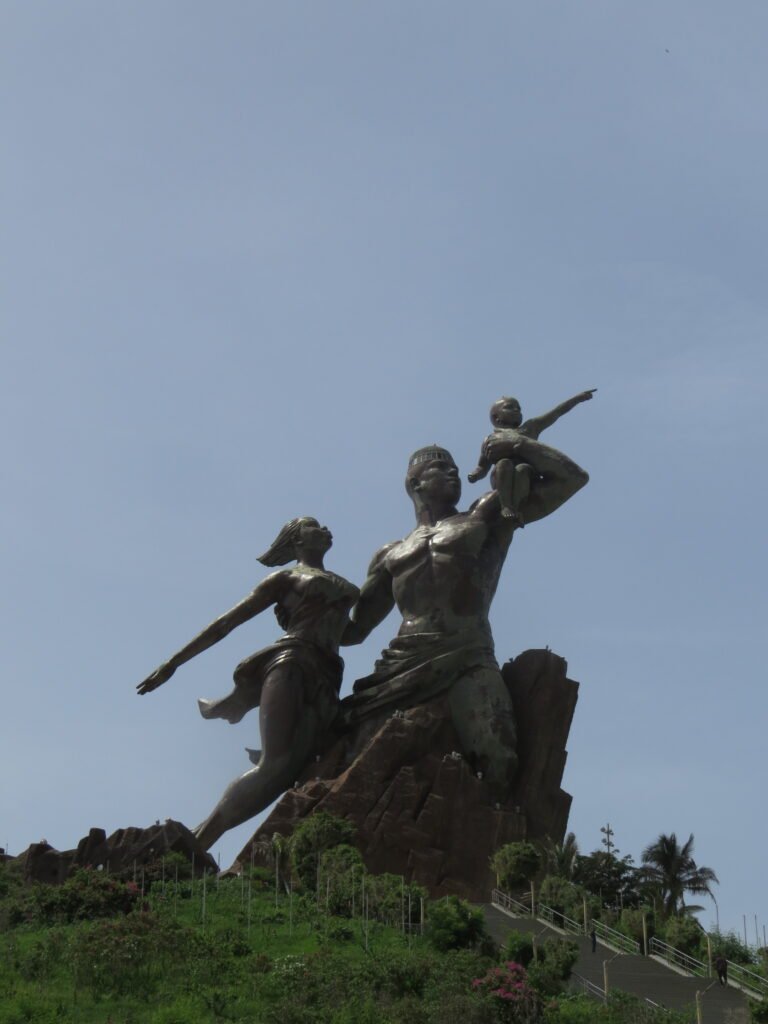
Dakar’s most prominent modern landmark is the African Renaissance Monument, a roughly 50-meter bronze statue on a hill overlooking the city, completed in 2010 for the fiftieth anniversary of Senegalese independence and widely described as the tallest statue in Africa. The city is also closely associated with nearby Gorée Island, a UNESCO World Heritage Site since 1978 whose former trading houses are preserved as a memorial to the Atlantic slave trade.[2]
Why Dakar Matters
Dakar matters as mainland Africa’s westernmost major city and as a historic gateway between Africa, Europe, and the Americas, a role shaped first by the slave trade memorialized at Gorée and later by Dakar’s role as the administrative seat of French West Africa. Its modern African Renaissance Monument reflects an explicit attempt to reframe that history around African self-determination.
Key Takeaways
- Dakar is Senegal’s capital, on the Cap-Vert Peninsula, mainland Africa’s westernmost point.
- France founded Dakar in 1857 beside existing Lebou fishing settlements.
- Dakar became the capital of French West Africa in 1902, replacing Saint-Louis.
- Senegal became independent in 1960, with Dakar as its capital under Leopold Sedar Senghor.
- The African Renaissance Monument, completed in 2010, is Africa’s tallest statue and Dakar’s modern landmark.
Sources
- World Bank | “Senegal Overview” | 2026 | worldbank.org/en/country/senegal/overview
- UNESCO World Heritage Centre | “Island of Goree” | Undated | whc.unesco.org/en/list/26
Key facts
- Dakar is Senegal's capital, on the Cap-Vert Peninsula, mainland Africa's westernmost point.
- France founded Dakar in 1857 beside existing Lebou fishing settlements.
- Dakar was the capital of all French West Africa from 1902 to Senegal's independence.
- Senegal became independent in 1960, with Dakar as its capital. Nearly a quarter of Senegal's population lives in the Dakar region.1
- The African Renaissance Monument (2010) is Africa's tallest statue, overlooking the city.
Quick checkWhat is the African Renaissance Monument in Dakar?Show answer
A roughly 50-meter bronze statue completed in 2010 for Senegal's 50th independence anniversary, widely described as the tallest statue in Africa.
Sources
- World Bank. Senegal Overview. 2026 (accessed Accessed 2026-10-21)
- UNESCO World Heritage Centre. Island of Goree. Undated (accessed Accessed 2026-10-21)
Editorially reviewed by Specialty Digest Editorial TeamLast reviewed October 21, 2026Researched and drafted with AI assistanceReport an issue