Kingston is the capital and largest city of Jamaica, built around one of the largest natural harbours in the world on the island’s southeastern coast. Founded in the late 17th century as a planned replacement for a destroyed port town, it later became the birthplace of reggae music and remains closely associated with Bob Marley’s legacy.
Where Is Kingston Located?
Kingston sits on Jamaica’s southeastern coast, on the northern shore of Kingston Harbour, a large natural harbour sheltered by a long sand spit known as the Palisadoes. The Blue Mountains rise directly behind the city to the north, giving Kingston one of the most dramatic settings of any Caribbean capital, hemmed in by mountains on one side and the harbour on the other.
A Brief History of Kingston
Founded After a Disaster
Kingston was founded in 1692, in the aftermath of a major earthquake that destroyed much of Port Royal, then one of the Caribbean’s most important port towns, located across the harbour on the tip of the Palisadoes. Survivors and merchants displaced from Port Royal resettled on the mainland, and the new town grew steadily as a center of trade through the 18th century.
Becoming the Capital
Kingston formally became Jamaica’s capital in 1872, replacing Spanish Town, the island’s former colonial capital, as Kingston’s commercial importance and population had long since outgrown it.
What Is Kingston Known For?
Kingston is internationally recognized as the birthplace of reggae music, with the Trench Town neighbourhood in particular credited as the setting in which the genre took shape in the 1960s. The city remains closely tied to the legacy of Bob Marley, Jamaica’s best-known musician, whose former home in Kingston now operates as a museum dedicated to his life and work.
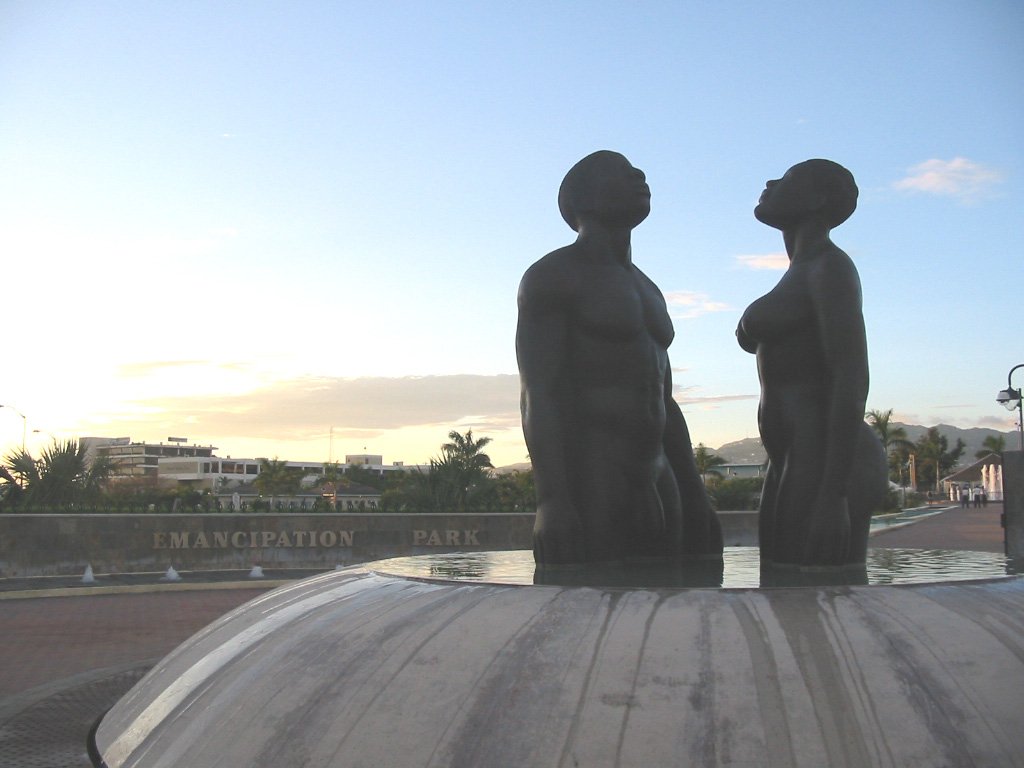
Kingston’s most prominent public monument is Emancipation Park, opened in 2002 in the city’s uptown New Kingston district. Its centerpiece, a pair of large bronze figures titled “Redemption Song” by the Jamaican sculptor Laura Facey, commemorates the emancipation of enslaved people across the British Caribbean in 1838 and takes its name from the Bob Marley song of the same name. The statues have become one of the city’s most photographed and most debated public artworks since their unveiling.
Why Kingston Matters
Kingston’s harbour, among the largest natural harbours anywhere in the world, made it Jamaica’s commercial and administrative center for more than two centuries, a role cemented when it formally became the national capital in 1872. Its global cultural weight, however, rests disproportionately on reggae music’s emergence from Kingston’s neighbourhoods in the 20th century, an influence on popular music worldwide that far outstrips the city’s modest size.
Key Takeaways
- Kingston was founded in 1692 after an earthquake destroyed the nearby port town of Port Royal, and became Jamaica’s capital in 1872.
- The city sits on Kingston Harbour, one of the largest natural harbours in the world, with the Blue Mountains rising directly behind it.
- Kingston’s Trench Town neighbourhood is widely credited as the birthplace of reggae music, and the city remains closely tied to Bob Marley’s legacy.
- Emancipation Park’s “Redemption Song” statues, unveiled in 2002, commemorate the 1838 emancipation of enslaved people in the British Caribbean.
Sources
Key facts
- Founded in 1692 after an earthquake destroyed the port town of Port Royal.
- Became Jamaica's capital in 1872, replacing Spanish Town.
- Trench Town, a Kingston neighbourhood, is widely credited as reggae music's birthplace.
- Emancipation Park's 'Redemption Song' statues (2002) commemorate the 1838 emancipation of enslaved people.
Quick checkWhy was Kingston founded in 1692?Show answer
Kingston was founded in 1692 to resettle merchants and residents displaced when a major earthquake destroyed much of the nearby port town of Port Royal.
Sources
- World Bank Group. Jamaica country overview. Undated, accessed 2026 (accessed 2026-10-21)
Editorially reviewed by Specialty Digest Editorial TeamLast reviewed October 21, 2026Researched and drafted with AI assistanceReport an issue